Albania’s capital is about to host a room full of people who know exactly how hard it is to put a Pride on the street right now.
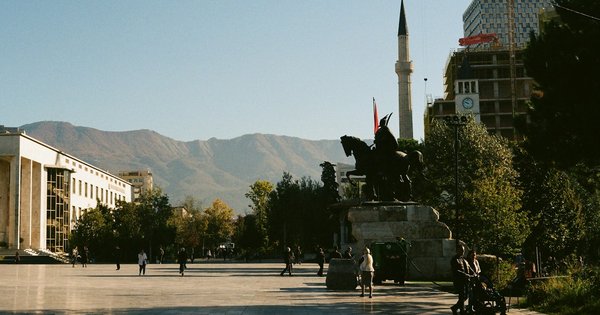
ILGA-Europe announced on October 27 that its second UNSTOPPABLE: Pride Organisers’ Summit will take place in Tirana from December 10 to 13, 2026, in partnership with the Albanian group Aleanca LGBT. The call for applications is open now.
If you organise a Pride anywhere in Europe or Central Asia, here’s what you need to know. And if you don’t, here’s why it’s still a good-news story for the Balkans.
The essentials
All of this comes from ILGA-Europe’s call:
- When: arrive December 10, full programme December 11–12, leave December 13.
- Where: Tirana, Albania. The working language is English.
- How many: around 20 to 25 participants.
- Cost to you: ILGA-Europe covers and books travel and accommodation for December 10–13, plus a daily cash allowance for local transport and meals not provided at the event.
- Deadline: November 10, 23:59 CET. Applicants hear back on November 13, and successful applicants must register by November 20.
- Apply: through ILGA-Europe’s application form. One application per organisation.
Who it’s for
This isn’t a beginners’ training, and ILGA-Europe says so. It’s a peer space for people who make the political calls for their Pride.
To apply, you need to be part of a Pride organisation, or an LGBTI organisation responsible for a Pride, in Europe or Central Asia. You need hands-on experience organising Pride marches or public Pride actions, an ongoing role in that work, and a central or leadership role in shaping your Pride’s political direction for at least two years.
What they’ll talk about
The theme is “Pride as a political force: Defending public space & building collective power.” The sessions, per the call:
- What are Prides working to change?
- Pride, protest and democracy: where do our struggles meet?
- Beyond the march: how do we build lasting people power?
- What calls for Prides to join forces?
There’s also a practical exchange on the stuff organisers actually lose sleep over: security threats, volunteer teams and funding pressures.
ILGA-Europe’s reasoning is blunt. Restrictions on assembly, far-right mobilisation, polarisation and precarity are making it harder for Prides to organise, and many are rethinking their roles and strategies. Anyone who followed this year’s bans and court fights, from Budapest to Kruševac in Serbia, where the ILGA-Europe Rainbow Map 2026 says police unlawfully banned Pride, will recognise the list.
The first UNSTOPPABLE summit was held in Ljubljana in 2025, and this one builds on it.
Why Tirana
ILGA-Europe didn’t pick Tirana for the views (though the views are great). The call points to months of sustained public protests in the city, on environmental protection, against corruption, and from students and young people demanding change on education and social security. That, it says, has kept questions of public space and collective action in the spotlight.
We’ve been following that movement. Albania’s “Flamingo Revolution” started over a resort plan on protected wetland and grew into an anti-corruption movement that pulled LGBTQ+ activists into a broad coalition, before organisers started facing Instagram takedowns. Holding a summit about “defending public space” in that city is a statement.
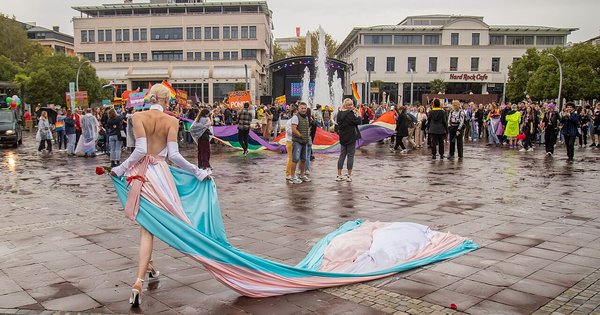
It’s also a nod to what Albanian activists have built. Tirana Pride marched for the 13th time on May 23, 2026, under the slogan “Together for the Family.” At that march, Citizens.al reported, Deputy Prime Minister Albana Koçiu spoke of “recognition, respect, and dignity for human life”, and EU Ambassador Silvio Gonzato said: “Equality is not optional, it is not an alternative, but it is the very foundation of free societies.”
The honest picture
Hosting a European summit doesn’t mean the work in Albania is done. At the same Pride, community representatives pointed to gaps in health services, discrimination, hate speech and limited institutional representation, Citizens.al reported. Activist Edlira Mara criticised a draft law that she said would ban content on gender identity and alternative family forms in schools for anyone up to 22, a bill we’ve covered. Same-sex couples still have no legal recognition in Albania, as our state-of-rights explainer lays out.
That’s exactly why a gathering like this matters here. Organisers from across the region will spend two days in a city where queer people have kept marching for 13 years, while the country around them argued about what kind of democracy it wants to be.
If you’re applying
- Read the eligibility rules closely: the two-year leadership requirement is the one people miss.
- Agree inside your organisation who applies, since only one application per organisation counts.
- Put November 10, 23:59 CET in your calendar now, with a buffer for time zones.
- Coming to Tirana for the first time? Our LGBTQ+ guide to Tirana has the basics. December there tends to be cool and rainy, so pack layers.