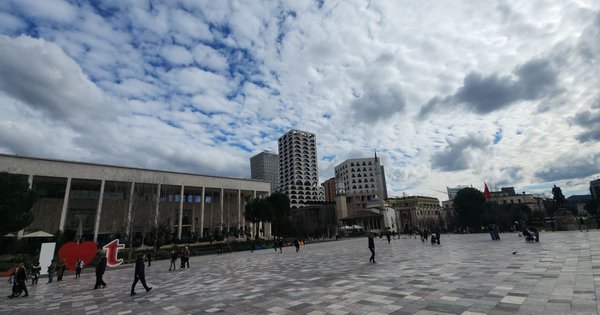
Albania is the country we know best. We have spent more of the last four years here than anywhere else, mostly in Tirana, and people are always surprised when we tell them that a small, majority-Muslim country in the Western Balkans is one of the more legally progressive places in the region for LGBTQ+ people. It is — and it isn’t. The full picture is more interesting than either the boosters or the doomsayers will tell you, so here is where things actually stand in 2026.
The law on paper: better than its reputation
Albania’s foundational protection is its Law on Protection from Discrimination, in force since 2010, which explicitly bars discrimination on the basis of sexual orientation and gender identity across employment, education, housing, and the provision of goods and services. That puts SOGI protections directly in statute — something many wealthier European countries took far longer to do, and something neighboring Bulgaria and Romania still lack in comparable form.
Albania also has a partial ban on conversion therapy. In 2020, the Albanian Order of Psychologists adopted rules prohibiting its members from practicing the discredited “therapy,” making Albania one of the first countries in the region to act. It’s a professional-conduct ban rather than a sweeping criminal one, so its reach is limited, but it is real and it is more than most of the neighborhood offers.
On the strength of protections like these, ILGA-Europe’s Rainbow Map consistently places Albania ahead of several EU member states, and TGEU’s Trans Rights Index this year recorded Albania moving up while countries like Belarus and Slovakia moved down. The trend line, measured over five years, points up.
The law in practice: the gaps that matter most
Now the other half. Albania does not recognize same-sex marriage, and it does not offer any form of civil partnership or registered union. For same-sex couples — including binational ones, which describes a lot of the people who write to us — that means no inheritance rights, no next-of-kin status, no joint adoption, none of the legal scaffolding that married couples take for granted. It is the single biggest gap, and there is no serious bill close to closing it.
Transgender Albanians face the second great gap. There is still no accessible process for legal gender recognition based on self-determination, and trans people continue to lack reliable access to dignified, publicly funded healthcare. Activists raised exactly this point during Tirana Pride this year: a great deal has been promised, and very little of the trans-specific agenda has been delivered.
The 2026 flashpoint: the gender-equality bill
The defining political story of the year has been the draft Law on Gender Equality. In its original form, the bill aimed to align Albanian law with the EU acquis and the Istanbul Convention, and it explicitly protected gender identity and used language like “gender diversity,” “gender identity,” and “gender expression.”
It did not survive contact with the opposition intact. A coordinated wave of disinformation — including the recurring lie that Albania was about to “legalize 70 genders” — came from organized religious groups and far-right politicians, and the bill’s backers introduced amendments stripping out the contested terms. A separate draft law went further still, proposing to ban content discussing gender identity or alternative family forms for young people. The fight is not over, but it is a sharp reminder that the anti-gender movement reshaping politics across Central Europe and the Balkans has very much arrived in Tirana.
The EU accession engine
What makes Albania different from, say, Bulgaria is the direction of pressure. Albania is in active EU accession negotiations, working through the policy “clusters” that candidate countries must clear, and fundamental rights — including the treatment of minorities and LGBTQ+ people — sit inside that process. Brussels is, in effect, a standing external incentive to improve rather than backslide.
That doesn’t guarantee progress; accession is slow and governments are skilled at doing the minimum. But it changes the math. Where American soft power is now retreating from the region, the EU’s accession leverage is the more durable force pushing Albania forward, and the gender-equality fight is partly a fight over how seriously the country takes that path.
What it actually feels like
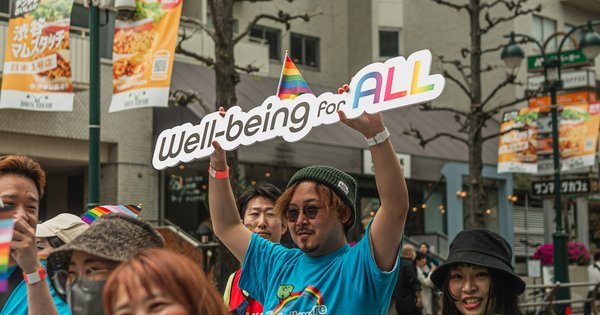
The lived reality, in our experience, runs ahead of the legal one — at least in Tirana. The capital has a small, resilient queer scene, organizations like Aleanca LGBT and Streha (the region’s first LGBTQ+ shelter), and a Pride that has grown from a tiny, guarded affair into a confident march down the boulevard. Day to day, two foreign men sharing an apartment in Blloku attract no trouble. Outside the capital, and for visibly gender-nonconforming Albanians, it is harder, and discretion is still the norm.
So the honest 2026 verdict is this: Albania has built a strong legal floor and a genuinely improving culture, while leaving the two most consequential gaps — partnership recognition and trans rights — wide open. It is one of the better places to be queer in the Western Balkans, and it still has a long way to go. Both things are true, and pretending otherwise serves no one.
Sources: TGEU, Euronews Albania, Osservatorio Balcani Caucaso Transeuropa, New Lines Institute.