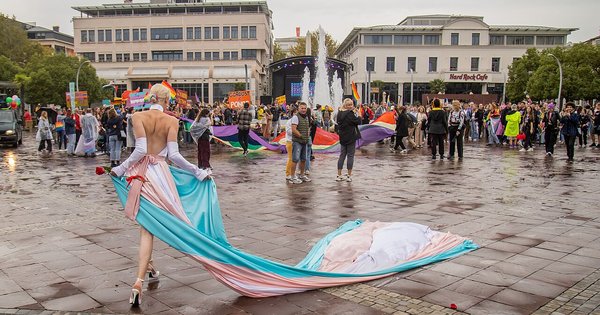
The last big Pride of the Balkan season has walked. On Saturday, October 3, the 14th Montenegro Pride set off from outside the Government building in Podgorica, crossed the city centre and finished at Argentina Square. Police estimated about 350 participants and said the gathering passed “in a peaceful atmosphere and without incidents,” Portal Analitika reported.
That sentence would have been hard to imagine at the first march in 2013. In 2026 it’s the headline, and it’s the least interesting part of the day.
The line everyone will remember
The march ran under this year’s slogan, Živjećemo, života radi!, “We will live, for life’s sake!” At Argentina Square, Queer Montenegro’s executive director Staša Baštrica told the crowd that Pride exists so people can finally live as themselves, without hiding who they are or whom they love, according to the Beta news agency report carried by 021.rs.
Then she widened the frame. Baštrica tied the fight for equality to everything else Montenegro has lived through: the wars after Yugoslavia broke up, the long transition, poverty and old social divisions. She criticised political structures where, as she put it, court rulings get questioned while laws people need are delayed or blocked. And she gave the day its sharpest line:
“Pravi neprijatelji nisu gejevi, lezbejke, biseksualne i trans osobe.” The real enemies are not gay men, lesbians, bisexual and trans people.
It’s the same idea as the organisers’ pre-Pride statement, which we covered when Pride Week opened: queer rights aren’t a side issue, they’re part of how a country treats everyone.
What they’re actually asking for
Strip away the speeches and the demands are short and concrete. Speakers from the organising team, reported by RTNK, called for:
- Full implementation of same-sex partnership rights. Montenegro passed its Life Partnership Act in 2020, still the only same-sex partnership law in the non-EU Balkans. But organisers say rights on paper aren’t yet rights in practice, and the law doesn’t cover adoption or joint parenting.
- Trans recognition without forced medical procedures. Montenegro has no law setting out how people change their legal gender. The government started drafting a self-determination law, and it has stalled ever since.
- Safe streets, schools and workplaces, and equal access to healthcare.
Who showed up
Alongside activists and citizens, RTNK listed representatives of the Liberal Party, the Civic Movement URA, civil society groups and international organisations, plus Montenegro’s human rights ombudsman, Siniša Bjeković. The Ministry of Human and Minority Rights said protecting the human rights of all citizens remains a priority, per Beta.
Statements of support are welcome. What organisers keep pointing out is that the draft gender recognition law is still sitting in a drawer.
Why 350 people matters
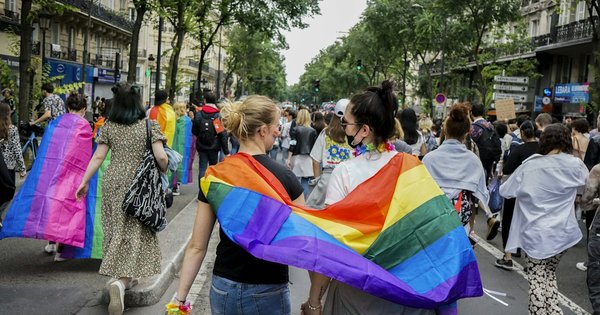
Next to Paris, which marched the same afternoon with tens of thousands, 350 can sound small. It isn’t. In a small capital where being out still has a real cost for many people, every name on that count is a choice. The first Pride here needed a heavy police cordon and ended in clashes as extremist groups tried to break through. Thirteen years later, the police statement reads like a weather report: the gathering ran from about 3pm to 8pm, officers took the measures the law requires, nothing happened.
Boring is the win. Boring is what let Montenegro pass the partnership law in the first place. The next step is turning that calm into the laws organisers asked for on Saturday.
The Balkan season, wrapped
Montenegro closes a Pride season that has looked very different from city to city. Pristina marked ten years of Pride in June under the slogan “Equality or Revolt.” Belgrade marched in September while the fight over a same-sex union law moved into election season. And today, October 4, neighbouring Bosnia and Herzegovina votes in general elections, with real stakes for its LGBTQ+ community.
Jeff and Zachary move to Podgorica in December, so we’ll be following what happens to these demands up close. If you marched on Saturday, we’d love to hear how it felt.
Sources: Beta via 021.rs; Portal Analitika; Tanjug; RTNK; Government of Montenegro; Balkan Insight. Photo: WeBalkans, Montenegro Pride Week 2023, CC BY 2.0, via Wikimedia Commons.