Two elections, three weeks apart, in two countries where LGBTQ+ rights are inching forward mostly because Brussels is asking them to. Bosnia and Herzegovina holds general elections on October 4; Serbia holds a parliamentary election on October 25. Neither vote is being framed around LGBTQ+ issues. Both will still matter enormously for how fast — or whether — things keep improving.
Bosnia: a system built to stall
Bosnia’s general election will decide the tripartite presidency along with national, entity, and cantonal governments — an already fractured system split between the Federation of Bosnia and Herzegovina and Republika Srpska. There is no national or entity-level legal recognition of same-sex couples anywhere in the country, and both entities restrict marriage to opposite-sex couples by law.
That hasn’t stopped a visible LGBTQ+ community from organizing anyway. Sarajevo held its seventh annual Pride march this summer under the slogan “Every Colour Is the Right One,” with organizers describing a slow but real shift: more families are accepting LGBTQ+ relatives than they were even five years ago, even as legal protections haven’t moved. Demands from that march — a partnership law, a gender identity law, stronger hate crime enforcement, workable rules for peaceful assembly — go into this election unmet, and Bosnia’s fragmented governing structure means even a strong reform-minded showing in one entity can be blocked by the other.
Serbia: a bigger door, still closed
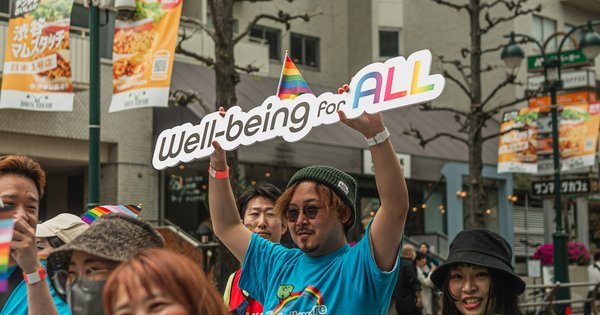
Serbia’s LGBTQ+ community just marked 25 years since its first Pride march, with this September’s Belgrade Pride drawing thousands under the banner “There Is a Room for All of Us” — a deliberate echo of the slogan from that first, far smaller and far more dangerous, march in 2001. The event went ahead with only isolated friction near a church where counter-protesters played devotional music and shouted the name of a convicted war criminal. Compared to Belgrade Pride’s history of outright bans and mob violence, that counts as progress.
What hasn’t moved is the law. Serbia’s parliament has now rejected, for a third time, even a debate on legislation to recognize same-sex partnerships. Activists used this year’s Pride to renew that demand publicly, pointing out that Serbian same-sex couples currently have no standing on inheritance, shared property, or medical decision-making for a partner — the ordinary machinery of a life built together. Serbia’s LGBTQ+ rights have advanced mostly as a side effect of its EU accession process, which has periodically pressured Belgrade toward anti-discrimination protections it wasn’t otherwise inclined to adopt. A parliament less invested in that accession track, or more willing to use LGBTQ+ rights as a wedge issue against it, could slow even that indirect pressure.
Why we’re watching both at once
Neither election is a referendum on LGBTQ+ rights, and it would be an overstatement to say either has hung entirely on it. But EU accession is the single biggest lever moving LGBTQ+ policy in both countries right now, and accession momentum is itself a function of which governments show up to negotiate — and how seriously they take the conditions attached. A results night that weakens either country’s EU trajectory is also, quietly, a setback for the partnership laws and gender recognition frameworks activists in both places have been pushing for years.
We’ll be following both races through October and reporting on what the outcomes mean for the region’s LGBTQ+ communities specifically, not just the top-line politics.