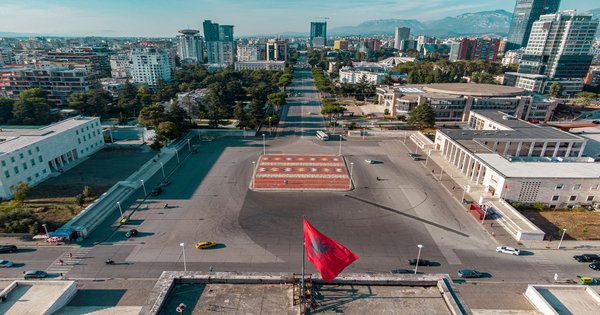
Albania has been our most-used base since we went nomadic in January 2022 — three stays in Tirana, plus Sarande and Durres — and we left Tirana this past June after 174 days. So when we say the protest movement that’s now consumed the capital for over 100 straight days is unlike anything Albania has seen since the fall of communism in 1991, that’s not a headline we’re repeating secondhand. It’s the scale locals themselves keep describing.
The movement didn’t start as an LGBTQ+ story. It started in May as opposition to a €1.4 billion luxury resort project on Sazan Island and the Narta Lagoon, backed by Jared Kushner and Ivanka Trump, that threatened a protected wetland where flamingos nest — hence the name. What began as an environmental protest against elite tourism development has since grown into a full anti-corruption movement demanding Prime Minister Edi Rama’s resignation and a transitional government to oversee free elections. It’s since pulled in an unusually broad coalition: leftist organizers, environmentalists, feminist collectives, clergy from all four of Albania’s major religious communities, and — notably for us — LGBTQ+ activists who don’t otherwise agree on much with the rest of that coalition.
Why queer Albanians joined
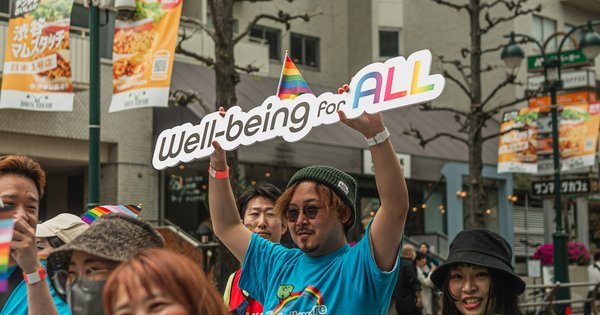
Xheni Karaj, one of the country’s best-known LGBTQ+ rights advocates and a name we’ve covered before, put it simply to New Lines Magazine: “This is about democracy.” Organizers and observers describe the sheer size of the crowds as something that’s given people cover to show up who previously feared the consequences of public dissent — including LGBTQ+ Albanians navigating a country that is, as we’ve written before, conservative and unevenly modernizing outside its tourist-facing spaces.
That calculation — safety in numbers — is now being tested by a different kind of pressure.
The crackdown moves online
According to reporting from Balkan Insight, protest organizers have faced a wave of Instagram account takedowns, and some of their own websites have gone offline, even as the government denies any involvement. At the same time, protesters have leaned on AI-generated memes to spread their message, while opponents have used AI-generated disinformation and deepfakes to discredit the movement and its individual participants. Digital rights researchers quoted in that coverage warn that the pattern — coordinated platform takedowns paired with AI-driven smear campaigns — could function as a reusable “toolkit” for governments looking to suppress dissent well beyond Albania.
That should register specifically with LGBTQ+ readers, and not just because queer activists are part of this particular coalition. We’ve reported before on the legal gaps around digital violence facing LGBTQ+ people in Albania and Kosovo — the absence of clear protections when someone is doxxed, impersonated, or targeted with fabricated content online. A crackdown that normalizes account takedowns and AI-generated disinformation as tools against one kind of dissent doesn’t stay contained to that dissent. The infrastructure being tested against Flamingo Revolution organizers now is the same infrastructure that could, with very little modification, be turned on Pride organizers, queer bloggers, or LGBTQ+ mutual aid networks later — especially in a country where hate speech and harassment protections for LGBTQ+ people remain thin on paper and thinner in enforcement.
What we’re watching
Albania’s government has denied directing the takedowns, and there’s no evidence yet connecting the online crackdown specifically to LGBTQ+ organizers within the movement rather than the protests generally. But the overlap between “who’s protesting” and “who’s losing their Instagram account” is worth tracking as this continues, particularly for a community that already relies heavily on platforms like Instagram for organizing, visibility, and safety information in a country without many institutional alternatives. We’ll keep following it — both because it’s happening in a place we came to know well, and because what gets normalized against one movement in the Balkans rarely stays isolated to that movement alone.