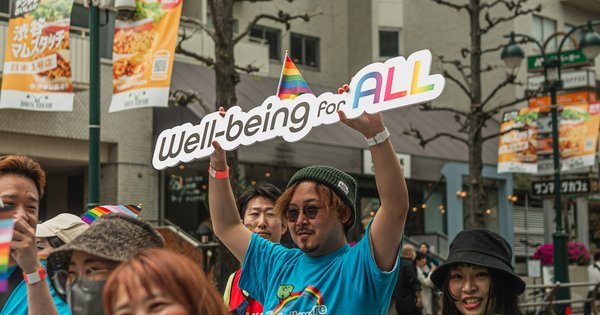
Three days after Tirana Pride marched down Dëshmorët e Kombit Boulevard under the slogan Together for the Family, the bill that activists kept naming from the stage is still where it was the day before the march: in committee, undebated on the floor, and — for now — going nowhere. That is the good news. The less good news is that “going nowhere” in the Albanian Parliament is rarely the same as “withdrawn.” Bills can sit. Bills can be revived. And while a bill sits, the public debate around it does its own work on schools, families, and the LGBTQ+ Albanians it would touch most directly.
This piece tries to do two things: describe what the bill actually proposes, and explain why it is worth paying attention to even though it has not advanced.
What the bill would do
The draft, introduced by opposition MPs aligned with the conservative coalition that has been organising against the 2025 gender equality law, would prohibit any “content discussing gender identity or alternative forms of family” in school settings or in materials directed at anyone under the age of 22. The age cutoff is the most striking feature. Most comparable bills in Europe — Hungary’s 2021 law, Bulgaria’s 2024 amendment, the original Russian “propaganda” statute — drew the line at minors. Twenty-two is not minors. It would cover the entire university population.
In practice, if passed in its current form, the bill would touch:
It would touch university curricula in sociology, public health, gender studies, social work, and law — any course in which gender identity is discussed as a concept. It would touch public health messaging directed at students. It would touch student-run LGBTQ+ groups on university campuses. It would, on a plain reading, also touch the work of the Commissioner for Protection from Discrimination when she addresses university audiences. Whether the law could be enforced against any of that is a separate question; the chilling effect on people who would rather not test it is the point.
The bill also includes a definition of “alternative forms of family” that is broad enough to capture any teaching that acknowledges single-parent households, blended families, or extended-family caregiving arrangements that do not match a particular nuclear-family model. Albanian family-policy researchers have pointed out that this would describe a substantial share of Albanian households — including many that have nothing to do with sexuality at all.
Where the bill stands procedurally
It has been submitted. It has been assigned to committee. It has not been calendared for a floor debate, and the governing Socialist Party majority has signalled, without quite saying so on the record, that it will not bring it forward. Several Socialist MPs have privately described the bill to local outlets as “a Russian import” and unconstitutional under Albania’s existing anti-discrimination framework, which since November 2025 explicitly protects gender identity.
Constitutional questions also hang over it. The 2025 gender equality law established protections that this bill would directly cut into — and the gender equality law is itself in front of the Constitutional Court on a separate petition filed by the same coalition that drafted this education bill. Until the Constitutional Court rules on the first case, anything Parliament does on this one would be operating against an unsettled legal background.
Why it matters even if it does not pass
The bill is doing work without ever reaching a vote. The arguments around it — that schools are “exposing” children to gender ideology, that universities are foreign-influenced, that LGBTQ+ visibility is a Western imposition incompatible with Albanian families — have become a steady feature of Albanian political talk shows since the gender equality law passed. That language is what activist Livia Zotrija was naming from the Pride stage on Saturday when she described “a wave of hatred, exclusion and disinformation.” The bill is part of what makes the wave structural rather than episodic.
It also matters for EU accession. Albania’s Cluster 1 chapters — the “fundamentals” — include rule-of-law and anti-discrimination commitments that the European Commission tracks in its annual progress report. A bill that would roll back specific protections the EU has urged Albania to add is the kind of thing that shows up in those reports as a flag, even when the bill does not pass. The Commission’s 2026 progress report is due in the autumn.
What changed at Pride
The visible part of Tirana Pride on May 23 was the march itself — diplomats, civil-society representatives, a small but committed crowd along the boulevard. The less visible part was that several of the speakers, including Deputy Prime Minister Albana Koçiu and EU Ambassador Silvio Gonzato, used the moment to put public pressure on Parliament not to advance bills that would compromise Albania’s accession trajectory. The phrasing was careful. Nobody named the under-22 bill from the stage. But the point landed.
For LGBTQ+ Albanians, the practical takeaway from Pride 2026 was modest and worth saying directly: the most aggressive piece of legislation against them this session is still parked. The legal protections they gained last November are still on the books. The Constitutional Court has not ruled. The conservative coalition has not collected the signatures it needs to force a referendum on the gender equality law, and the constitutional path to a referendum on that kind of law is contested at best.
None of that adds up to safety. It adds up to a moment — the kind of in-between moment that is easier to see clearly during Pride week than during the slower months when nothing visible is happening and the bills are still sitting in committee.