On paper, Montenegro is one of the better places in the Western Balkans to be queer and employed. Discrimination at work is illegal. Same-sex couples can register partnerships. The country sits 18th of 49 on ILGA-Europe’s 2026 Rainbow Map, the highest score in the Western Balkans.
At work, it often looks different. A new investigation by the Centre for Investigative Journalism of Montenegro (CIN-CG) asks why LGBTIQ+ people there still don’t have equal chances at a job. The short version: the law exists, but almost nobody uses it.
”This is better for you and for us”
The investigation, published by CIN-CG and written by journalist Andrea Perišić, opens with a young man it calls Luka (not his real name). He worked in hospitality. After a three-day absence, his employer let him go, pointing to complaints from guests: “Guests say all sorts of things and complain. This is better for you and for us.”
At an earlier job, he says, colleagues made homophobic comments every day, and “superiors did not take any action to stop such behaviour.” Now he plans every job application “300 steps ahead,” and he’s thinking about leaving Montenegro after he finishes his studies. In his words, that’s “a consequence of homophobia that nobody thinks about,” and one reason so many young people leave.
The numbers behind the stories
CIN-CG pulled together surveys and official data, and they line up:
- 87.7% of respondents in a 2024 survey by LGBTIQ Socijalni Centar and LGBT Forum Progres said they had faced workplace discrimination over their sexual orientation. 26.9% said it was over gender identity, and 39.4% said they had lost a job over real or presumed LGBTI identity.
- Only 24.1% of organisations analysed in Jovan Ulićević’s June 2026 study of the labour market had specific policies to protect and include LGBTIQ+ staff.
- In a 2022 CeMI poll of 990 adults, 45% of citizens thought employers weren’t ready to hire LGBTI people. 22% thought they were.
Then there’s the gap between what people go through and what gets reported. Queer Montenegro (Kvir Montenegro) told CIN-CG that just 12 people came to it for free legal help with workplace discrimination in the past five years. It doesn’t know of a single case that ended in sanctions for an employer. A few were settled by compromise after the group stepped in.
The ombudsman’s figures are starker. The Protector of Human Rights and Freedoms logged 105 employment discrimination cases in 2024 and 74 in 2025. In 2024, none was filed on grounds of sexual orientation or gender identity. In 2025 there was one employment-related case, with no violation found, filed under a category so broad it’s unclear what it was about.
Zero complaints doesn’t mean zero discrimination. Queer Montenegro says people stay quiet because they fear losing their job, being outed, how colleagues will react, and institutions they don’t trust. The group also says Montenegro’s Labour Law is already “quite well aligned with EU standards.” The problem isn’t the text of the law. It’s whether anyone feels safe enough to use it.
”When a person closes the door on themselves”
Vuk Adžić, a trans man who spoke to CIN-CG on the record, says discrimination rarely arrives as a straight no. “Discrimination very rarely looks like someone telling you directly they won’t hire you because you’re trans,” he said. It’s more often a question about whether you’ll “fit in,” or documents that don’t match your gender, which you then have to explain before anyone looks at your skills.
The part that hurts most, he says, comes before any interview: people who expect rejection stop applying. “That is one of the saddest forms of discrimination, when a person closes the door on themselves.”
That links to a bigger policy problem. Montenegro still hasn’t adopted its draft law on legal gender recognition based on self-determination, and ILGA-Europe’s May 2026 assessment, as cited by CIN-CG, says the government hasn’t adopted a new action plan for LGBTIQ+ people either. For trans job seekers, a stalled ID reform turns into an awkward conversation at every job interview.
The ministry didn’t answer
CIN-CG sent questions to the Ministry of Human and Minority Rights. It hadn’t replied by the time the investigation was published.
This fits a pattern we keep reporting from Montenegro: progressive laws, then patchy enforcement. The same is true of hate crimes and asylum claims, of partnership rights that other laws haven’t caught up with, and of discrimination in sport.
Why it matters
Europe-wide data shows the same squeeze. According to the EU Fundamental Rights Agency figures CIN-CG cites, job discrimination dipped slightly since 2019 for most groups. Among trans respondents it fell from 41% to 34%, but among intersex respondents it stayed at 38%. Meanwhile 54% reported harassment, and only 18% reported it to any organisation.
Montenegro has a chance to be the Balkan country where the rules actually work. The next steps aren’t mysterious: collect data on these complaints, unblock the gender recognition reform, and make sure someone in HR knows what to do when Luka’s manager says it’s “better for everyone” if he goes.
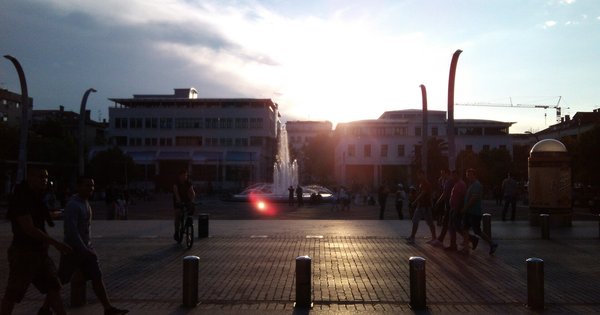
Sources: CIN-CG, “LGBTIQ+ osobe u Crnoj Gori još bez jednakih šansi za posao” (Oct 25, 2026), also republished by CEDEM under the “We Go Deep” project; ILGA-Europe Rainbow Map 2026: Montenegro. Quotes are our translations from Montenegrin. Photo: ines lukic, Trg Republike, Podgorica, 2013, CC BY 3.0, via Wikimedia Commons.