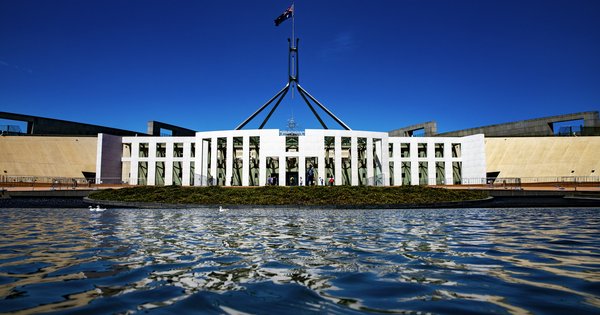
On Wednesday morning in Canberra, the Australian government is due to say sorry to the LGBTIQA+ people it pushed out of the military.
Deputy Prime Minister and Defence Minister Richard Marles is scheduled to deliver the federal apology to LGBTIQA+ Defence personnel, veterans and their families at 10am AEDT on Wednesday 25 November, in the House of Representatives, OUTinPERTH reports. If you’re in Europe, that’s around midnight Tuesday night Central European Time.
We first covered this in September, when the government promised the apology but gave no date. Now there is one. Here’s what you need to know.
Who the apology is for
The apology addresses discrimination and harm caused to LGBTQIA+ veterans and their families under past government policies. According to OUTinPERTH and QNews, it covers people who faced:
- criminal convictions
- administrative discharges
- forced resignations
- revoked security clearances
Crucially, it’s about sexual orientation and gender identity, so it includes trans and gender-diverse personnel. That matters, because a big worry in the Senate inquiry was that people dealt with quietly, through paperwork rather than courts, would be left out.
How long this went on
The history is long. QNews traces the Army’s first explicit anti-homosexuality policy to 1944.
Historians Shirleene Robinson (University of Technology Sydney) and Noah Riseman (La Trobe University), writing in The Conversation, set out the later timeline:
- From 1974, Defence policy generally required homosexuality-related cases to be handled administratively unless an aggravated offence was involved. So from the mid-1970s there were almost no convictions, but plenty of discharges.
- Until 1992, lesbian, gay and bisexual people were barred from serving.
- The ban on transgender service was lifted only in 2010.
The two historians interviewed 140 LGBTIQ+ service members between 2014 and 2018. One of them, Yvonne Sillett, joined the Women’s Royal Australian Army Corps in 1979 and became one of the first women instructors at Kapooka. Her career ended in 1989 after service police discovered her sexuality. On the apology, she told them: “I did not think it would happen in my lifetime.”
What’s already changed since September
The apology isn’t arriving alone.
- Convictions wiped. In October, the Minister for Veterans’ Affairs announced that current or former personnel can “apply to have historical homosexual convictions extinguished from their service records,” The Conversation reported. A separate process covers people who faced administrative action, including over gender identity, though the authors note it’s harder to find on the Defence website.
- Certificates of Honourable Service. When the government announced the apology during Senate debate on military justice legislation in September, it also promised affected former members a Certificate of Honourable Service, QNews reported.
“Not his deputy”: the row over who says sorry
Not everyone is happy that Marles, rather than Prime Minister Anthony Albanese, will deliver it.
“Given all these precedents, it is Anthony Albanese who should deliver an apology to LGBTIQA+ veterans, not his deputy,” Just.Equal spokesperson Rodney Croome told QNews.
When the apology was first announced, Greens LGBTIQA+ spokesperson Senator Nick McKim made the same point: “it must come from the Prime Minister as well as the Chief of the Australian Defence Force,” he said, per QNews.
The money question
The other open issue is redress. The government hasn’t announced compensation. Just.Equal wants a national financial redress scheme, noting that Canada and the UK already offer one and that Tasmania provides redress for its former anti-LGBTIQA+ laws, QNews reports.
Robinson and Riseman make a similar case: an apology can’t change the past, so it should come with practical steps like mental health support and acknowledgement of lost careers.
The veteran in the gallery
David Gibson will be in the chamber. A former Army officer, he was discharged 37 years ago for being bisexual and now chairs GRAI (GLBTI Rights in Ageing Inc.), which pushed for the apology in its Senate inquiry submission.
“When I sit in Parliament, I’ll hear the government acknowledge that what happened to us was wrong,” Gibson told QNews.
And the line worth keeping, whatever is said on Wednesday: “Service does not become less honourable because the institution you served failed to treat you honourably.”
What to watch
- The words. Does the apology clearly name trans and gender-diverse personnel, and people discharged administratively, not just those convicted?
- The follow-through. Any commitment on redress, mental health support or making the administrative-action process easy to find.
- Who’s in the room. Many of these veterans are now in their sixties and older. For some, Wednesday will be the first time their country has said out loud that they served with honour.