Football terraces, judo mats, wheelchair basketball courts: in Montenegro, as in much of the Balkans, sport is where a lot of people learn what’s “normal.” It’s also where a lot of hate speech happens out loud.
This week, Montenegro’s LGBTI organisation LGBT Forum Progres put that problem on the table.
What happened
On October 23, LGBT Forum Progres held a conference at Hotel Septembar in Podgorica titled “Mechanisms for combating hate speech and discrimination in sport,” RTNK reported. Representatives of institutions, sports organisations, civil society and the media attended.
The main event was new research: “Crveni karton za mržnju”, or “Red Card for Hate: the state of discrimination in Montenegrin sport.” It surveyed 168 sports workers from different parts of Montenegro about their experiences of and attitudes to discrimination, hate speech and the protection mechanisms that exist today, according to Portal Analitika.
The organisers said the research gives insight into what sports workers have experienced and should be a basis for improving policy and practice. The local reports didn’t publish detailed figures from the survey, so we’re not going to guess at them. We’ll report the numbers once the full study is public.
Who spoke
The panel was a deliberately wide one, and that’s part of the point:
- Dina Knežević, from the office of Montenegro’s Protector of Human Rights and Freedoms (the ombudsman), spoke about institutional protection and the responsibility everyone involved has for preventing discrimination.
- Milijana Ćirković, a para-athlete and president of the Association of Paraplegics of Montenegro, talked about making sport accessible and removing the barriers people with disabilities face.
- Marija Kipa, a judoka, multiple national champion and coach, stressed education and the responsibility of clubs to create a safe, encouraging environment for every athlete.
The discussion covered why discrimination so often goes unrecognised and unreported, what institutions and sports organisations should be doing, and how to build prevention and protection that actually work.
What they’re asking for
Participants called for closer cooperation between institutions, sports federations, clubs and civil society. The focus: education, reporting that’s genuinely accessible, and consistent use of anti-discrimination standards. In RTNK’s summary, the message was that Montenegro needs to improve its mechanisms for recognising, reporting and preventing discrimination.
That might sound like the language of every NGO conference. But anyone who has been to a match in the region knows why it matters: if a young player hears slurs from the stands every weekend and there’s no clear place to report it, most will just stay quiet, or stop playing.
A project funded by the state
The research is part of a project called “U igri smo zajedno” (“We’re in the game together”), which LGBT Forum Progres runs with the NGO Socijalni Centar. It’s financed by Montenegro’s Ministry of Sport and Youth.
That detail is worth noticing. A government ministry paying for an LGBTI organisation’s work on hate in sport is not something you’d see everywhere in the Western Balkans. It also fits a pattern we’ve written about before: Montenegro’s laws are often ahead of how they work in practice. ILGA-Europe’s Rainbow Map says the country’s Law on Prohibition of Discrimination is still pending full implementation, and that two attacks on LGBTI people in Podgorica in January still had no reported outcome by late 2025.
Why it matters
Montenegro scores 53% on ILGA-Europe’s 2026 Rainbow Map, the highest in the Western Balkans. It recognises same-sex life partnerships. But rights on paper don’t stop a coach from shrugging off a homophobic chant, or a club from having no idea what to do when a player comes out.
Starting with sport is smart. It reaches young people, it brings LGBTI rights into the same conversation as disability access and fair play, and it gives clubs something concrete to do. A red card is, after all, the one rule everybody already understands.
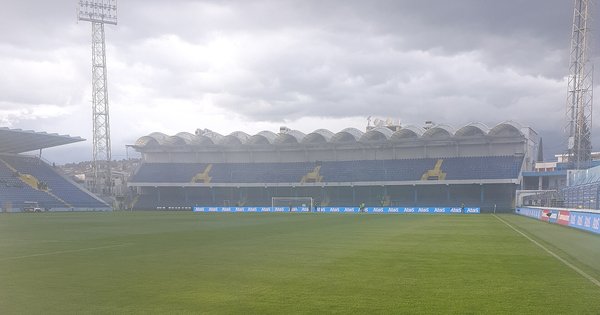
Sources: RTNK (Oct 24, 2026); Portal Analitika (Oct 24, 2026); ILGA-Europe Rainbow Map 2026: Montenegro. Photo: Vux3, Podgorica City Stadium, March 2023, CC BY-SA 4.0, via Wikimedia Commons.