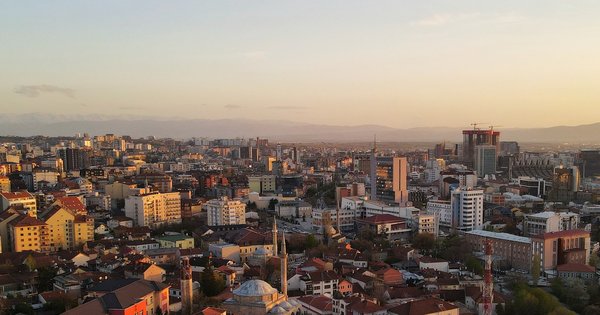
We landed in Pristina on 11 September. Two days later, on a Sunday, Kosovo’s Assembly confirmed a new government for the first time since the June election. Three days after that, a court in The Hague sentenced former president Hashim Thaçi to 25 years for war crimes. It has been a busy first fortnight to be reading the local news.
We’ve written about why we came here and about the practical scaffolding of living here. This piece is about something else: the one thing we said we’d be watching most closely between now and December, which is whether Kosovo’s stalled Civil Code, and with it any legal recognition of same-sex couples, has a realistic path forward. The honest answer, after a week and a half of reading, is that the new government makes it possible again, not likely.
A government with one vote to spare
On 13 September the Assembly approved Albin Kurti’s fourth cabinet with 62 votes in the 120-seat chamber, as reported by AFP and European Western Balkans. That’s one more than the 61 needed. Kurti’s Vetëvendosje won 53 seats in the 7 June snap election. According to EUalive and its partner IBNA, the remaining votes came from deputies representing non-majority communities. The main Albanian opposition parties, the PDK, LDK and AAK, stayed out of the vote, and the PDK and AAK say they’ll ask the Constitutional Court to rule on how the Assembly was constituted.
Kosovo has now held three parliamentary elections since February 2025. For most of that time the country has had a caretaker government, and ordinary legislating has stopped and started around it. That matters for queer Kosovars in a very plain way. A Civil Code can’t pass through an Assembly that isn’t sitting.
The arithmetic problem
In April 2024 Kurti announced that the government intended to legalise civil unions through a new Civil Code. According to Outright International, as of February 2026 the Assembly still hadn’t adopted the code, in the face of fierce opposition that included members of the ruling party itself. Kosovo recognises neither same-sex marriage nor civil unions. We covered the substance of that deadlock in July, including the argument among advocates over whether partnerships belong in the code itself or in a separate “special law.”
Here’s what’s new. A government that governs with one vote to spare can’t afford many defections on anything. If some Vetëvendosje deputies were unwilling to back the Civil Code when the party held a larger majority, the margin for a contested vote is now thinner still. Nothing in the reporting on the new cabinet suggests the Civil Code is near the top of its list. Before the vote Kurti didn’t present a new programme, EUalive reported. Instead, European Western Balkans quoted him saying the mandate was about “strongly restoring security and prosperity for citizens,” and that the repeated elections had only interrupted the same government.
The presidency could reset the clock again
The bigger risk is structural. Kosovo still has no elected president. Vjosa Osmani’s term ended in April, and Assembly Speaker Albulena Haxhiu is serving as acting president. Electing a head of state takes much more than forming a government. As EUalive explains it, the vote needs a quorum of 80 deputies and, in practice, a two-thirds majority in the first two rounds. The failure to elect a president is exactly what triggered the June election.
In late August Kurti reached a deal with the LDK’s leadership to back law professor Bekim Sejdiu for president. A day later, six LDK deputies said they wouldn’t follow their leader. The vote has no firm date. If it fails, Kosovo faces its fourth snap election in two years, and any bill still sitting in the Assembly, the Civil Code included, gets caught up in the dissolution again.
Why Brussels still matters
The one consistent lever is the European Union. Kurti told the Assembly that EU candidate status remains his government’s “main objective and the top strategic priority,” European Western Balkans reported. EUalive notes that Brussels has said Kosovo needs stable institutions if it wants candidate status and the EU growth plan money that comes with it.
Recognition of same-sex partnerships isn’t a formal precondition for candidate status. But fundamental rights sit at the core of every accession process. Next door in Montenegro, accession pressure helped deliver a life partnership law. If the new government is serious about candidate status, a working Assembly that can finally pass a modern Civil Code is part of what “stable institutions” looks like.
What we’re watching from here
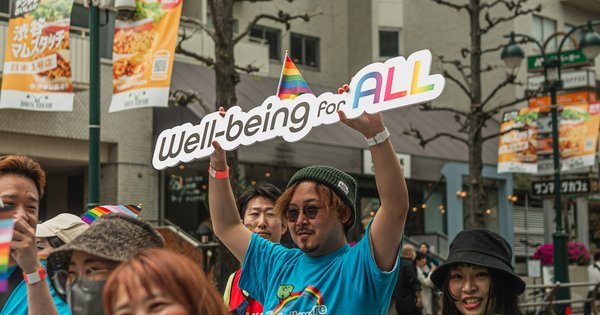
We haven’t been here long enough to say how any of this feels to queer people living in Pristina, and we won’t guess. The people who can say are Kosovo’s own organisations: the Center for Equality and Liberty, the Center for Social Emancipation (QESh) and the Centre for Social Group Development. In June they marched through this city under the slogan “Equality or Revolt,” and Balkan Insight noted that no politicians from local or central government attended.
Between now and our departure on 4 December, three things will tell us whether that absence was a pause or a pattern:
- The presidential vote. Whether the Assembly survives the autumn decides whether any legislation, the Civil Code included, gets a real chance.
- The Constitutional Court challenge from the PDK and AAK, which could unsettle the new government before it has done much of anything.
- Whether the Civil Code reappears on the Assembly’s agenda at all, and in what form. That means whether same-sex partnerships are written into the code itself, as Kosovar civil society has demanded, or pushed into a future “special law.”
Kosovo’s constitution already prohibits discrimination based on sexual orientation. The distance between that promise and a law a couple can actually use has never been about principle. It has been about votes. This month Kosovo got a government again. It still hasn’t got the votes.