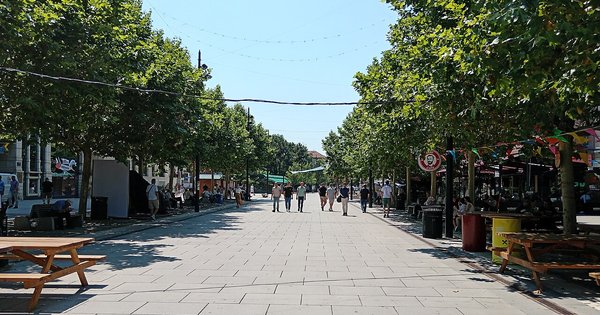
We landed in Pristina today. Neither of us has ever set foot in Kosovo before, which is a slightly absurd thing to write after four and a half years of full-time nomading — a good chunk of which we’ve spent in the country right next door.
We came here from Porto, where we’d just spent eighty-five days. Before that we were in Tirana from the end of December through to the middle of June, which was our longest stretch in Albania yet and the latest instalment of a habit we’ve had since 2022. So this isn’t us leaving Albania for Kosovo. We left Albania in June, spent a Portuguese summer, and then pointed ourselves back at the Balkans — which is a distinction that matters, because it’s the reason we’re here at all.
The boring reason: the Schengen clock
Eighty-five days in Portugal is very nearly the whole ninety you get in any rolling 180-day window in the Schengen Area. When we flew out of Porto this morning, our Schengen allowance was effectively spent.
This is the arithmetic that quietly governs most long-term nomad routing in Europe, and it’s why the Western Balkans matter so much to people doing this. Kosovo isn’t in Schengen. Neither is Montenegro, Serbia, Bosnia, North Macedonia or Albania. Time here doesn’t touch the clock, which means a stretch outside the zone isn’t a compromise — it’s what makes the next Schengen stretch possible.
So we needed to be out of Schengen for a while. That narrowed the field. What decided it was something much less technical.
The actual reason: Albanians kept telling us to
Over four years in Albania we lost count of the number of people who asked whether we’d been to Kosovo yet, reacted with genuine surprise when we said no, and then told us we had to go. Not the vague way people recommend somewhere they’ve seen online — the specific, slightly insistent way people recommend a place they have a personal stake in. Prishtina’s young, they’d say. It’s got energy. Go.
We put it off for years, mostly because the Albania routine was comfortable and the coast was right there. But the recommendation kept arriving from too many directions to keep ignoring, and somewhere in Porto this summer it stopped being a thing we hadn’t got around to and became the obvious next move. So here we are, on the word of a lot of Albanians, in a country we’ve been hearing about for longer than we’ve been paying attention.
We’re here until 4 December. After that we move to Podgorica for the winter — which is its own kind of return, since the last time either of us was in Montenegro was 2015, during the protests over NATO accession. The country joined in 2017 and a great deal has changed since. Seeing how much is a large part of why we picked it.
First contact, and an immediate problem
The first genuinely useful thing we learned in Kosovo, we learned within about an hour of landing: our Holafly global unlimited plan has no data service here.
Not slow. Not throttled. Nothing. “Global” turns out to have an asterisk, and Kosovo sits behind it — which, in fairness, is a recurring theme for a country that isn’t in the EU, isn’t in the UN, and isn’t recognised by every state whose networks these plans depend on. It’s a small thing that becomes a large thing when you land somewhere new, need a map and a ride, and have no connection to arrange either.
We’ll write up how we solved it once we’ve actually lived with the solution. Consider this the advance warning for anyone arriving on a global roaming plan and assuming it covers this corner of Europe: check before you fly, not after you land.
The other first impression, and the better one, is that people here are remarkably friendly. Not service-industry friendly — actually friendly, in a way that’s been evident in more or less every interaction since we got off the plane. Four years in the region has taught us not to build a whole thesis out of day one. But we’d be leaving out the most obvious thing about today if we didn’t mention it.
What we know going in
We’ve been on the ground a matter of hours, so we’re not going to pretend to have opinions about this city yet. But some things you can know in advance, and we did our reading.
Kosovo uses the euro, despite being neither an EU member nor part of the eurozone — it adopted the currency unilaterally. The official languages are Albanian and Serbian. Kosovo declared independence from Serbia on 17 February 2008, and the NEWBORN monument in the centre of the city was unveiled that same day and repainted on most anniversaries since.
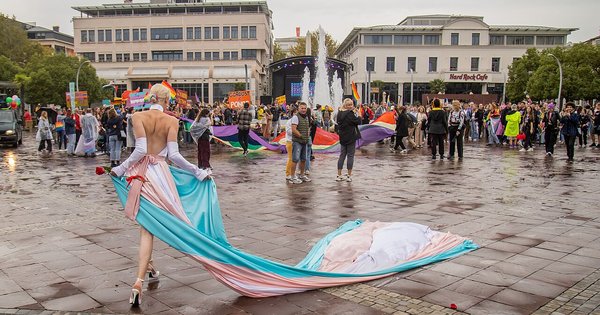
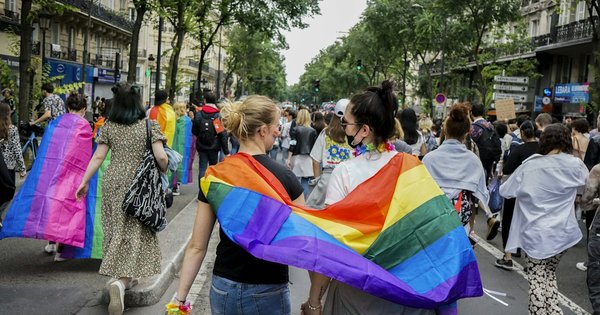
On the queer side, the picture is documented well enough that we can point you at it without pretending we’ve seen it ourselves. Prishtina Pride held its tenth edition in June 2026 under the slogan “Equality or Revolt,” and Balkan Insight reported that hundreds marched, with organisers calling for a safe shelter for LGBTIQ+ people facing violence, legal recognition of same-sex partnerships, and equal access to healthcare — and noting that, unlike previous years, no politicians from local or central government attended. A decade of Pride in a country this young is not nothing. A decade of Pride that politicians have started skipping is also not nothing.
The organisational backbone includes the Center for Equality and Liberty, founded in 2013, alongside the Center for Social Emancipation (QESh) and the Centre for Social Group Development. These are the groups doing the actual work, and anything we eventually write about the scene here will be checked against them rather than against our own impressions from a handful of evenings out.
The outstanding legal fight is the Civil Code. Prime Minister Albin Kurti announced in April 2024 that the government intended to legalise civil unions as part of a new code, and it has been stuck ever since, with the Assembly repeatedly failing to adopt it against opposition that includes members of the governing party. As things stand, Kosovo recognises neither same-sex marriage nor civil unions. That deadlock is the thing we’ll be watching most closely from here.
What we actually want to find out
The honest list, written on day one so we can be held to it.
Whether the “young energy” everyone in Albania described is a real texture or a line. Whether the gap between Pristina and the rest of Kosovo is as wide as the one we found between Tirana and everywhere else. Whether two men holding hands on a Tuesday afternoon registers here at all, and what the everyday cost of being visible is — because in our experience the answer is almost never “the foreign gay couple with the laptops.”
And selfishly: whether this is somewhere we’d come back to, or whether it stays a single winter.
We’ll report back properly once we’ve earned the right to. For now we have a suitcase in the hallway, no mobile data, and a city we’ve been hearing about for four years and are finally standing in.