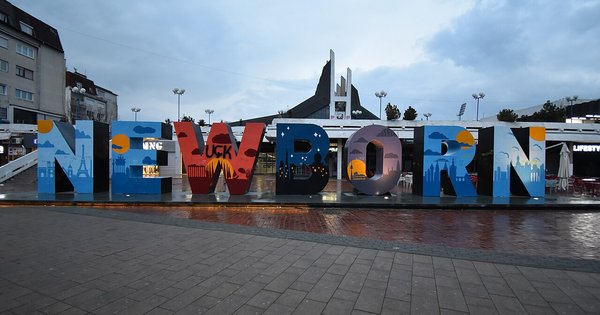
We arrived in Pristina on 11 September. Today is the 18th. That is one week, which is not a basis for recommending a neighbourhood, a café or a landlord, and we are not going to pretend otherwise.
What one week is enough for is the scaffolding — the visa maths, the currency, the connectivity, the cost bands, the organisations worth knowing — plus the honest first impressions that come with arriving somewhere new after four and a half years of doing this. We came here from Porto, where we’d spent the summer, and we wrote about why we picked Kosovo the day we landed; this one is the working document. We’ll write the lived version in November, when we’ve earned it.
The visa and Schengen maths, which is the real reason many of you are here
Kosovo is not in the EU, not in the eurozone, and not in the Schengen Area. For US passport holders, entry is visa-free for up to 90 days in any 180-day period, and — this is the part that shapes nomad routing across this whole region — that time does not touch your Schengen clock.
If you run the standard 90-in-180 Schengen rotation, the Western Balkans are the release valve: Kosovo, Serbia, Montenegro, Bosnia, North Macedonia and Albania all sit outside the zone with separate allowances. Our itinerary is built on exactly that — here until 4 December, 85 days and comfortably inside Kosovo’s 90, then Podgorica for 86 days on Montenegro’s separate clock. Between them that is nearly six months outside Schengen, which is exactly the point — we arrived here having spent 85 of our 90 Schengen days in Portugal.
Two cautions. Kosovo’s allowance is 90 in 180, not 90 per entry — a border run to Skopje and back does not reset it. And Schengen status across the Western Balkans is exactly the category of travel information that goes stale fastest; Bulgaria’s Schengen status changed after we’d already left Sofia, which rewrote the maths for anyone planning the same stay a year later. Check current rules against consular sources before booking anything long. Kosovo also has no dedicated digital nomad visa, so everything above is ordinary tourist entry.
Money, and the euro oddity
Kosovo uses the euro, having adopted it unilaterally rather than by joining the eurozone. In practice that is convenient — no conversion, no third Balkan currency app — and mildly surreal, since you are paying in euros in a country not administratively part of that Europe. Cards work widely in central Pristina and ATMs are everywhere, but carry cash as you would anywhere in the region.
On cost, we are not going to quote numbers we have paid, because a week’s spending is not a cost of living. Nomad cost trackers put a central one-bedroom in Pristina in the rough neighbourhood of €300 a month on long leases, with groceries and eating out well below Western European levels. Treat that as a band, not a quote: aggregator data skews toward whoever last filled in the form, and short-term furnished rentals aimed at foreigners run above local long-lease rates everywhere in the Balkans. Tirana taught us that repeatedly. What we can say is that nothing we have seen on a menu or a listing so far reads as expensive against Tirana or Sofia.
Getting online and getting work done
Kosovo’s fixed broadband is better than its profile suggests. Provider-level data for the year to June 2026 puts the fastest operator’s average download speed in the mid-90s Mbps, with several competitors in a similar range and low latency figures for the region. That is comfortably enough for video calls, screen sharing and large uploads — not fibre-to-the-flat Amsterdam, but not Albanian-coast-in-August either.
Mobile is where we got caught out, and this is the single most useful thing in this guide. Our Holafly global unlimited monthly plan — which has covered us across a lot of countries — has no data service in Kosovo at all. Not slow, not throttled: nothing. Kosovo sits outside EU roaming arrangements and outside a lot of “global” plan footprints, for the same reasons its passport and its dialling code cause friction. If you are arriving on an international roaming plan, verify Kosovo specifically before you fly.
The fix turned out to be trivially easy. On our first Saturday here we walked into the post office and bought a local eSIM over the counter: 10 euros for 4GB with calls and SMS included, activated on the spot, no paperwork worth mentioning. We have since upgraded to the top-tier plan — just under 15 euros for 50GB. For anyone used to European mobile pricing, those are not typos. We would now tell anyone coming here to skip the roaming plan entirely and just do this on day one.
Two smaller notes. Ask about the specific fixed connection before signing anything, because averages hide a wide spread. And Kosovo’s country code is +383, which is newer than a lot of booking and banking software expects, so check that anything you depend on accepts it.
Pristina has a real coworking scene for a city this size — listings run to a couple of dozen spaces — and a café culture that, like Tirana’s, treats a laptop and a three-hour macchiato as normal. We haven’t worked in enough of them to name favourites, and we won’t name ones we haven’t used.
Walkability, and the first-week texture
A week in, what stands out is how easy the city is to move through. It is small and flat enough to cross on foot without thinking about it, and the central pedestrian spine means a lot of daily life happens outdoors at walking pace. The coffee culture is not an exaggeration — it is the organising social fact of the day here, as it is in Tirana, and it makes a city easy to be a stranger in, because sitting alone with a coffee for an hour is what everybody is doing. The demographic skew registers within about an hour; Kosovo has the youngest population in Europe and Pristina feels it. The other thing we did not expect to be so immediately obvious is how friendly people are — not service-industry friendly, actually friendly, in more or less every interaction including the bureaucratic ones. The man who sold us that eSIM had served in the Kosovo army, wanted to talk about it, and sent us off with directions we had not asked for. That has been closer to the rule than the exception. Whether the “young energy” everyone in Albania promised us is a real texture or a line we were sold is still an open question.
What we cannot tell you yet: whether two men holding hands on a Tuesday afternoon registers here, and at what cost. We have not tested it, and we would rather report that honestly than guess. What we said in our April guide, written before we’d ever been, was that Pristina is “cautious but safe” for queer travellers — comfortable in practice, with public affection still uncommon. Nothing in week one has contradicted that. Nothing in week one has confirmed it either. We have mostly been unpacking.
Who’s actually doing the work here
If you are here for more than a holiday, these are the names to know.
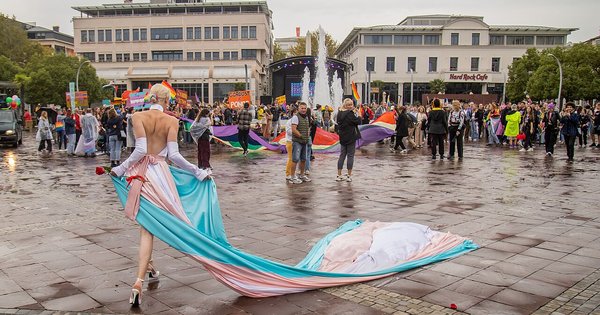
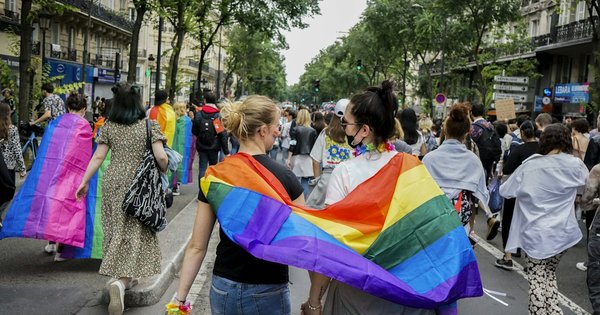
The Center for Equality and Liberty (CEL), founded in 2013, is the most visible organisation, alongside the Center for Social Emancipation (QESh) and the Centre for Social Group Development (CSGD). They are small, chronically underfunded, and the reason Pristina has public queer life at all. Balkan Insight reported that Prishtina Pride held its tenth edition in June 2026 under the slogan “Equality or Revolt,” with organisers calling for a safe shelter for LGBTIQ+ people facing violence, legal recognition of same-sex partnerships, and equal access to healthcare — and, notably, with no politicians from local or central government attending.
That last detail connects to the open legal question. Kosovo’s constitution explicitly prohibits discrimination on the basis of sexual orientation, which puts it ahead of several EU member states on paper, but the country recognises neither same-sex marriage nor civil unions. The Civil Code that was meant to introduce civil unions has been stuck in the Assembly for years, including against opposition from within the governing party. That deadlock is what we’ll be watching from here until December.
Would we send you here?
Provisionally, yes — and “provisionally” is doing real work in that sentence. If you want a cheap, walkable European base outside the Schengen clock, with working internet and a coffee culture that makes solo work pleasant, Pristina is an obvious and badly underused candidate. If you want a visible queer social scene, this is not Barcelona or Amsterdam, and the April guide’s framing — that showing up here quietly still counts for something in a way it no longer does in Western Europe — is the honest one.
Ask us again on 4 December. We’ll tell you which of these first impressions we got wrong.