Kosovo likes to describe itself as one of the most progressive constitutions in the Balkans, and on paper it is not wrong. The country’s founding document explicitly forbids discrimination on the basis of sexual orientation, and its Constitutional Court has already indicated that same-sex couples cannot simply be written out of family law. And yet, in the summer of 2026, Kosovo still offers same-sex couples no legal recognition of any kind. The reform meant to fix that — a comprehensive new Civil Code — has been stuck for years, and it is worth understanding exactly why.
A promise that keeps stalling
The story goes back to 2022, when the Assembly of Kosovo first rejected a draft Civil Code that would have opened the door to civil unions. The government tried again, and in April 2024 Prime Minister Albin Kurti publicly committed to legalizing civil unions as part of the code, framing it as both a human-rights obligation and a step toward European integration. It looked, briefly, like Kosovo might become the first Muslim-majority country to recognize same-sex partnerships.
Then the momentum stalled again. As of early 2026, the Assembly had still failed to adopt the new code, with fierce opposition coming not only from the usual conservative and religious quarters but from within the governing party itself. Kosovo’s politics have been consumed by a prolonged period of institutional gridlock, and the Civil Code has been one of the casualties. A reform that a majority of the political class claims to support in principle keeps failing to find a majority in practice.
The fight over how, not just whether
Part of what makes Kosovo’s situation distinctive is that the disagreement is not only between supporters and opponents of LGBTQ+ rights. Even among advocates, there is a real argument about the mechanism.
The draft Civil Code defines marriage as a union between two spouses “of different sexes,” while providing that other civil unions may be established through a separate, special law to be passed later. To supporters of that approach, it is a pragmatic path: get the code through, then legislate partnerships. To many Kosovar civil-society organizations, it is a trap. They argue that pushing same-sex partnerships into a future “special law” — one that may never actually be written — segregates queer couples from every other citizen and treats their relationships as a separate, lesser category. Their position is that all partnerships, whatever their form, belong in the Civil Code itself, on equal footing.
That is not a small distinction. It is the difference between a right that exists and a right that is perpetually promised.
Pride marches on anyway
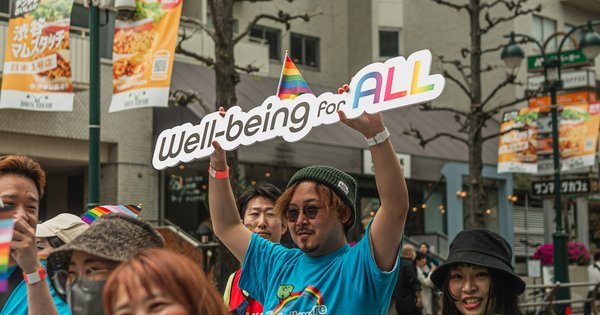
While the politicians stall, Kosovo’s LGBTQ+ community has kept showing up. In June 2026, Pristina held its tenth Pride parade under the slogan “Equality or Revolt,” with hundreds marching through the capital’s main streets under heavy security, joined by activists, human-rights organizations, and members of the diplomatic corps. A decade of Pride in a young, conservative, Muslim-majority country is a remarkable thing in itself.
But this year carried a pointed signal. Unlike previous editions, no politicians from either local or central government attended — a conspicuous absence in a country where officials had previously used Pride to burnish their pro-European credentials. Organizers and observers read it as a sign of how thoroughly LGBTQ+ issues have been sidelined amid the wider political paralysis. The community marched; the state stayed home.
The EU accession lever
For a country whose entire strategic future is oriented toward the European Union, the stalled Civil Code is more than a domestic embarrassment. Alignment with EU anti-discrimination standards is part of the accession conversation, and Brussels has consistently flagged the recognition of same-sex partnerships as an area where Balkan candidates need to move. Kosovo’s advocates have learned, as their counterparts in Albania, Serbia, and North Macedonia have, that the EU accession process can be one of the few levers strong enough to move an otherwise reluctant political establishment.
Whether that lever proves strong enough here remains the open question. Kosovo has the constitutional foundation, a favorable court signal, and a prime minister on record in support. What it has lacked is the political will to convert all of that into a law that actually reaches a couple’s kitchen table — the hospital visitation, the inheritance, the simple recognition that two people share a life. Until the Assembly finds that will, Kosovo’s progressive constitution will remain, on this question, a promise waiting to be kept.