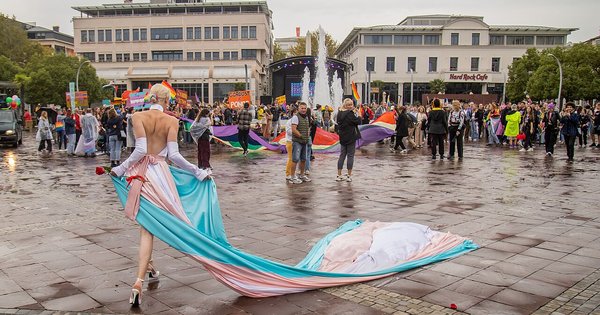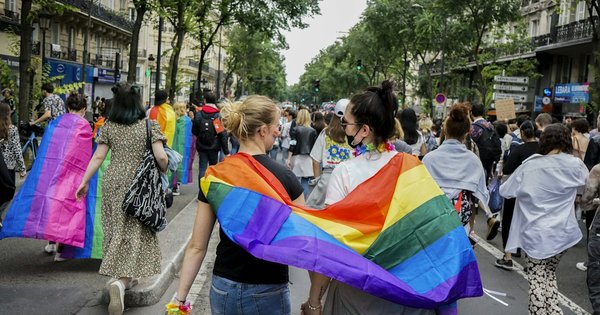
The Parada Równości — Warsaw’s Equality Parade — turned 25 this weekend, and the milestone lands at an unusually hopeful moment for Poland. For most of its history, the largest Pride march in Central and Eastern Europe has been an act of stubbornness: held through a ban in the early 2000s, marched against the open hostility of a governing party that built its brand on declaring “LGBT-free zones,” and protected by lines of police from counter-demonstrators. At 25, it is still defiant. But this year, for the first time in a long while, the wind is at its back.
From banned march to regional giant
The Equality Parade began in 2001 as a modest, contested event. In 2004 and 2005 the Warsaw authorities tried to ban it outright — a decision the European Court of Human Rights later found violated freedom of assembly, in the landmark Bączkowski v. Poland ruling. That judgment became a cornerstone of Pride jurisprudence across the continent, cited every time a city tries to shut a march down.
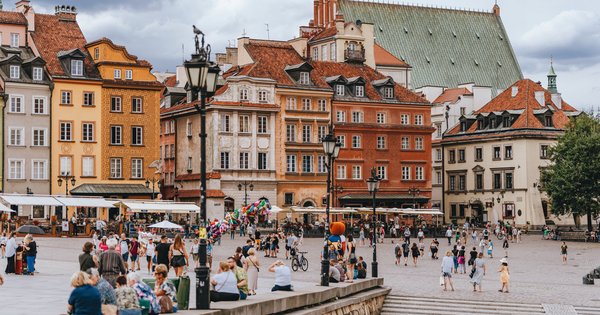
Two decades on, the parade is the biggest of its kind east of Berlin, drawing tens of thousands through the center of Warsaw from Świętokrzyska Street toward the grand boulevard of Krakowskie Przedmieście. The route alone tells a story: a queer march moving openly through the most monumental, establishment stretch of the Polish capital, past buildings that for years housed governments that wanted it gone.
Why the mood shifted
The change traces to Poland’s 2023 parliamentary election, which ended eight years of Law and Justice (PiS) government and brought in a coalition that had campaigned, in part, on rolling back the previous era’s anti-LGBTQ+ rhetoric. The infamous “LGBT-free zones” that dozens of municipalities adopted have been largely dismantled, under pressure from both Warsaw and Brussels, which had threatened to withhold EU funds.
But it would be a mistake to read 2026 as a finish line. Poland still has no marriage equality and no civil partnership — it remains one of the few EU states offering same-sex couples no legal recognition at all. A civil-partnership bill has moved through the governing coalition’s agenda only haltingly, snagged on internal disagreement and the reality that President-level resistance can stall or veto progress. Polish courts have begun, case by case, to recognize marriages contracted abroad, echoing the cross-border pressure now reshaping the law across the EU. The momentum is real; the legislation is still catching up.
That tension — a friendlier government but unfinished law — is exactly what a 25th-anniversary parade is for. The crowd’s job this year was to convert goodwill into statute, to remind a coalition that promised change that the people who delivered its votes are watching, flags up, on Krakowskie Przedmieście.
A milestone with regional weight
We pay close attention to Warsaw from our side of the continent because Poland sets a tone for the whole region. It is the largest country in Central Europe, an EU heavyweight, and for years it was the cautionary example — proof that a member state could drift toward Hungary’s model of state-sponsored hostility. The fact that the Equality Parade now marches with the political weather improving sends a signal east and south: backlash is not a one-way street, and elections can change the climate as quickly as they once darkened it.
There’s symbolism, too, in the timing. Warsaw marched the same Saturday as Bucharest, Sofia, and Athens — a single enormous European Pride day stretching from the Baltic to the Aegean. Each city carried a different relationship to its government, and Warsaw’s was perhaps the most dynamic of all: a country mid-pivot, its biggest march hitting a quarter-century just as the door to real legal change creaks open.
What 25 years actually buys you
Anniversaries invite tidy narratives, and the honest version is messier and better. Twenty-five years ago, a few hundred people marched in Warsaw under threat of a ban. This weekend, tens of thousands moved through the heart of the capital with the law trending, slowly, their way. The puberty of this movement was spent in court and under police protection. Its adulthood is being spent lobbying a sympathetic-but-cautious government to actually pass the partnership law it keeps promising.
That’s progress — not the Hollywood kind, but the kind that compounds. Poland isn’t done. But for the first time in a long time, the Parada Równości got to celebrate a birthday rather than simply survive another year. After 25 years of marching uphill, that shift in gradient is worth a party.
Sources: Equality Parade — Wikipedia, GayOut — Warsaw Equality Parade 2026.