We’ve lived in the Athens area three times now — a month in 2015 before we were doing this full-time, then 85 days in Cholargos in the summer and fall of 2022, and another 85 days back in central Athens over the winter of 2023 into 2024. Between those stays, we’ve had more time in Athens than in almost any other city we’ve called home. That’s long enough to stop treating it like a stopover between the Acropolis and the ferry to Santorini, and start treating it like the place we’d actually recommend for a slow season of remote work.
Where to actually stay
Cholargos, where we lived in 2022, is a residential northern suburb — quiet, well-connected by metro, and useful if you want a break from tourist-district noise while still being 20 minutes from the center. It’s not where you go for nightlife, but it’s a good, calm base for a work-focused stretch.
Our second Athens stay was more central, and if we were choosing again, central is what we’d pick for anyone prioritizing the LGBTQ+ scene specifically. Koukaki, just south of the Acropolis, has become the neighborhood most nomads and expats gravitate to — walkable, full of good coffee, close to everything, and increasingly full of short-term rental buildings built for exactly this kind of stay. Pangrati is quieter and more residential but still central. Both put you within easy reach of Gazi, the neighborhood that matters most if queer nightlife is part of why you’re here.
Gazi is the reason to be in Athens, not Cholargos
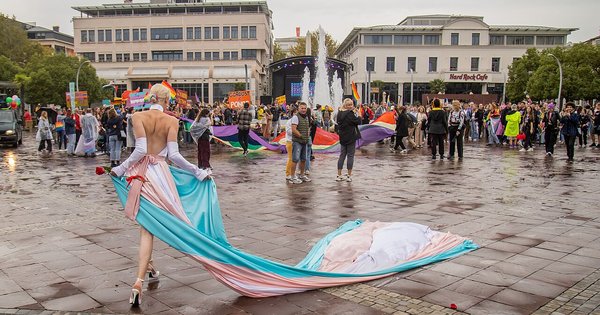
Gazi, built around a converted 19th-century gasworks that now anchors a cultural complex, is Athens’ gay district in the way that a handful of blocks in most European capitals function as one. It’s dense with bars, clubs and a crowd that skews younger and more mixed than you might expect from a city with Greece’s more conservative reputation outside the capital. Sundays at the bars around Gazi Square have their own rhythm — locals treat it as a weekly ritual rather than a special occasion, which tells you something about how normalized queer life is here, at least within city limits. Athens Pride happens in June and draws a genuinely large, mixed crowd through Syntagma Square and down toward the coast — nothing like the scale of Amsterdam or Madrid, but real, well-organized, and growing each year we’ve watched it.
What it’s actually like day to day
Greece legalized same-sex marriage and adoption in February 2024, while we were living there for our second stint — we remember the coverage landing while we were mid-lease in Athens, and the sense among Greek friends that it mattered less as a lightning-rod culture war fight than it might have a decade earlier. Athens itself has always felt easier than Greece’s national politics might suggest: holding hands on the street in the center draws no attention, and the expat and digital nomad community here is large enough that you’re never the only queer remote worker in the coworking space.
Outside Athens, especially in smaller towns and rural areas, attitudes are more traditional — a pattern we’ve seen repeated across most of the Balkans and southern Europe, where capital cities run years ahead of the rest of the country. We’d treat Athens as its own bubble rather than a proxy for how comfortable the whole country will feel.
The practical stuff
Greece is in the Schengen Area, which means the standard 90-days-in-any-180-days rule applies — we structured both of our stays to land right at that limit, and recommend budgeting a few days of buffer rather than cutting it exactly to 90, since flight schedules rarely cooperate on your last possible day. Both of our leases came through The Blue Ground, which we’d use again: professionally managed, no landlord surprises, and priced at a premium compared to direct rentals but worth it for the reduced friction of arranging a lease from outside the country.
Cost-wise, Athens sits in the middle of the European nomad spectrum — noticeably more expensive than where we’re usually based in Albania, cheaper than Barcelona or Vienna, and reasonable for what you get given the climate and quality of life. Internet was reliable in both apartments we rented, coworking options have multiplied since our first stay in 2015, and the metro makes a car unnecessary anywhere near the center.
If you’re weighing Athens against other Mediterranean bases, our honest read after three stays: it doesn’t announce itself the way Barcelona or Lisbon do, and it took us a full stay to actually appreciate it. But for a queer remote worker who wants real nightlife, a functioning legal framework, and a slower cost of living than Western Europe’s bigger nomad hubs, it’s held up every time we’ve gone back.