We landed in the Copenhagen area in the middle of last summer and stayed for about ten weeks — long enough to get past the “vacation” version of the city and into the version where you know which grocery store has the shorter line and which bus actually shows up on time. Copenhagen Pride Week is running right now, August 8 through 16, building to the main parade on the 15th, and it seemed like the right moment to write down what we learned.
Where we actually lived
We weren’t based in the postcard part of the city. Our apartment was in Glostrup, a quieter suburb a short train ride from the center, which is a very normal way to do a longer Copenhagen stay if you’re not trying to pay central-city rent. It meant a commute in on the S-train rather than a walk out the door, but Denmark’s transit system makes that trade easy — trains run often, on time, and the whole system is built for people who don’t own cars. If you’re weighing a long stay here, don’t rule out a suburb. You’ll spend the savings on better coffee.
The safety picture, honestly
Denmark consistently ranks among the more protective countries in Europe for LGBTQ+ people on paper — anti-discrimination law, marriage equality since 2012, a functioning gender recognition process. What surprised us more than the legal framework was how unremarkable queerness felt in daily life. Holding hands on the street, mentioning a husband to a shopkeeper, none of it produced a flicker of reaction in the time we were there. That’s not a guarantee for every visitor’s experience, and Copenhagen isn’t immune to isolated incidents the way no city is, but it’s a genuinely different baseline than most of the places we’ve lived in Southern and Eastern Europe.
Where the scene actually is
Copenhagen doesn’t have a single “gay district” the way some cities do — the queer scene is more distributed than concentrated. Vesterbro, the neighborhood just west of the central station, is where you’ll find the highest density of LGBTQ+-friendly bars and cafés, including the cluster of venues locals call the “Red Square” area near Copenhagen’s old meatpacking district. It’s a genuinely mixed, arts-driven neighborhood rather than a gayborhood in the Provincetown sense, and that fits Copenhagen’s broader vibe: less about a single strip of rainbow flags, more about a city where queerness doesn’t need its own separate zone to feel safe.
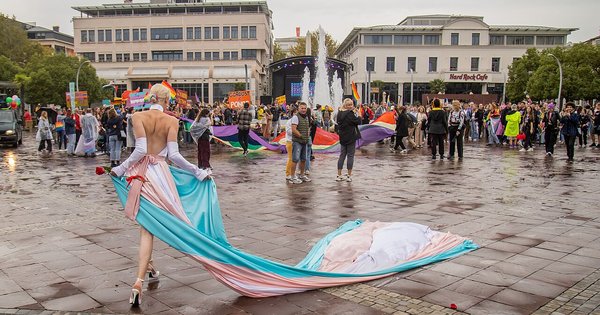
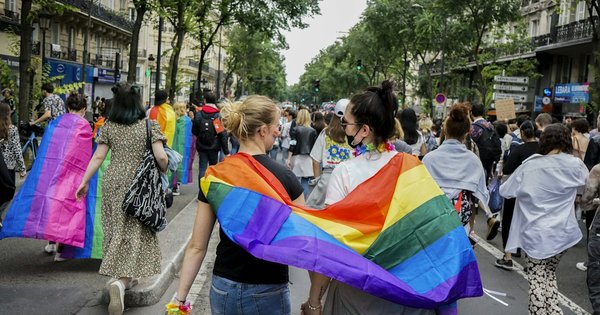
During Pride Week, the center of gravity shifts toward Copenhagen City Hall Square and the parade route, which this year runs roughly 3.3 kilometers from Frederiksberg to the main square, with the celebration spilling into Vesterbro and the Studiestræde area once the parade ends. If you’re timing a visit around Pride, the week itself — not just parade day — is where most of the community programming happens.
Practical notes for a longer stay
Housing in central Copenhagen is expensive by European standards, closer to what you’d pay in Amsterdam or Munich than what you’d pay in the Balkans or Southern Europe, which is a big part of why a suburb like Glostrup made sense for us on a nomad budget. Danish bureaucracy is efficient but assumes you’ll do things digitally and in Danish first, English second — get comfortable with MitID and NemKonto if you’re staying long enough to need either. English is close to universal in Copenhagen itself, more so than almost anywhere else we’ve lived, which makes day-to-day logistics easier even before you’ve learned any Danish.
Weather is the one honest downside. Copenhagen in winter is dark and wet in a way that catches people who’ve spent years in the Mediterranean or the Balkans off guard. We’d recommend timing a Copenhagen stay for spring through early autumn if you have the flexibility — which happens to be exactly when Pride Week lands.
Would we go back
Yes, and probably to the city center itself next time, budget allowing. Copenhagen isn’t the cheapest stop on a nomad rotation, and it isn’t the one with the most dramatic rights story unfolding in real time the way Albania or Serbia are right now. What it offers instead is something we don’t get everywhere: a place where being visibly queer simply isn’t a daily calculation. After enough time in places where it is, that’s worth more than we expected.