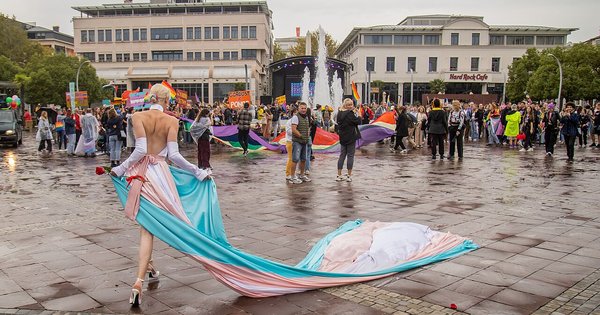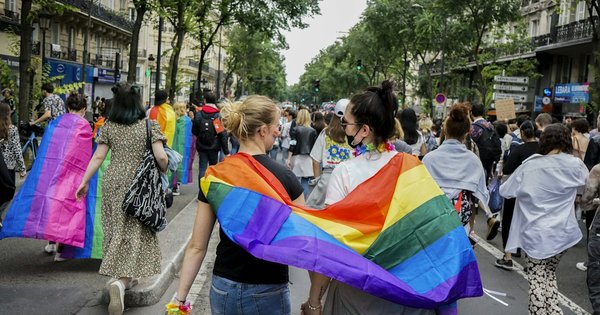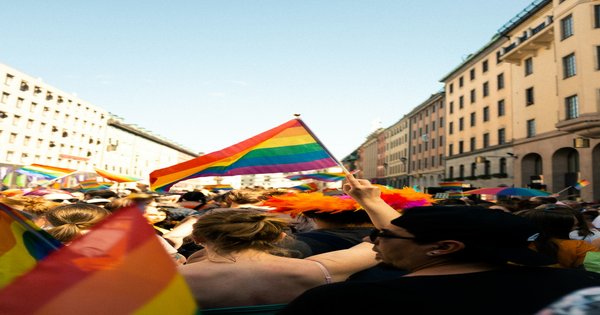
Tens of thousands of people marched through Amsterdam on Saturday afternoon in the WorldPride March, closing out two weeks that turned the Dutch capital into the center of the global LGBTQ+ calendar. The procession left Martin Luther King Park at 4:30 p.m., wound through President Kennedylaan, Rijnstraat, Van Woustraat, Ceintuurbaan, Roelof Hartstraat and Van Baerlestraat, and arrived at Museumplein a little after 6:15 p.m. for a free closing concert that ran into the night, according to reporting by Dutch news agency ANP and NL Times.
Organizers described the march as a demonstration of solidarity, resistance and visibility rather than simply a party. That framing showed in what people carried: alongside the expected wall of rainbow flags, some marchers held flags from Afghanistan and Pakistan, two of the roughly 60-plus countries worldwide where same-sex relationships remain criminalized. Signs along the route read “Everyone has the right to be who they are” and, more bluntly, “Kiss whoever the fuck you want.” Residents leaned out of windows along the canal-adjacent streets to cheer as the crowd passed, singing and waving small flags in what witnesses described as a genuinely festive atmosphere. A few marchers also carried Palestinian flags and chanted slogans, and police officers were positioned at intervals along the route throughout.
Two weeks that carried more weight than usual
WorldPride Amsterdam opened July 25 with a Pride Walk from Dam Square to Vondelpark that drew roughly 10,000 people on its own — a preview of the scale organizers expected across the full two weeks, with city officials projecting as many as a million visitors over the run of the event. The timing wasn’t an accident: 2026 marks the 25th anniversary of the Netherlands becoming the first country in the world to legalize same-sex marriage, and Dutch Prime Minister Rob Jetten took part in the Canal Parade as the country’s first openly gay head of government to march in it.
That milestone sat alongside a heavier security posture than WorldPride organizers are used to. The deadly attack at Berlin’s Christopher Street Day Pride in late July, which investigators linked to a radicalized attacker with ties to the Islamic State, left much of Europe’s Pride circuit on edge for the rest of the summer. A survey cited by NL Times found 65 percent of the Netherlands’ LGBTQIA+ community reported safety concerns heading into Amsterdam’s events, and thousands gathered at the city’s Homomonument in a solidarity vigil for Berlin before WorldPride even began. That the closing march went forward Saturday without incident, under visible but unobtrusive police presence, will register as its own quiet relief for organizers and attendees alike.
The human rights conference that ran alongside the parties — now a standard fixture of WorldPride under InterPride’s requirements — drew activists from across Central and Eastern Europe, including delegations from Balkan LGBTQ+ organizations for whom this kind of visibility simply isn’t available at home. For activists from Serbia, Kosovo, Bosnia and Albania, events like this function less as celebration and more as a rare, concentrated chance to compare notes with counterparts working in far more hostile legal and political environments.
What comes next
WorldPride doesn’t return to Europe soon. The bidding race for the 2030 edition is already underway, with Bangkok and Barcelona among the cities positioning to host. For Amsterdam, Saturday’s march and concert marked the handoff point: the city stops being the epicenter of the global WorldPride calendar and goes back to being, simply, one of Europe’s most consistently LGBTQ+-friendly capitals — a status built over decades, not two loud weeks in August.
We’ve spent time in the Netherlands ourselves, in Amsterdam and in Wormer just outside the city, and what struck us most wasn’t the scale of an event like this one — it’s how unremarkable queerness is there on an ordinary Tuesday. That’s the harder thing to export, and it’s the real measure of whether Saturday’s flags and songs travel any further than the route they marched.
Sources: NL Times; NL Times, WorldPride opening; NL Times, Berlin attack solidarity.