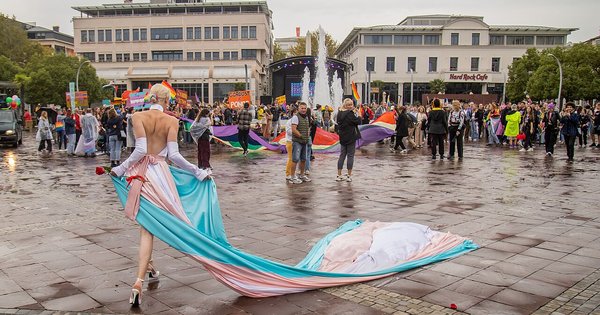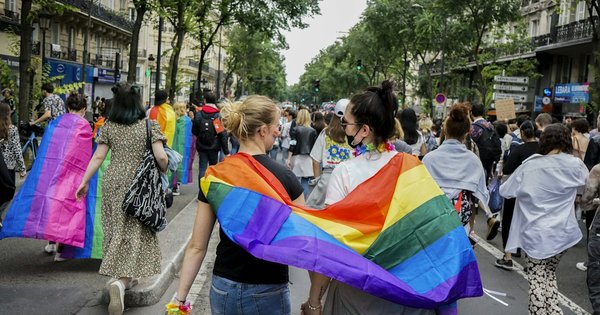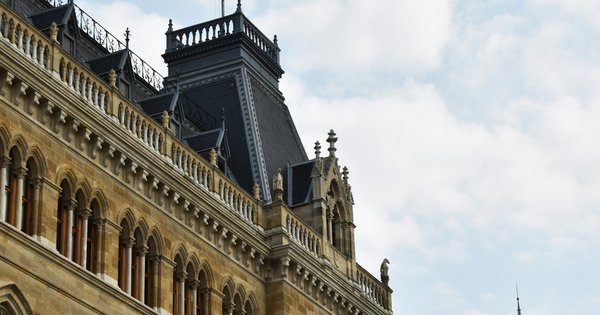
Vienna Pride opened today. The thirty-year edition of Austria’s largest demonstration begins, by tradition, with a conference at the Rathaus — Vienna’s neo-Gothic City Hall, the seat of the social-democratic municipal government that has, in one form or another, hosted the Pride Conference since the program first added the policy day a decade ago. Sixteen days of programming, more than a hundred officially listed events, and one parade now stretch out ahead of June 13, when the 30th Regenbogenparade — the Rainbow Parade — will move along the Ringstrasse.
The 2026 slogan is VISIBLE seit 1996 — Visible since 1996. The number on every poster is 30. It is meant to read in two registers at once: a thirty-year anniversary, and a statement in the present tense.
What today actually looked like
The Pride Conference is the bookend of Vienna Pride that most international coverage misses. It runs in German and English, it is free with registration, and it has, for the last several years, been one of the few places where the people who actually implement European LGBTQ+ policy — civil servants, MPs, EU rapporteurs, hate-crime data leads, queer NGOs — get the same room for a working day. The 2026 agenda, published by HOSI Wien, structured the day around three threads: hate-crime reporting and police-community trust, trans healthcare access inside Austria’s federal system, and the rollout of the EU’s LGBTIQ+ Equality Strategy 2026–2030.
That last item is the one with the most teeth. The new EU strategy, adopted late last year, ties member-state implementation of equality directives to recurring Commission monitoring with sharper public deadlines than the 2020–2025 cycle. Today’s panel on it featured speakers from ILGA-Europe and the Commission’s equality team alongside Austria’s Federal Ministry for Women, Family, Integration and Media — a ministry whose portfolio changed under the current coalition government and which now sits in a sometimes-awkward relationship to LGBTQ+ work that used to live more comfortably elsewhere.
The hate-crime panel was the one organizers had flagged as the most likely to make headlines. Austria’s interior ministry hate-crime data has, over the last three years, recorded a steady increase in reported anti-LGBTQ+ incidents, with sharper jumps in 2025 around CSD events in Vienna, Linz, and Graz. The framing inside the conference was not the abstract one — is hate rising — but the operational one: what does Vienna’s police-community liaison structure actually do when a march is targeted, and how does that map onto reporting and follow-through.
Why the anniversary framing lands the way it does
The first Vienna Rainbow Parade marched on June 29, 1996. The number that gets repeated — 25,000 participants — is real but easy to flatten. In 1996 the Austrian criminal code still carried paragraph 209, the provision that set a higher age of consent for sex between men than for opposite-sex relations; it was not struck down until 2002. Marching, in 1996, was an act of public legal defiance as well as a celebration. Saying visible since 1996 in 2026 is therefore not a victory lap, and the organizers have been pointed about this. It is a present-tense claim — we are visible, and we have been, and that is not over — directed at a political environment in which visibility is, again, contested.
The contested environment is the part you cannot leave out. Austria’s far-right Freedom Party — the FPÖ — has been in the federal coalition government since January 2025, and its rhetoric on what it calls “gender ideology” has tracked the wider European far-right pattern: schools, broadcasting, public-sector hiring. The mayor of Vienna, Michael Ludwig, is a Social Democrat; the city government is not the federal government and has used Pride week, in recent years, to draw exactly that distinction in public. Today’s opening address from Vienna’s Cultural Affairs office — historically a routine moment — was unusually pointed about what the city does and does not control.
The shape of the next sixteen days
The 2026 calendar leans heavier on community and historical programming than past editions, which the organizers describe as a deliberate response to the anniversary.
The Community Fest and Pride Run Vienna on the Prater Hauptallee tomorrow, Friday May 30, turn the Prater into the city’s main Pride hub for the day. The Pride Run draws around two thousand participants; the community fest hosts roughly seventy LGBTQ+ NGOs, queer artists, and food vendors. It is, for our money, the gentlest day of the whole program — daylight, a park, no parade logistics, and the easiest entry point if you are new to Vienna or new to Pride.
The mid-week pieces — Drag Beach on June 4, the Pride Happening at the Badeschiff on June 6, the Pride Beach Day on June 7 — anchor the city’s queer summer in a way Vienna does particularly well, given the Danube and the Donaukanal both run through the city center.
Four exhibitions run across the program — at the Wien Museum, at the QWIEN queer archives, at the Volkstheater, and at the Sigmund Freud Museum. QWIEN’s is the one to plan for if you have a half-day; the archive holds the most comprehensive collection of pre-1971 Austrian queer ephemera anywhere in the country, and the curated material on display this year focuses on the long, undocumented stretches that came before the 1996 march.
The Pride Village on Rathausplatz opens for the final weekend and stays open through the parade itself on June 13. The 30th Regenbogenparade runs counter-clockwise around the Ringstrasse — roughly four and a half kilometers — and is expected to draw more than 300,000 people. That figure, which the city government has stood behind in pre-event briefings, would make it one of the largest in the parade’s history.
What we are watching
Three things, across the sixteen days, are worth watching from the outside.
The first is whether the federal government — specifically the FPÖ-held ministries — issue any statement that breaks the unwritten Austrian convention of not commenting on Pride week one way or the other. Past coalitions have stayed quiet. This one is harder to predict.
The second is the parade itself. The Ringstrasse route is wide, well-policed, and one of the safer European Pride routes by a comfortable margin; the question is how Vienna’s police-community liaison structure handles the smaller margins around it — the side streets, the public transit hubs, the late-night dispersal. The conference today spent real time on this, which is, in our reading, the right place to put it.
The third is who shows up to march under the VISIBLE since 1996 banner. The anniversary framing was chosen, in part, to ask exactly that question. The answer arrives on June 13.
The official hub is the Vienna Pride website, which carries the day-by-day program. HOSI Wien’s news page is the place to follow the political context as the sixteen days unfold.