It’s been a month since Türkiye’s police launched the operation the state calls Ailem Güvende, “My Family Is Safe.” On Tuesday, a group of independent UN human rights experts put their verdict on the record: end it.
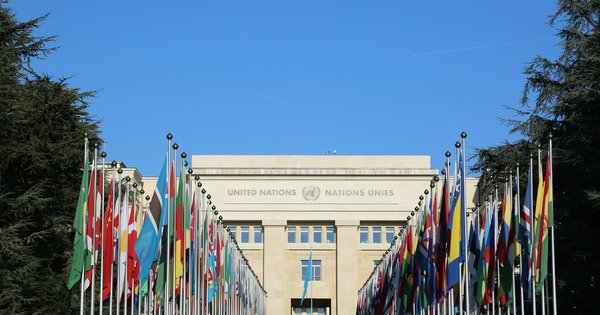
In a statement issued in Geneva on October 13, the experts said they were alarmed by a crackdown on LGBTI rights defenders and organisations that uses criminal, administrative and financial measures to restrict freedom of expression and association. They called for “an immediate end to the so-called ‘My Family Is Safe’ operation,” Turkish Minute reported.
The short version
- Who spoke: UN special procedures, the independent experts appointed by the Human Rights Council. Signatories include the Special Rapporteur on human rights defenders, the Independent Expert on sexual orientation and gender identity, the rapporteurs on free expression, on peaceful assembly and association, and on the independence of judges and lawyers, plus the Working Group on Arbitrary Detention. They don’t speak for the UN as a whole.
- What they found: At least 44 human rights defenders reportedly detained or arrested since September 12. At least 117 people detained at the start, and a reported 124 more during protests against the operation.
- What they want: The operation ended, people held for their rights work released, seized equipment returned, and accounts unblocked where blocking fails human rights standards.
- What’s next: The experts say they are in contact with the government of Türkiye.
What a month of “My Family Is Safe” looks like
The raids began on September 12 in Izmir, Aydın, Ankara, Mersin and Istanbul, hitting homes, offices and venues. According to Amnesty International’s latest urgent action, dated October 10:
- At least 83 people have been remanded in pre-trial detention, at least 23 of them rights defenders or people connected to LGBTI associations.
- Among the at least 117 detained were 27 other LGBTI people, most of them trans women.
- Four board and oversight committee members of KAOS GL, one of Türkiye’s leading LGBTI rights organisations (Janset Kalan, Nedime Erdoğan, Umut Derin and Selin Berghan), and journalist Tuğba Tekerek are being held at Ankara’s Sincan prison on charges of “obscenity” and violating the Law on Associations.
- On September 14, the Justice Ministry sent a circular to 175 prosecutors in all 81 provinces telling them to prioritise these investigations.
- At least 419 social media accounts have been blocked, and on September 30 a court blocked the independent news site T24 over what it called “LGBTI propaganda.” We covered that here.
Amnesty counted 125 people detained at protests against the crackdown in Ankara, Istanbul and Izmir. All were later released. (The UN experts’ figure for protest detentions is 124; we use each source’s own number.)
Justice Minister Akın Gürlek has said the operation is part of President Erdoğan’s “Decade of the Family,” aimed at “protecting our children, the institution of the family and social order,” according to Turkish Minute. The experts say his ministry has announced judicial measures against more than 160 people and 20 associations and businesses.
The details that stand out
Three parts of the UN statement go beyond what’s been widely reported.
Donors are being named. The experts say financial investigations have reportedly made donors’ identities public. They point out that receiving international funding is lawful under Turkish law. That matters: going after funders is a way to starve groups without ever having to win a case against them.
The charges are about “morality.” Investigations reportedly cite “obscenity,” “morality” and prostitution offences, and officials have described associations as promoting immorality. The experts’ position is clear: morality-based arguments can’t justify discriminatory restrictions on LGBTI people or the people defending their rights. Worth remembering: same-sex relationships are legal in Türkiye.
Conditions inside. The experts cite reports of discrimination against LGBTI detainees based on HIV status and gender identity, solitary confinement, humiliating searches, and limited access to healthcare and due process. They’re asking the government to guarantee healthcare, medication, legal counsel and protection from ill-treatment for everyone held.
What the experts are asking Türkiye to do
- End the “My Family Is Safe” operation.
- Release everyone detained solely for their human rights work.
- Until then, guarantee detainees healthcare, medication, lawyers and judicial safeguards.
- Stop criminal and financial investigations of LGBTI people that lack a clear legal basis.
- Return seized equipment that isn’t needed for a lawful investigation, and work with platforms to lift blocks that don’t meet human rights standards.
- Protect confidential information, and let LGBTI and HIV organisations work without intimidation.
That last point is easy to skim past, and it shouldn’t be. HIV groups hold some of the most sensitive data there is. When their devices are seized, the risk spreads to people who were never part of any investigation.
How we got here
If you’re catching up, the sequence so far:
- September 12–14: Coordinated raids on LGBTI groups, HIV organisations, bars and homes. Our first report.
- September 15: Pre-trial detentions begin, and police detain people waiting outside Istanbul’s Çağlayan courthouse. Our report.
- September 21: UN human rights chief Volker Türk warns of a “comprehensive onslaught” against LGBTIQ+ people worldwide. More here.
- September 30: T24 blocked.
- October 13: The UN experts’ statement.
Why this matters beyond Türkiye
A statement from UN experts doesn’t open a cell door. What it does is set an official, documented standard that governments, courts and diplomats can be held to. Defence lawyers can cite it. Other governments can raise it. And it puts on record, in Geneva, that “protecting the family” is not a legal reason to jail people for running an LGBTI association.
It also shows how these crackdowns travel. The tools here aren’t unique: a vague morality offence, a “propaganda” label, pressure on funders, mass account blocking. Each one has turned up somewhere else first.
The part to hold onto
Turkish LGBTI groups have kept working through Pride bans since 2015, and they’re still documenting every detention, every court date, every blocked account. People came out to protest in three cities knowing they could be detained. Organisations across Europe and beyond are writing letters, and the UN’s own experts have now taken their side in writing.
We’ll keep following the KAOS GL case, the detainees in Sincan and the wider “My Family Is Safe” investigations.