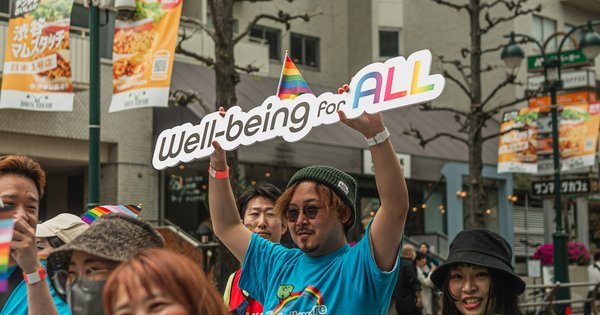
The people who gathered outside the Çağlayan courthouse in Istanbul on Tuesday were doing something ordinary. When someone you know is taken in a dawn raid and driven to a courthouse for arraignment, you go and wait outside the courthouse. You bring a lawyer’s number, a phone charger and a bottle of water, and you stand there until you know what happened to them.
Police surrounded the crowd, warned that the gathering was unauthorised, and began loading people onto buses. Reuters reported that at least 126 people were detained across protests in Istanbul and Ankara on Tuesday, with several outlets putting the Istanbul figure alone at more than 150. The Human Rights Foundation of Turkey’s documentation centre counted at least 106 detained outside Çağlayan specifically. The same day, courts sent at least 31 people to jail pending trial in the operation the state has named Ailem Güvende — “My Family Is Safe.”
What the courts decided
The arraignments are the part of this that will outlast the news cycle. Detention after a raid is temporary and reversible; a judicial order for pre-trial detention is not. It means a person stays in prison while a file is built, and in Turkish criminal practice that period can run to months before anything resembling a trial begins.
Among the 31 were members of the board of Kaos GL, the Ankara organisation founded in 1994 that is the oldest continuously operating LGBTQ+ group in the country. Reuters reported that eight Kaos GL members were jailed pending trial; the Media and Law Studies Association, which monitors press freedom cases, put the number of board members arrested at seven. The discrepancy is the kind of thing that happens when arraignments run simultaneously in fifteen provinces and lawyers are still trying to establish who is where. Prosecutors cited the detainees’ roles in the association and their social media activity as the basis for charges of disseminating obscene content.
That is worth stating plainly, because it is the legal architecture of the whole operation. Turkish association law requires registered organisations to have boards of directors and auditors. Those are not activist ranks; they are statutory positions someone has to fill for an NGO to exist at all. By charging the people who hold them, prosecutors have made the act of legally constituting an organisation into the evidence of the offence.
Journalists are inside the same net. Tuğba Tekerek, a freelance reporter, was detained on the accusation that she administered the Kaos GL Instagram account — a claim she has denied, saying her only connection to the account was that a report she filed from Georgia in 2024 was published on the Kaos GL news site and shared under her byline.
The joint statement, and what it asks for
On Monday, more than sixty organisations across Europe, Central Asia and the Middle East signed a joint statement coordinated by ILGA-Europe. The signatories include Front Line Defenders, TGEU, ILGA World, EuroMed Rights, EL*C, ARTICLE 19 Europe, the World Organisation Against Torture and the International Federation for Human Rights, alongside national groups from Albania to Kyrgyzstan and from Tunisia to Ireland.
Its central finding is about design rather than scale: “The scale, timing and selection of targets indicate a coordinated attack on organised LGBTI+ civil society in Türkiye.” The statement notes that the raids came only hours after a 12 September court order restricting the websites and social media accounts of LGBTI+ organisations, and that the operation went specifically after governing and oversight bodies — Kaos GL and Pembe Hayat in Ankara, Muamma and 7 Renk in Mersin, and SPoD, HEVİ, Lambdaistanbul, LİSTAG, Pozitif Yaşam and Pozitif-iz in Istanbul.
The demands are concrete. Release those detained for human rights work. Guarantee confidential access to lawyers. Give individualised legal grounds for every detention, search and seizure. And — a point the signatories return to twice — protect the seized digital equipment.
That last one is the quietest item on the list and possibly the most consequential. LGBTI+ organisations in Turkey hold case files on people living with HIV, survivors of violence, asylum seekers, lawyers and donors. As the statement puts it, that information “must not be used to identify, profile or target additional people.” Every hard drive removed from an association office this weekend is a list of names belonging to people who never chose to be part of a court case.
The statement also pushes back on the financial-crimes angle. Justice Minister Akın Gürlek has announced that MASAK, the Financial Crimes Investigation Board, will scrutinise foreign funding received by the associations. The signatories’ response: “International funding and cooperation are essential to independent civil society and are not evidence of criminal activity.”
Why “unauthorised” does so much work
Turkish police described Tuesday’s gathering as unauthorised, and that framing is the mechanism by which protest has been steadily made unavailable in Turkey rather than formally banned. Istanbul Pride has been prohibited every year since 2015 on the same basis. What makes an assembly authorised or not is a governor’s decision, and governors are appointed.
The result is a country where the legal right to assemble exists on paper while the practical route to exercising it has been closed at the administrative level. Once a gathering is unauthorised, dispersing it becomes a matter of public order rather than a restriction on expression, and the people carried away on buses are processed as participants in an illegal act rather than as protesters.
Among those detained in Ankara on Tuesday were five trans women, according to reporting by LGBTQ Nation. Trans women in Turkey are already the group most exposed to police contact, most likely to be street-profiled and least likely to have their complaints of violence pursued. A mass detention operation lands on them hardest and first.
What can actually be done from outside
The joint statement’s asks of European institutions are unusually specific, which suggests the people who drafted it have watched previous statements evaporate. It asks the EU, Council of Europe and UN bodies to raise the cases directly with Ankara rather than in general terms. It asks European governments to send diplomatic observers to hearings — a practice that measurably changes how Turkish courtrooms behave. And it asks European public funders not to quietly withdraw from Turkish partners now that MASAK is looking at their books, which is exactly what a funding investigation is designed to produce.
The last request is directed at the rest of us, and it is careful about what solidarity should look like: amplify what Turkish organisations themselves are saying, follow their guidance on what is safe to publicise, and press governments rather than simply posting. Activists under surveillance can be endangered by well-meant attention that names the wrong person.
What happens next runs on court calendars. Lawyers will file objections to the detention orders. More arraignments will follow in the remaining provinces. Organisations whose board members are in prison and whose servers are in evidence lockers will have to decide whether they can keep running helplines and HIV services at all.
And people will keep turning up outside courthouses, because that is what you do when someone you know is inside. On Tuesday the police were waiting for them. The reasonable assumption is that they will be waiting again — and that people will come anyway.