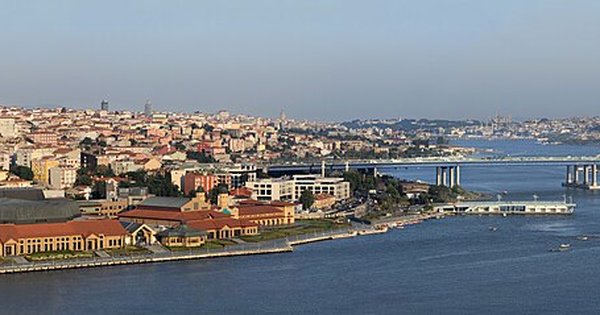
At around 1am on Sunday morning, Turkish police went through the doors of LGBTQ+ bars, nightclubs, association offices and private homes in five cities at once. The raids hit Istanbul, Ankara, İzmir, Aydın and Mersin simultaneously — the timing chosen, as it usually is, so that venues would be full and people would be asleep.
By the afternoon Justice Minister Akın Gürlek had posted a statement on X confirming that the operation was a coordinated one and giving it a name: Ailem Güvende, “My Family Is Safe.” He said investigations now span 15 provinces and involve 162 suspects, nine associations and 13 businesses. The Istanbul chief prosecutor’s office said 26 people had been detained there, and that officers seized drugs, digital equipment, smuggled alcohol and a firearm. Reuters reported the operation as the largest single action against LGBTQ+ organising the country has seen.
What the state says it is investigating
The charges Gürlek described are a familiar bundle: facilitating prostitution or providing premises for it, producing and distributing obscene content, and promoting “LGBT activities” through social media channels accessible to children. He said investigators had used undercover officers, physical and technical surveillance, witness statements, digital examinations and video recordings to build the files.
He also said the Financial Crimes Investigation Board, MASAK, is reviewing money transfers involving associations that the government says promote “LGBT issues and immorality,” and that some of those associations had received funding from foreign public institutions — grounds, in the state’s account, for examining where the money came from and what it paid for.
The framing matters. By folding narcotics, prostitution and obscenity charges into the same operation as the raids on registered human rights associations, prosecutors produce a case file in which an NGO office and a nightclub back room are part of one alleged network. The Human Rights Association, Turkey’s oldest rights organisation, said exactly that in its response: “To include unrelated charges such as ‘forming a criminal organization,’ ‘drugs,’ ‘prostitution’ and ‘obscenity’ serves not to reveal the truth but to incriminate the entire community.”
Its statement went further. “This is not a judicial investigation; it is a political operation aimed at forcing society into a monolithic family model and purging LGBTI+ and independent civil society under the guise of protecting the family and children.”
The organisations targeted
The list of groups caught up in the raids reads like an inventory of Turkey’s entire LGBTQ+ and HIV sector. Kaos GL, founded in Ankara in 1994 and the country’s longest-running LGBTQ+ organisation, is at the centre of it — the Ankara chief public prosecutor’s office opened a separate investigation after a complaint alleging its website and social media accounts contained material accessible to children. Kaos GL reported that at least 50 activists had been detained in total, including ten whose homes were raided.
Also named were the Families and Friends of LGBTIs in Turkey (LİSTAG), the Social Policy, Gender Identity and Sexual Orientation Studies Association (SPoD), Lambdaistanbul, HEVİ LGBTİ+, and the HIV organisations Pozitif Yaşam and Pozitif İz.
Several of those groups issued a short joint statement: “Being LGBT, forming an association and defending our rights are not crimes.” It carried no signatories, which tells you something about the conditions people are operating under tonight.
How Turkey got here
None of this arrives out of nowhere. Homosexuality has not been criminalised in Turkey since 1858, under the Ottoman Empire — a fact the government’s own supporters cite when foreign critics raise the subject, and one that has become steadily less meaningful as the state has built other tools.
Istanbul Pride has been banned every year since 2015. In 2022, police arrested close to 400 people who gathered in Taksim Square for a banned march. This June, officers detained at least 50 people during a Pride event in the city. In April, eleven members of the group Young LGBTI+ went on trial over “obscenity” and “violating the protection of the family” for posting photographs of same-sex couples kissing.
The policy frame tying all of this together is President Recep Tayyip Erdoğan’s demographic agenda. He declared 2025 the “Year of the Family” and has since signed a ten-year executive order establishing a “Decade of Family and Population,” which sets up state monitoring of birth patterns and prioritises policies meant to make marrying and raising children easier. Erdoğan has repeatedly blamed LGBTQ+ people for Turkey’s falling birth rate. Demographers point instead to inflation, housing costs, the absence of affordable childcare, and rising education and employment among women.
Gürlek’s own justification on Sunday placed the raids squarely inside that framework — the operation, he wrote, was carried out “as per the duty to protect families and children given to the state by the constitution.”
What happens next
The immediate questions are procedural and urgent. Of the 162 people named, how many will be formally charged, how many held in pre-trial detention, and how quickly lawyers can reach those detained overnight. Turkish criminal proceedings of this kind tend to move slowly once the initial sweep is over, which means people can spend a long time in an unresolved legal position while their organisations are effectively frozen.
The longer question is what remains of the sector afterwards. Kaos GL, SPoD, Lambdaistanbul and LİSTAG are not fringe collectives; they are the organisations that run helplines, document hate crimes, support parents of queer kids and provide HIV services in a country of 85 million people. Pozitif Yaşam and Pozitif İz in particular do work that has nothing to do with the charges being described and everything to do with keeping people alive.
For now, the people who run those organisations are doing what activists in this position always do first: counting who is missing, finding lawyers, and telling anyone who will listen what happened at one in the morning.