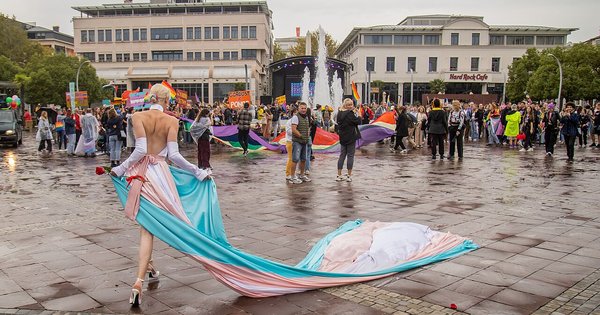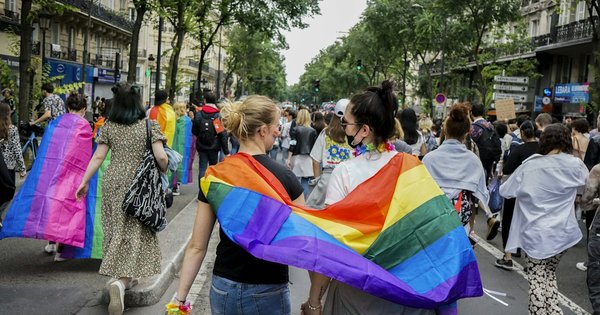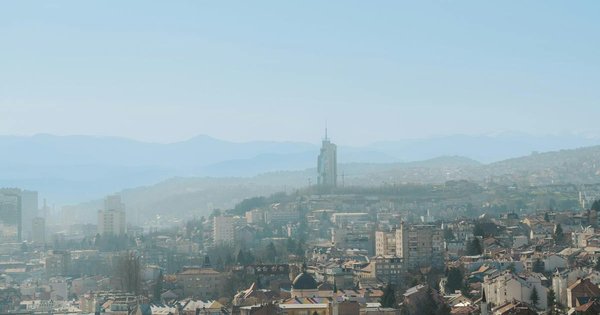
While Tirana marched this weekend, the Balkans’ Pride calendar was already pointing at its next stop. Bosnia and Herzegovina’s Pride March returns to the streets of Sarajevo on Saturday, June 20, 2026, with a full Pride Week running June 13 to 21 around it. We have not yet made it to Sarajevo for Pride ourselves, but it is a march we follow closely, and this year’s edition arrives with a particular weight.
A young march with a short, hard history
It is easy to forget how recent the BiH Pride March is. The first one was held in 2019 — the last capital in the former Yugoslavia to hold a Pride march, and it did so under extraordinary security after years in which even the suggestion of a public LGBTQ+ event in Sarajevo drew threats and violence. The 2008 Queer Sarajevo Festival, more than a decade earlier, had been attacked outright. So when several hundred people walked in 2019 behind police lines and made it through, that was not a footnote. That was the headline.
Every march since has built on that. The organizers — the volunteer-run group behind the BiH Povorka Ponosa — have kept it going through a pandemic, through a political environment in Bosnia that is, to put it gently, not designed to make anything easy. Bosnia’s constitutional structure splits the country into entities and cantons, anti-discrimination enforcement is uneven, and there is no recognition of same-sex partnerships at the state level. Against that backdrop, a Pride March that simply happens, on schedule, every year is an achievement that countries with far more legal protection should not take for granted.
What Pride Week 2026 looks like
This year’s Pride Week is built to be more than the march. Across June 13 to 21, organizers have planned concerts, workshops, film screenings, drag performances, and guided walks through Sarajevo’s queer history — the kind of programming that turns a single protected afternoon into a week in which LGBTQ+ life in the city is simply, visibly present.
That guided-history element is worth singling out. Sarajevo is a city where queer life has always existed and has very rarely been allowed to be visible, and walking tours that name that history in public are their own quiet form of activism. They say, in effect: we were always here, in these streets, and here is where. For visitors, Pride Week is also the most welcoming on-ramp into a city that rewards the people who take it seriously — and for anyone planning a trip, our standing LGBTQ+ travel guide to Sarajevo covers the practical ground.
A message coordinated with Tirana
What stands out most about 2026 is that Sarajevo and Tirana are not treating their Prides as separate events this year. Organizers of both marches have coordinated their messaging deliberately, sending out a shared call for solidarity and resilience in the face of a rising far-right and a louder anti-LGBTQ+ politics across the region. That is a meaningful signal. The anti-gender movement in the Western Balkans has grown more organized and better funded, and it does not respect borders — so the response is increasingly cross-border too. Activists from Tirana are expected in Sarajevo next month, continuing a years-long pattern of Balkan Pride movements physically showing up for one another.
It is a reminder that the regional story is not a collection of isolated national struggles. It is one movement with several addresses.
Security, and the honest picture
We are not going to pretend the BiH Pride March is a relaxed street party. It is held under heavy police protection for a reason, and the organizers’ own communications are consistently clear-eyed about the threat environment. Counter-mobilization by religious-conservative and far-right groups is a recurring feature, and the march route and timing are managed accordingly.
But the honest picture includes the other half too. The march has been held, successfully and without major violence, every year since 2019. The crowd has grown. Younger Bosnians are showing up. International missions and parts of the EU-accession apparatus pay attention to it. And the existence of a week-long program around the march — film, music, drag, history — is itself evidence that the event has matured past pure crisis mode into something closer to a cultural fixture.
If you are going
The march is June 20; Pride Week runs June 13 to 21. As with every Pride in this part of Europe, the right move for visitors is to follow the organizers’ channels for the confirmed gathering point, timing and security guidance rather than relying on secondhand information, and to treat the march as the organizers’ space first. Sarajevo in June is a genuinely beautiful place to be. A city that has fought this hard to hold its Pride is a city worth standing with while it does.