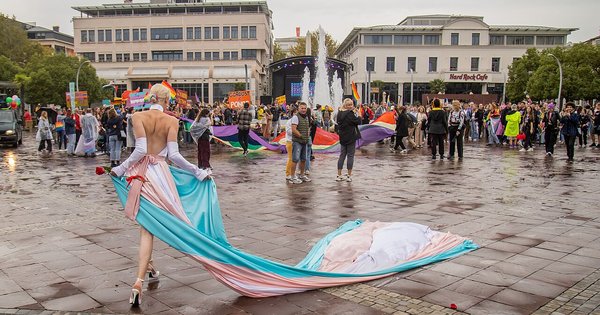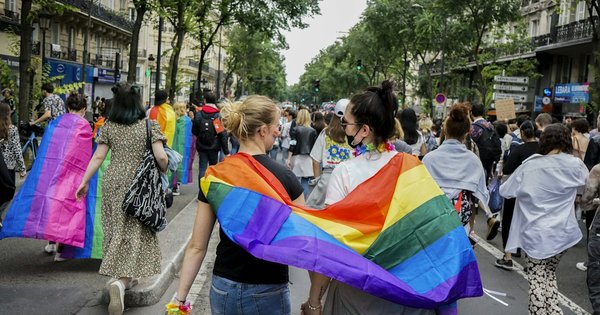
Riga Pride 2026 filled the centre of the Latvian capital today under the slogan “Gājiens par brīvību” — “March for Freedom.” Starting at 1:00 p.m. from the Esplanāde park, the parade wound along Krišjāņa Valdemāra Street, Lāčplēša Street and Brīvības Boulevard before looping back to the Esplanāde, where a concert and the closing program carried the day into the evening. Traffic was rerouted across the city centre, which is its own small marker of how routine this has become in a country where, not so long ago, a Pride march in the capital was anything but routine.
The parade was the centrepiece of a full Riga Pride week — dozens of events spanning discussions, lectures, film screenings, creative workshops and concerts, all built around human rights, equality and diversity. That breadth matters. A Pride that is only a single afternoon march is easy to dismiss as a one-day spectacle; a Pride that fills a week with film and conversation is building something more durable.
Why the Baltics are worth watching
It is easy to file the Baltic states under “Eastern Europe” and assume the picture is bleak. The reality is more interesting, and Latvia is a good example of why.
For years, Riga was a flashpoint. Early Baltic Pride events in the 2000s drew aggressive counter-protests, eggs and worse, and required heavy police protection. The contrast with today’s relaxed, city-sanctioned march through central boulevards is a reminder that social change in this part of Europe is real, even when it is slow and uneven.
Latvia has also moved on the legal front. The country introduced a civil union framework that came into force at the start of 2024, giving same-sex couples a route to legal recognition for the first time — a genuine milestone in a region where many neighbours still offer nothing at all. It is not marriage, and the rights attached are narrower than what couples have in Spain or the Netherlands, but for Latvian families it was a line finally crossed after years of parliamentary fights and a presidential push.
The regional contrast
We spend most of our year moving across Europe and the Balkans, and one of the things that becomes obvious over time is how differently Pride season lands depending on where you are standing. In Barcelona or Amsterdam, Pride is a festival with corporate floats. In Kyiv, it is an act of wartime defiance. In much of the Western Balkans, it still happens behind lines of riot police.
Riga sits in an encouraging middle of that spectrum and, importantly, it is moving in the right direction. Estonia, just to the north, became the first post-Soviet state to legalize same-sex marriage, with the law taking effect in January 2024. Latvia’s civil unions followed. Lithuania remains the most cautious of the three, but even there the conversation has shifted. The Baltic trajectory, taken together, is one of the quieter good-news stories in European LGBTQ+ rights — precisely because so few people expected it.
The headwinds are real
None of this means the work is done. Latvian society remains divided, conservative and religious currents push back hard against every advance, and the civil union law was passed over fierce opposition and survived attempts to overturn it. Public attitudes lag behind the law, especially outside Riga, and trans rights in particular remain far less developed than the headline marriage and partnership debates.
The “March for Freedom” framing is doing real work here. In a region where Russian state propaganda has spent years casting LGBTQ+ rights as a foreign imposition and a threat to “traditional values,” tying Pride to the language of freedom is pointed. For the Baltic states — small countries with long memories of occupation and a sharp awareness of what unfreedom looks like — that vocabulary is not abstract. Marching openly is itself the argument.
What today meant
A Pride parade rolling unremarkably through the centre of Riga, with traffic detours and an afternoon concert in the park, is not the kind of event that makes global headlines. That ordinariness is the achievement. A generation ago it would have been unthinkable; today it is a Saturday in June.
The Baltics will not be the loudest entry in this year’s Pride calendar, but they may be one of the most quietly instructive. Riga’s March for Freedom is a reminder that progress in Europe is not flowing in only one direction, and that some of the most encouraging movement is happening in places the rest of the continent rarely thinks to look.