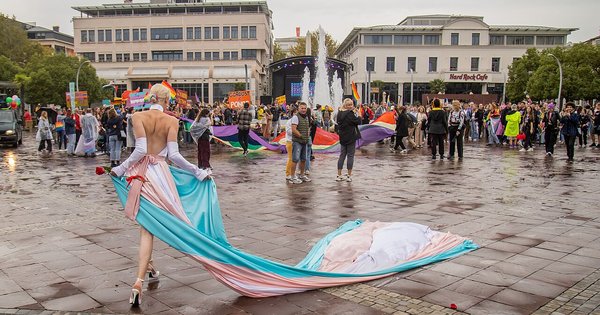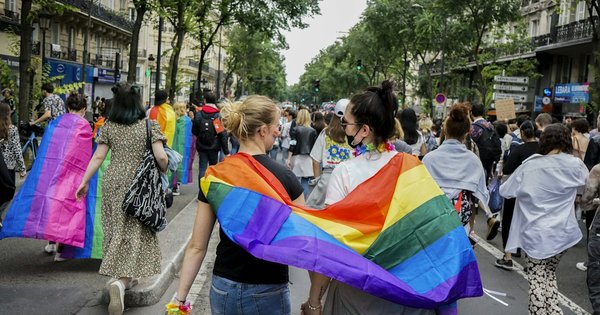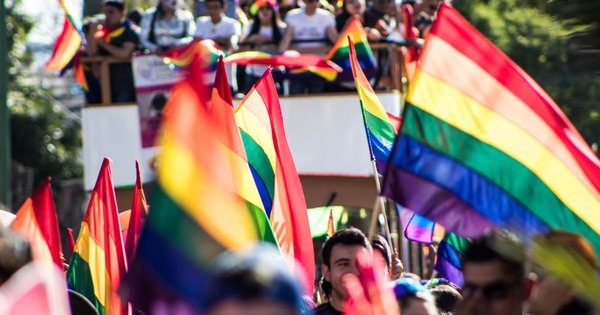
Hundreds of people marched through the centre of Pristina to mark the tenth Pride parade in Kosovo’s capital, held under the pointed slogan “Equality or Revolt.” The march closed out Pristina Pride Week, which had run since June 1 with discussions, cultural events and performances, and ended with a concert by Albanian pop star Adelina Ismaili.
Ten years is a meaningful number for a Pride that began, like so many in the Western Balkans, under a cloud of anxiety about whether it could happen safely at all. That it is now an established fixture in Kosovo — Europe’s youngest country, and one of its most socially conservative — is an achievement worth marking honestly, with both the progress and the unfinished business in plain view.
Who showed up, and who didn’t
The marchers were joined by members of the international diplomatic corps and by figures from Kosovo’s civil society, including Feride Rushiti, the well-known director of the Kosovo Rehabilitation Centre for Torture Victims. The EU delegation in Kosovo, as in past years, lent its visible support.
But one absence spoke loudly. Unlike previous editions, no politicians from either the local or central government took part in this year’s march. In a country where senior officials had, in recent years, made a point of walking with the community, that retreat is not a neutral detail. It is the kind of quiet distancing that tends to precede, or accompany, a stalling of political will — and it is exactly what the “Equality or Revolt” slogan was built to call out.
The broken promise at the centre of it all
To understand why Kosovo’s activists chose a slogan with the word “revolt” in it, you have to understand the civil unions saga.
Kosovo’s draft Civil Code included provisions that would have opened the door to legal recognition of same-sex partnerships — a genuinely significant step for the region. The country’s constitution and its progressive anti-discrimination framework, drafted under heavy international supervision after independence, are among the most LGBTQ-friendly on paper anywhere in the Balkans. The gap between that progressive paper and conservative reality has long been Kosovo’s defining LGBTQ+ tension.
When the Civil Code came up for a vote, the same-sex partnership provisions failed to pass, defeated by a combination of religious conservatism, political cowardice and lawmakers unwilling to spend capital on an unpopular cause. The promise embedded in Kosovo’s founding documents — equal treatment regardless of sexual orientation — ran into the wall of what politicians were actually willing to deliver. That failure is the backdrop to everything about this year’s march.
Why this matters beyond Kosovo
We spend a large part of our year in the Balkans, and Kosovo occupies an unusual place in the region’s LGBTQ+ map. It has some of the strongest formal protections — a legacy of the internationally guided state-building that followed the war — alongside deeply traditional social attitudes and a powerful conservative religious culture. The result is a country that can write equality into its constitution and then fail to pass the ordinary legislation that would make that equality real.
This is the central pattern across much of the Western Balkans: rights advance fastest where the EU accession process applies pressure, and stall wherever domestic politicians decide the issue is not worth the backlash. Kosovo, Serbia, North Macedonia and Bosnia all show versions of this dynamic. The tenth Pristina Pride, with its absent politicians and its civil-code disappointment, is a near-perfect illustration of the gap between aspiration and delivery.
The case for hope
It would be a mistake to read this only as a story of disappointment. A decade ago, the idea of hundreds of people marching openly through Pristina behind rainbow flags, with a major pop concert to close the night, would have seemed remote. Pride weeks now run for days. Civil society organizations are established and credible. A generation of younger Kosovars has grown up with Pride as a normal part of the calendar, not an unthinkable provocation.
The diplomatic presence matters too. With Kosovo’s EU path a live political question, European institutions have leverage, and they have consistently used at least some of it to keep LGBTQ+ rights on the agenda. The civil-code defeat was a loss, but it was a loss in a fight that is still very much open.
What comes next
“Equality or Revolt” is a slogan with an implicit deadline. It tells Kosovo’s politicians that the community has noticed who marched and who didn’t, and that patience with paper promises is wearing thin. The next real test will be whether the same-sex partnership provisions return to the legislative agenda, and whether any politician is willing to stake something on them.
For now, the tenth Pristina Pride did what these marches do best: it made the community visible, it named the broken promise out loud, and it refused to let a decade of progress be quietly walked back. In the Balkans, that refusal is the whole game.