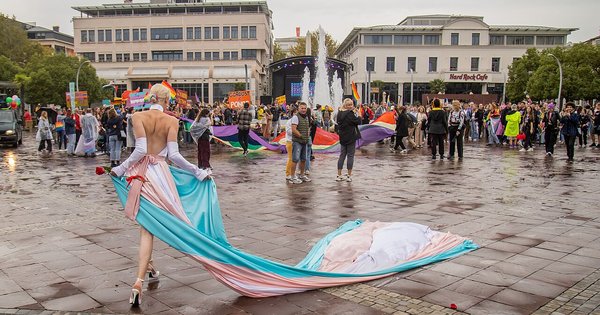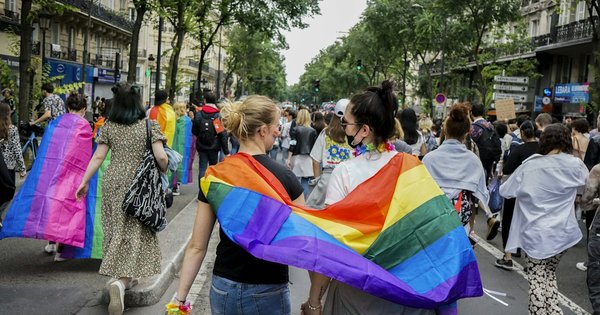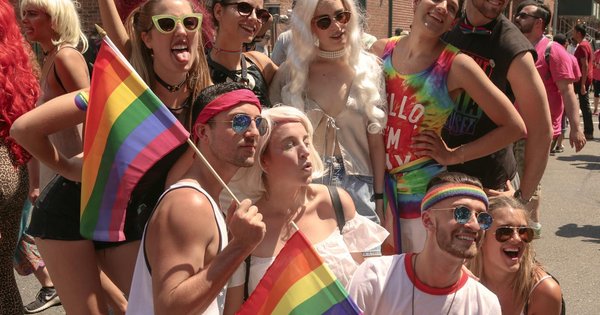
Paris does Pride on a scale that is hard to overstate. The Marche des Fiertés — France’s largest LGBTQ+ march — draws somewhere between half a million and 700,000 people through the centre of the city most years. In 2026 it lands on Saturday, June 27, the finale of a Pride Week that runs from June 20. If you are going to be anywhere near the French capital that week, this is the event to plan around.
The basics
The march is organised by Inter-LGBT, the coalition that has coordinated Paris Pride for decades. It steps off from the Palais-Royal at 1:30pm. From there it follows a route through some of the most recognisable streets in Paris: west to east along the Rue de Rivoli past the Louvre and the Tuileries, into the Marais along the Rue Saint-Antoine, past the Place de la Bastille, and along the wide eastern boulevards to the Place de la Nation.
That endpoint is the second half of the day. From around 5pm, Nation hosts the Podium des Fiertés — a free outdoor concert and stage programme that turns the square into the city’s largest open-air party. There is no registration and no ticket. The march is open to everyone: alone or in a group, queer or ally, lifelong activist or first-timer who is simply curious.
Why the route matters
It is easy to treat a parade route as logistics, but the Paris route is doing something deliberate. The Marais — the stretch through Rue Saint-Antoine — is the historic heart of queer Paris, dense with bars, bookshops and community spaces. The Bastille is the city’s enduring symbol of revolt. Nation, the destination, is a square named for the Republic itself. Walking from a royal palace to a square called Nation, through the gay quarter and past the Bastille, is a piece of choreography that says something: this is a demonstration about belonging to the country, not standing outside it.
That framing is worth holding onto, because the Marche des Fiertés has always insisted it is a march — a manifestation, a political demonstration — and not merely a festival. The concert at the end is the celebration. The walk is the point.
The political backdrop
Paris Pride 2026 arrives in a France where LGBTQ+ visibility is not uncontested. Over the past year, several towns governed by the far right have made headlines for refusing to fly rainbow flags from public buildings, turning what used to be an uncontroversial June gesture into a recurring flashpoint. France’s national legal protections for LGBTQ+ people remain strong — this is a country with marriage equality since 2013 and a conversion-therapy ban — but the political temperature around visibility has risen, and Inter-LGBT has not shied away from naming that in its messaging.
This is the wider European pattern in miniature. Across the continent, the legal floor for LGBTQ+ rights in Western Europe is relatively solid while the cultural and political weather has turned choppier. A march of 600,000 people through central Paris is, among other things, a straightforward answer to that: a demonstration of numbers that is difficult to argue with.
If you are going
A few practical notes. Central Paris is effectively closed to traffic along the route for the afternoon, so plan to move by Métro and expect the stations nearest Rivoli, Bastille and Nation to be crowded. June weather in Paris is warm but unpredictable; sunscreen and water are sensible, and the city installs water points along major event routes. The Marais will be busy all week, not just on the Saturday — Pride Week programming includes panels, parties, and community events well before the march itself.
And a scheduling note for readers building a summer itinerary: June 27 is a busy date on the European Pride calendar, so if Paris is on your list, book accommodation early. The march is also one week after Sarajevo Pride and falls in the thick of the continent’s Pride season, which runs from the spring marches in the Balkans straight through to WorldPride in Amsterdam later in the summer.
The bigger picture
We have not yet made it to Paris Pride ourselves — our summer routing has kept us further south and east — but it sits high on the list, and from everyone we have spoken to, the Marche des Fiertés earns its reputation. It is large enough to feel like a genuine show of force and old enough to carry real history, and it manages, in the same afternoon, to be both a serious political demonstration and an enormous, joyful street party. For one Saturday in late June, the centre of Paris belongs to the community. That is worth showing up for.