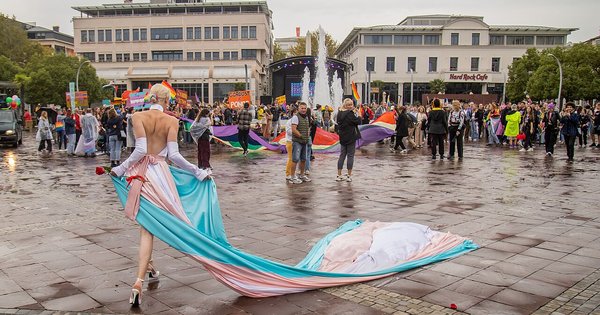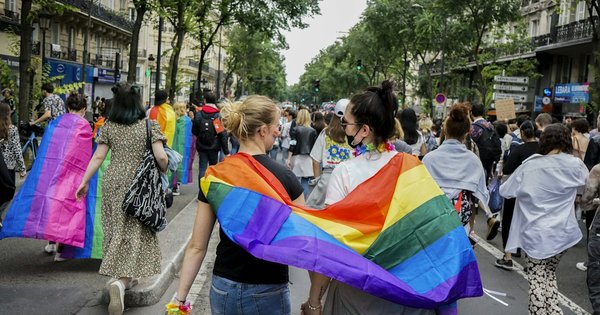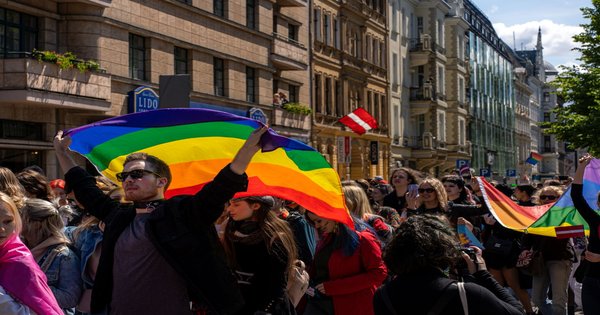
Madrid Pride — MADO to everyone who actually goes — opens today, June 25, and runs through July 5. It is the loudest, biggest, most unapologetic stretch of the European Pride calendar, and this year it arrives carrying a slogan that tells you where Spanish organizers think the moment is: A las calles con orgullo: disidencia y resistencia — “To the streets with pride: dissidence and resistance.”
That framing matters. Spain is, by most measures, near the top of the LGBTQ+ rights ladder right now. So why a defiant slogan instead of a victory lap? Because the people organizing MADO are looking at the same two facts at once, and refusing to pretend either one cancels the other out.
What’s happening, and when
The festival opens with Orgullo de Barrio — neighborhood Pride — in Chueca, the historic gay district at the center of it all, running June 25 through June 30. This is the part long-time attendees often love most: cultural events, community programming, and street parties spilling across the squares of the neighborhood before the main crowds arrive.
From there it builds. The High-Heel Race (Carrera de Tacones), a beloved bit of chaos in which competitors sprint down Calle de Pelayo in heels, lands on July 2. The Madrid Summit, now in its eighth edition and a serious space for human-rights discussion, runs July 3. And the centerpiece — the Pride parade itself, billed as Europe’s single largest mobilization for LGBTQ+ rights — steps off on July 4, following its traditional route from Glorieta del Emperador Carlos V near Atocha up to Plaza de Colón, where the year’s manifesto is read aloud to a crowd that regularly numbers well over a million.
We haven’t covered MADO from the ground ourselves — our Spanish home base has been Barcelona, not Madrid — but anyone who has lived through a Madrid summer knows the city essentially reorganizes itself around this week. Chueca becomes the gravitational center of queer Europe for ten days.
The country that just topped the Rainbow Map
The backdrop this year is genuinely historic. In May 2026, ILGA-Europe’s annual Rainbow Map ranked Spain the single most LGBTQ+-friendly country in Europe by law and policy — knocking Malta off a perch it had held for a decade. Spain’s 2023 trans law, its strong anti-discrimination framework, and regional protections like Catalonia’s newly-in-force anti-LGBTI-phobia law all fed into that number one spot.
For a Pride march, that’s an extraordinary thing to celebrate. A country can stand in Plaza de Colón and say, with real evidence behind it: on paper, no one in Europe does this better.
The reason “resistance” is still in the slogan
And yet. The same year Spain topped the Rainbow Map, it has also been confronting a sharp rise in reported anti-LGBTQ+ hate crimes — the on-the-ground violence and harassment that no ranking of laws fully captures. High-profile cases, including hate-crime trials over assaults at beaches and in nightlife districts, have made clear that strong statutes and safe streets are not the same achievement.
This is the tension MADO 2026 is built around, and it’s an honest one. Best laws in Europe; rising violence in the same window. Organizers chose “dissidence and resistance” precisely because the legal win is real but incomplete — because the gap between what the law promises and what a queer person can expect walking home at night is exactly where a Pride march still has work to do.
It also reflects a wider European mood. Across the continent, far-right parties have made LGBTQ+ rights a target, and Spanish organizers are explicitly positioning Madrid as a counterweight: a place where the answer to backlash is more visibility, not less.
If you’re going
MADO is huge, free, and crowded in the best way. A few practical notes for anyone joining: Chueca is the heart of everything, and the Orgullo de Barrio days (June 25–30) are the calmer, more community-feeling stretch before the enormous parade weekend. The metro is the only sane way to move during the parade — central stations near Atocha and Colón get extremely busy on July 4. And Madrid in early July is hot in a way that sneaks up on people; the celebrations run late into the night for a reason.
Whatever the Rainbow Map says, the march on July 4 will make the same argument it always has, just louder this year: rights written down still have to be defended in the street. Spain seems entirely ready to do both at once.