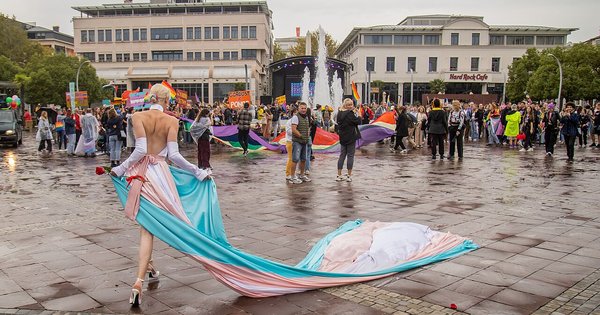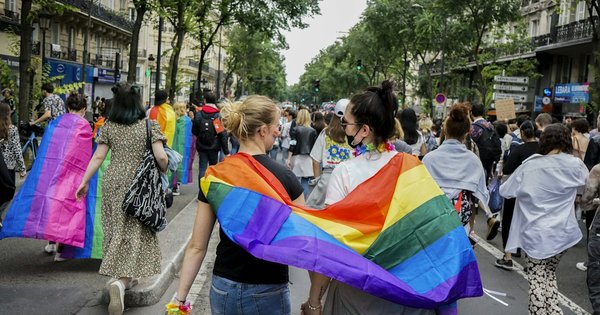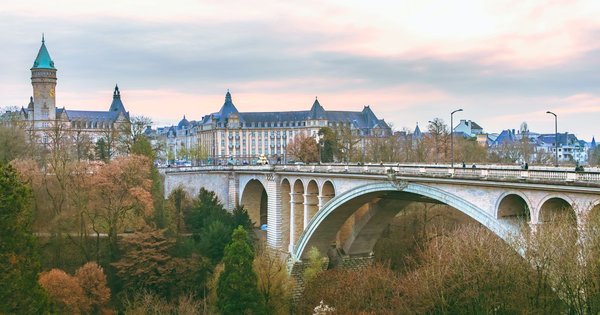
For the first time in 16 years, Luxembourg’s Pride march returned to the heart of the capital. On Saturday, July 11, the Marche pour l’Égalité — the Equality March — stepped off at 13:30 and wound its way down the Avenue de la Liberté, across the Pont Adolphe, and through the old town’s narrow streets before arriving at the Place Guillaume II, the Knuedler, at the center of Luxembourg City. It was the centerpiece of a Pride Week that ran from July 2 to 12, and a homecoming of sorts for a celebration that had spent recent years hosted in the southern city of Esch-sur-Alzette.
Luxembourg is small — the whole country has fewer people than many mid-sized cities — but it punches well above its weight on LGBTQ+ rights, and the return of Pride to the capital carried real symbolic weight.
A country that legalized love early, then led by example
Luxembourg legalized same-sex marriage in 2015, and did so with a flourish that made international headlines: Prime Minister Xavier Bettel married his partner, Gauthier Destenay, that same year, becoming the first sitting head of government in the European Union to enter a same-sex marriage while in office. That moment did a lot of quiet work — it normalized queer partnership at the very top of a European state, and it signaled that in Luxembourg, LGBTQ+ equality was not a fringe cause but part of the establishment.
The legal picture backs that up. Same-sex couples can marry and adopt jointly. Anti-discrimination protections cover sexual orientation and gender identity. Gender recognition was reformed in 2018 to allow legal gender change based on self-determination, without the medical and psychiatric gatekeeping that still burdens trans people in much of Europe. On the ILGA-Europe Rainbow Map, Luxembourg consistently scores among the stronger performers on the continent.
What the week looked like
Pride Week here — organized under the long-running banner of Rosa Lëtzebuerg, the country’s veteran LGBTQ+ association — is deliberately more than a single parade. The program spread across nearly two weeks, mixing film screenings, exhibitions, panel discussions, and parties with the bigger public moments. The street festival built over Friday, July 10, and Saturday, July 11, with the Place Guillaume II handed over to stages, stalls, and crowds. Organizers opened the festivities on Friday afternoon with a display of queer art and culture in the square, before the Equality March gave Saturday its focal point.
The march itself is billed as exactly that — a march for equality, not simply a party. In a country where the legal framework is already strong, the emphasis tends to shift toward solidarity: with trans communities facing rollbacks elsewhere, with asylum seekers fleeing persecution, and with LGBTQ+ people in the many countries where a public march like this would be impossible or dangerous. Luxembourg’s Pride has room to look outward precisely because it has less to fight for at home.
Why the capital’s return matters
Moving Pride back to Luxembourg City is not just logistics. For years the main celebration lived in Esch-sur-Alzette, and while that kept the tradition alive, the capital is where the country’s institutions, embassies, and civic life are concentrated. Marching down the Avenue de la Liberté — the name is almost too on the nose — and finishing in the central square puts queer visibility back in the most public space the country has.
There’s a broader European context here too. This has been a dense Pride season across the continent, from Madrid’s enormous MADO march to the Balkans’ smaller, harder-won parades, and with Amsterdam preparing to host WorldPride and EuroPride in early August. Luxembourg’s edition is modest by comparison in raw numbers, but it’s a reminder that the health of a Pride movement isn’t measured only by crowd size. A small, wealthy, multilingual country bringing its celebration back to the capital, with institutional backing and an outward-looking message, is its own kind of statement.
If you’re thinking about going next year
Luxembourg City is compact and walkable, and the Pride footprint sits right in the center around the Place Guillaume II and the surrounding old town. Public transport in Luxembourg is free nationwide — a policy the country adopted in 2020 — which makes getting around refreshingly simple. The country is expensive to sleep in, so travelers on a budget sometimes base themselves just across the border in France, Germany, or Belgium and come in for the day. Early July is generally warm but mild, and the walkable scale means you can take in the march and the square festivities without much planning.
Pride returned to the Knuedler this year. After 16 years away, that feels less like a relocation and more like a country reclaiming space it always could have used.
Sources: Luxembourg Pride official site, Ville de Luxembourg – Equality March, Visit Luxembourg City.