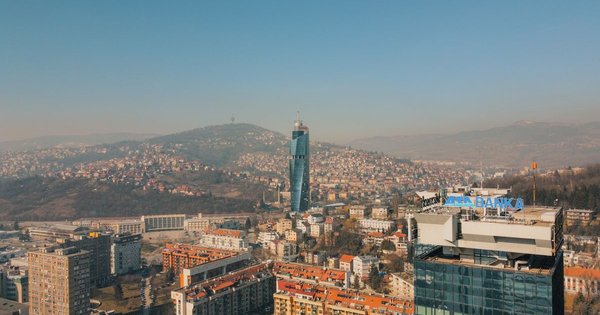
Sarajevo is a city that gets under your skin. Ringed by green hills, split by the fast little Miljacka river, it’s the place where the Ottoman east and the Austro-Hungarian west sit almost literally side by side — you can stand on one spot in the old town and see a mosque, a Catholic cathedral, an Orthodox church, and a synagogue within a few minutes’ walk. We haven’t made it to Sarajevo ourselves yet, so treat this as a researched guide rather than a first-person account. But it’s a capital fellow travelers keep telling us to prioritise, and it deserves an honest look — the beauty and the complications both.
The lay of the land
Bosnia and Herzegovina is the least legally protective of the Western Balkan states for LGBTQ+ people, and it’s important to say that plainly. There’s no legal recognition of same-sex partnerships, and progress has been slow and hard-won. In ILGA-Europe’s 2026 Rainbow Map, Bosnia sits near the bottom of the European table.
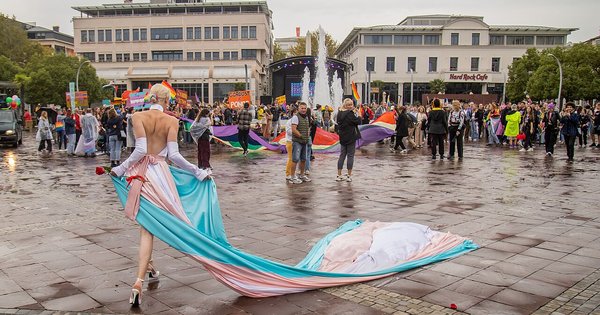
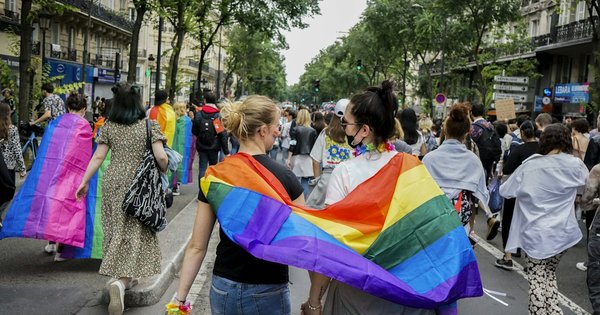
And yet Sarajevo is also where the country’s queer community has done some of its bravest organising. The city held its first Pride march in 2019 under enormous police protection, and it has returned since — each edition a genuine act of courage rather than a foregone celebration. Bosnia has also recently seen its first hate-speech convictions in cases targeting LGBTQ+ people, and courts have pushed back against discriminatory rhetoric from senior politicians. The legal floor is low, but it is not static.
For a visitor, the practical translation is this: Sarajevo is generally safe to visit and easy to enjoy, but it is not a place for loud public displays of affection, and local queer life runs quiet and word-of-mouth rather than out in the open.
Where to base yourself
Most visitors stay in or near Baščaršija, the Ottoman-era old town, and around Ferhadija, the pedestrian spine that runs west into the Austro-Hungarian quarter. This central strip is walkable, lively, and where you’ll spend most of your time. Accommodation is inexpensive by Western European standards, and small guesthouses and apartments are the norm.
As with much of the Balkans, booking as a same-sex couple is usually smoothest through apartment rentals, where a double bed raises no questions, rather than smaller family-run pensions where you may get a raised eyebrow. This isn’t about danger so much as avoiding awkwardness on your own holiday.
What to actually do
Sarajevo rewards slow wandering more than box-ticking. Lose an afternoon in the coppersmith alleys of Baščaršija, drink Bosnian coffee the proper unhurried way, and walk the War Childhood Museum and the sobering Tunnel of Hope to understand the siege that defined the city in the 1990s. Take the cable car up Trebević for the view back over the valley, and eat far too much ćevapi.
The café culture is the real heart of the place, and it’s where queer travelers tend to feel most at ease — Sarajevo’s coffee houses are relaxed, mixed, and unbothered spaces where nobody is scrutinising who you came in with.
Nightlife and community
Sarajevo does not have a visible gay bar scene the way Western capitals do; it doesn’t really have one at all. What it has instead is a network of alternative, artsy, and student-friendly venues that are welcoming to queer patrons without advertising themselves as such. The Sarajevo Open Centre is the country’s leading LGBTQ+ rights organisation and a good reference point for anyone wanting to understand the local scene or connect with community life; their work also drives Bosnian Pride.
If you’re timing a visit around Pride, know that it is a heavily secured event and a political statement as much as a celebration — go with respect for what it costs the people who organise it.
The honest bottom line
Sarajevo is one of the most rewarding cities in Europe to visit, full stop — layered, beautiful, warm, and cheap, with a history that will stay with you. For LGBTQ+ travelers, the calculus is the familiar Balkan one: you’ll be safe and welcomed as a visitor, but you’ll want to read the room, keep affection low-key in public, and appreciate that the easy queer visibility of Amsterdam or Barcelona is still a long way off here.
Go for the coffee, the hills, and the history. Go with your eyes open. And when you come back with the real first-person account we can’t yet give you, tell us what we got right — and what we didn’t.