We haven’t made it to Prizren yet — it sits high on our Balkans list, and honestly the photos alone have kept it there — so treat this as a researched guide rather than a lived one. It draws on reporting from ERA-LGBTI and Kosovo’s community organizations, on conversations with travelers who know the city, and on what we’ve learned holds true across the Western Balkans more broadly: the distance between what a country’s laws promise and what its streets feel like is almost always wider than the headlines suggest.
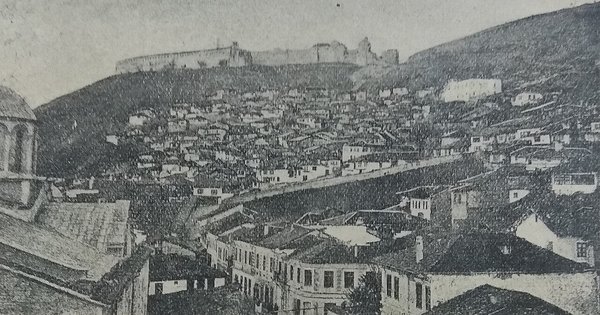
If you’ve already done Pristina, this is the trip that completes Kosovo. Prizren is roughly 90 minutes southwest of the capital by car or bus, tucked against the Sharr Mountains, and it is widely considered the most beautiful city in the country — an Ottoman-era old town of stone bridges, a hilltop fortress, and a skyline of minarets and church towers that reflects centuries of layered history. It is smaller, slower, and more conservative than Pristina, and it rewards travelers who arrive with the right expectations.
The legal landscape, briefly
The same framework that governs Pristina governs Prizren, because it’s national. Kosovo’s constitution explicitly bans discrimination on the basis of sexual orientation — one of only a handful of constitutions worldwide that does — and the 2015 Law on Protection from Discrimination added sexual orientation and gender identity as protected characteristics. On paper, that puts Kosovo ahead of several EU member states.
In practice, the ambition has stalled where it matters most to couples. As we’ve reported, civil partnership provisions have been repeatedly dropped, reinstated, and dropped again as Kosovo’s Civil Code has moved through the Assembly, and the country still recognizes same-sex relationships as neither marriages nor registered partnerships. Strong anti-discrimination law sits on top of a socially conservative, majority-Muslim society in which most queer people are not out to their families. Prizren, being smaller and more traditional than the capital, feels that gap more acutely.
What Prizren is actually like
The city is compact and made for walking. The Prizren League complex, the Sinan Pasha Mosque, the Ottoman stone bridge over the Bistrica river, and the climb up to Prizren Fortress are the core sights, and you can cover the old town on foot in an afternoon. Café culture here is as strong as anywhere in Kosovo — expect excellent, cheap coffee and long, unhurried sitting.
What Prizren does not have is a visible queer scene in the way even Pristina modestly does. There are no gay bars, no dedicated venues, and no equivalent to Tirana’s Blloku. Same-sex couples who’ve visited report that discretion is the norm — holding hands on the fortress trail is not the move, but sharing a room and moving through the city as two friends draws no particular attention. Dating apps function as they do across the region: a small grid, a lot of discreet profiles, and a fair number of travelers passing through. This is a city to enjoy for its beauty and its calm, not for nightlife.
Time your trip around DokuFest
Here’s the single best piece of advice for a queer traveler considering Prizren: go in August, for DokuFest. Kosovo’s premier documentary and short film festival takes over the entire old town for roughly a week each summer, turning the fortress, rooftops, and riverside into open-air cinemas. It regularly programs queer-themed and human-rights films, and it draws an international, progressive, festival crowd that shifts the whole atmosphere of the city for its duration. It is, by a wide margin, the moment when Prizren is most open, most cosmopolitan, and most comfortable for LGBTQ+ visitors — and it’s a genuinely world-class festival on its own merits.
Practical notes
Prizren works best as a two-to-three-day stop paired with Pristina, or as part of a wider Balkans loop through Skopje and Tirana — both are within a few hours by road. Accommodation is inexpensive and plentiful in and around the old town; a well-reviewed guesthouse near the river puts you inside the most walkable part of the city. Kosovo uses the euro despite not being in the eurozone, which simplifies budgeting. And as anywhere in the region, the warmth of individual hospitality tends to outrun what the political headlines might lead you to expect — we’ve found that to be true from Sofia to Tirana, and everything we’ve read suggests Prizren is no exception.
If you go before we do, we’d love to hear how it went. Prizren is exactly the kind of place — beautiful, complicated, overlooked — that TrueQueer exists to put on the map for queer travelers willing to look past the usual list.