Ljubljana is one of the cities still on our own list. After four years moving around the Balkans and Central Europe, we’ve spent real time in Vienna, Sofia, and along the Croatian coast — but Slovenia’s compact, river-threaded capital has stayed a “next time” we keep not getting to. So consider this a researched guide rather than a personal dispatch: what the law actually says, what queer friends and fellow travelers report, and how to think about a trip. When we do make it, we’ll write the firsthand version.
The short version: Slovenia is, on paper, one of the most progressive countries in the entire region, and Ljubljana is small, walkable, and relaxed in a way that rewards a slow weekend.
The legal landscape — and it’s a strong one
This is where Slovenia genuinely stands apart. In July 2022, the country’s Constitutional Court ruled that defining marriage as only between a man and a woman was discriminatory, struck down the offending provisions, and gave parliament six months to fix the law. Parliament did, amending the Family Code in October 2022, and the change took effect on January 31, 2023. With that, Slovenia became the first post-communist country in Europe to grant same-sex couples full marriage and joint adoption rights — not a partnership workaround, but the real thing.
That matters for context. Most of the Balkans and Central Europe offers same-sex couples either nothing or a limited civil-partnership framework. Croatia has life partnerships but not marriage. Slovenia leapfrogged the lot. It’s an EU member and part of the Schengen Area, anti-discrimination protections cover sexual orientation and gender identity, and legal gender recognition is available. ILGA-Europe’s rankings place Slovenia comfortably in the upper half of the European pack.
For a visitor, the practical takeaway is reassurance: you have full legal standing and actual recourse if something goes wrong. That’s not something we can say about every city we cover.
The vibe on the ground
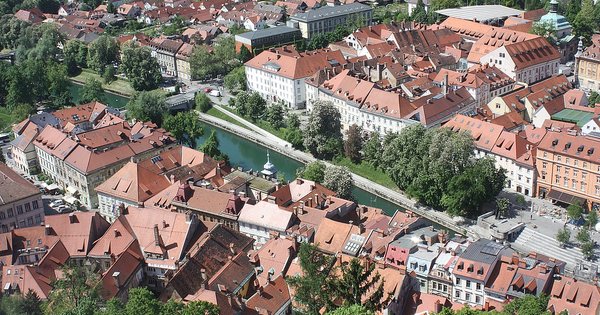
From what queer travelers we trust report, Ljubljana reads as easy and low-key rather than flashy. It’s a university town of around 280,000 — small enough to cross on foot, with a pedestrianized old center along the Ljubljanica river and the castle on the hill above. The social atmosphere in the center is generally relaxed; same-sex couples report uneventful days far more often than not. As with most of the region, the cities are more comfortable than the countryside, and Ljubljana is the most comfortable place in Slovenia.
The honest caveat, which Slovenian activists themselves raise: legal progress hasn’t erased social conservatism, and the marriage-equality fight was hard-won against organized opposition. Public displays of affection are fine in the center but, as anywhere, worth reading the room for. The overall picture friends describe is closer to a calm Central European city than to the exuberant visibility of Madrid or Berlin — pleasant, safe, unshowy.
Where the scene lives: Metelkova
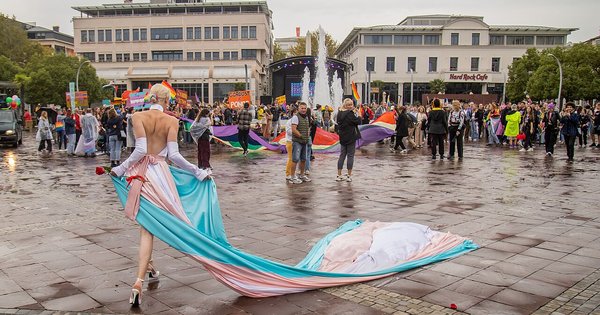
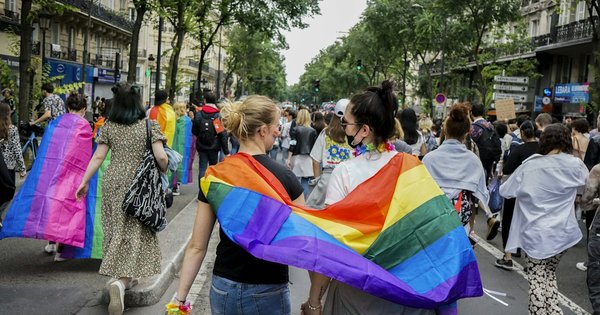
If queer Ljubljana has a heart, it’s Metelkova — an autonomous cultural zone in a former army barracks, covered in street art and home to a cluster of alternative clubs and bars. It’s the launch point for Ljubljana Pride each June, and it hosts the city’s best-known LGBTQ+ venues, including the long-running queer clubs that have anchored the scene for years. (Metelkova has also seen incidents over the years, including a 2019 attack on one of its LGBTQ+ clubs, so it’s a space that’s both beloved and, at times, defended — worth knowing rather than worrying about.)
Beyond Metelkova, the scene is small and somewhat dispersed, which is typical for a city this size. Ljubljana’s queer organizing has deep roots: the movement here dates to 1984 and the founding of MAGNUS within the student cultural center ŠKUC, making it one of the oldest organized gay and lesbian scenes in the former Yugoslavia. That history is part of why the city punches above its size on rights.
When to go
June is the obvious window. Ljubljana Pride is the highlight of the queer calendar, and Slovenia’s summer is mild and walkable. The city is also a natural base for the rest of the country — Lake Bled, the Julian Alps, and the tiny Adriatic coast around Piran are all close. If you’re stitching together a Central European or Balkan route, Ljubljana sits neatly between Vienna, Zagreb, and the Italian northeast.
We’ll keep this guide as the researched version until we get there ourselves. If you’ve been recently, we’d genuinely love to hear what you found.
Sources: Euronews: Slovenia legalises same-sex marriage and adoption; Global Voices; LGBTQ rights in Slovenia, Wikipedia.