We spent just over three months living in Durrës — January through April 2025 — which makes it one of the longer stops in our four-plus years of full-time travel. It was our third extended stay in Albania, after Tirana and Sarandë, and it showed us a different side of a country we keep coming back to. Here’s our honest take on Albania’s second city as a base for queer remote workers.
Why Durrës?
Durrës is one of the oldest continuously inhabited cities on the Adriatic — founded by Greek colonists in 627 BC, stamped with a Roman amphitheater, Byzantine walls, and an Ottoman old town, all stacked on top of each other within a few blocks. Today it’s Albania’s main port and its most popular domestic beach destination, with a long sandy coastline running south of the city.
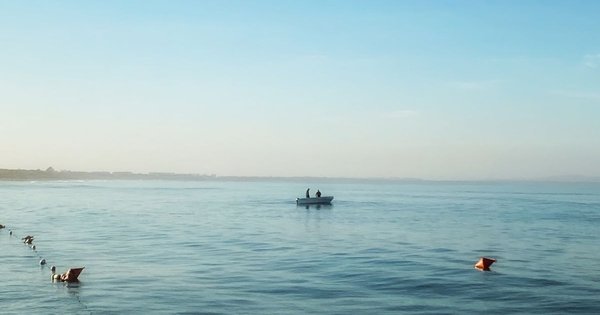
For us, the appeal was simple: sea views, walkable seafront, real-city amenities, and rent that’s hard to believe even by Albanian standards. We paid about €960 a month for our apartment, booked directly through a local landlord — and that was for a winter stay with a sea view. Add Albania’s famous visa situation for Americans (a full year visa-free) and the math works better than almost anywhere on the Mediterranean.
The honest part: queer life in Durrës
Let’s be direct, because that’s what this guide is for: Durrës has no visible queer scene. No gay bars, no LGBTQ+ venues, no Pride events of its own. Queer life in Albania is centralized in Tirana — the bars and community spaces of Blloku, the NGOs like Aleanca and Streha, Tirana Pride itself. That’s a 35–45 minute drive or a cheap, frequent bus ride away, which is exactly how we treated it: Durrës was where we lived and worked, Tirana was where we went for community.
As a married gay couple, our day-to-day experience in Durrës was the same as everywhere else in Albania: unremarkable, in the good way. Albanians are famously hospitable, and nobody ever made us feel unwelcome. We were also, as we always are in the Balkans, low-key in public — no hand-holding on the promenade. Albania has comprehensive anti-discrimination law on paper and the region’s only partial conversion-therapy ban, but social attitudes lag the legal framework, and Durrës is more conservative and less cosmopolitan than the capital. If you need a city where you can be fully, visibly out in public space, Durrës isn’t that yet. If you want a calm, affordable coastal base with Tirana’s queer scene within easy reach, it absolutely works.
Where to live
The seafront stretch south of the port — along Rruga Taulantia and toward the Plazh neighborhood — is where most furnished rentals aimed at foreigners are. In winter, you’ll have the promenade nearly to yourself; in July and August, the city fills with Albanian and Kosovar holidaymakers and the beach strip gets loud. If you’re staying through summer, look closer to the old town center rather than the resort strip.
Booking works the way it does everywhere in Albania: Airbnb prices are inflated, and the real deals come from direct contact with landlords through Facebook groups or local agents. Negotiating a multi-month rate in person is normal and expected.
Practical life
Internet was solid for us — fiber is widely available and we had no trouble with video calls. Cafés are everywhere (this is Albania), and the café-as-office culture is alive and well, though there are fewer laptop-friendly specialty coffee spots than in Tirana. Groceries, gyms, and pharmacies are all cheap and plentiful. The Roman amphitheater is genuinely worth your time, and the seafront promenade makes for an unbeatable end-of-workday walk.
Getting around without a car is easy: buses to Tirana run constantly, and Tirana’s airport is about 30 minutes away — closer to parts of Durrës than to parts of Tirana itself.
The verdict
Durrës won’t be anyone’s queer travel bucket-list destination, and we won’t pretend otherwise. But as a digital nomad base it quietly delivers: ancient-city texture, sea air, fiber internet, sub-€1,000 rents, and the entire queer infrastructure of Tirana less than an hour away. For the right kind of remote worker — one who wants calm over scene — it’s one of the best-value coastal bases in Europe.
We’d go back. In fact, writing this from Tirana, we’re already talking about it.