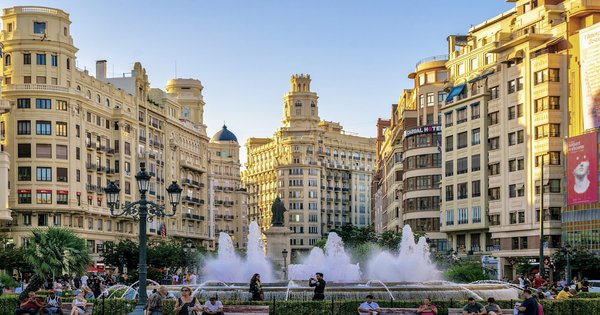
For eight days, Valencia has been the queer sporting capital of the world. Gay Games XII — the twelfth edition of the event founded in San Francisco in 1982 — brought more than 10,000 athletes and participants to Spain’s third-largest city for over 30 sports, and on Saturday, July 4, it all comes to a close with a ceremony at the Pavelló Font de Sant Lluís.
A fitting host
Valencia was always going to be a comfortable home for this. Spain sits at the very top of ILGA-Europe’s Rainbow Map this year, having displaced Malta from a perch it held for a decade, and the country pairs that legal standing with a genuinely warm public culture around LGBTQ+ life. Add a Mediterranean city built for walking, eating late, and spilling out into the streets, and you get close to the ideal setting for an event whose whole premise is that sport and celebration belong together.
The Gay Games have never been an elite competition in the Olympic sense. The founding idea — participation over podiums — means the fields fill with weekend runners, first-time swimmers, veteran volleyball teams, and people who took up a sport specifically so they’d have a reason to come. That is the point. For a lot of participants, a queer sports event is the first time athletics has felt like a place they belong rather than a place they had to hide.
Closing night
The closing ceremony begins at 5:30 p.m. on July 4 with the traditional parade of athletes, followed by speeches and the official handover of the Federation of Gay Games flag. That handover carries a specific weight this year: the flag passes to Perth, which will host Gay Games XIII in 2030 — the event’s first trip to Australia, and a marker of how far the movement has spread from its San Francisco origins.
The Valencia organizers have loaded the night with performances — She-La Fletcher as mistress of ceremonies, the Gay Games València choirs, the Pride Cheerleading team, and Spanish acts including Nebulossa, Rebeca, Suri and Mia Collado — before a fireworks finale over the city. Closing ceremonies at these games tend to be emotional in a way the opening never quite is: a week of new friendships and small personal victories all landing at once, in a room full of people who understand exactly what it took to get there.
Why it lands the way it does this week
We won’t pretend the timing is incidental. This has been a heavy stretch for LGBTQ+ news — a US Supreme Court that just closed school sports teams to trans girls, anti-gender movements gaining volume across our own corner of Europe, rights that felt settled suddenly up for argument again. It would be easy to read the week as nothing but retreat.
Valencia is the counterweight, and it matters that the counterweight is sport, of all things. The same domain being weaponized in American courtrooms to exclude trans kids is, this week in Spain, ten thousand people of every gender and body and age playing for the sheer pleasure of it. The Gay Games were built in 1982 as a deliberate answer to exclusion — a place where nobody had to qualify their way into belonging. Forty-four years later, that answer still holds. The movement is a fight, and this week it was also a party, and it needs to be both.
If you’re anywhere near the Spanish coast this weekend, Valencia is where the flags are. And if you’re not, the handover to Perth is worth marking anyway: the games go on, the circle widens, and in 2030 the whole thing begins again on the other side of the world.
Sources: Gay Games XII Valencia 2026 official site, Federation of Gay Games — Valencia, Visit València — Closing Ceremony.