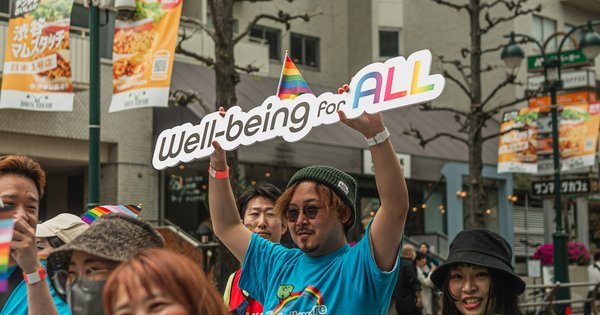
On Friday, six days after the raids began and three days after police detained scores of people who had gathered outside the Çağlayan courthouse in Istanbul, the response moved outside Turkey’s borders. An international day of action brought demonstrators to Turkish embassies and consulates across Europe and in Washington, DC.
Amnesty International, which coordinated much of it, said the protests took place outside Turkish missions in capitals including Brussels, Paris, London and Oslo, alongside Washington. Organisers’ listings circulated in advance included a 7pm gathering in Belgrade. The Washington Blade reported that activists in Madrid and other cities held similar actions the same day.
It was, by the standards of international LGBTQ+ solidarity, a genuinely broad mobilisation — and it threw into relief how quiet the European Union’s institutions have been by comparison.
What happened outside the embassies
In Washington, the protest was organised by the Council for Global Equality, Amnesty International USA, Outright International and Health GAP. Amnesty International USA executive director Nadia Daar addressed the crowd in front of the embassy. “This crackdown is not making families safer,” she said, according to the Washington Blade — a direct answer to the name the Turkish state has given the operation, Ailem Güvende, “My Family Is Safe.”
Council for Global Equality managing director Keifer Buckingham made the narrower legal point that keeps getting lost in coverage: homosexuality is not a crime in Turkey. Nothing in the operation rests on a law against being gay, because there isn’t one. The charges are obscenity, sex work offences, drug offences, breaches of the law on associations, and in some files organised crime. Health GAP executive director Asia Russell and Outright International’s Neela Ghoshal also spoke.
The choice of venue — embassies rather than city squares — matters. It routes the pressure through diplomatic channels rather than domestic ones, and it is a form of protest specifically designed to be reported back to Ankara.
Human Rights Watch: this is a rule-of-law problem
The same morning, Human Rights Watch published an assessment that reframed the crackdown as something wider than an LGBTQ+ story.
By HRW’s count, at least 112 people have been arrested since 12 September, with 82 still held under court order. At least 24 are LGBT activists, founders or executives of the targeted organisations. One is a journalist — Tuğba Tekerek, whose detention, HRW says, rests on a single 2024 news report she wrote mentioning LGBT rights in Georgia, published on the Kaos GL news portal.
The detail that most clearly marks the escalation is evidentiary. In Ankara, where police arrested fourteen Kaos GL board members, a court ordered seven detained on allegations of violating the law on associations and of “obscenity”; the evidence cited includes social media posts showing two photographs of men kissing. HRW also notes that the foreign funding the justice minister has flagged is entirely legal in Türkiye provided recipients notify the authorities, that associations are routinely audited for exactly that compliance, and that organisations aligned with the government — and the government itself — receive EU funding.
“This crackdown is a blatant attempt to criminalize and marginalize LGBT people and silence the groups that stand up for their rights,” said Benjamin Ward, HRW’s deputy Europe and Central Asia director.
On 14 September the justice minister issued a circular to chief prosecutors’ offices nationwide titled “Protecting the Family, Young People and Society from Violations of General Morality and Negative Content and Entities,” encouraging investigations into “activities encouraging the erasure of gender distinctions in children and young people” and specifying that these may be pursued as organised crime and financial crime matters. Between 12 and 16 September, according to the Freedom of Expression Association, courts ordered dozens of websites and social media accounts blocked — including, notably, the accounts of Amnesty International in Türkiye, the newspaper Evrensel, and two press-freedom and human rights groups with no LGBTQ+ remit at all.
That is the argument for reading this as a rule-of-law story. The tools being tested on LGBTQ+ organisations — morality charges, funding audits, association law, mass blocking orders — are general-purpose tools.
The gap between civil society and Brussels
Individual European states have spoken. Human rights and LGBTQ+ envoys from Germany, France, Sweden, Finland, the Netherlands and Iceland issued a joint statement calling the actions taken since 12 September “deeply troubling,” urging Turkey to respect freedom of assembly, association and expression under international law and the European Convention on Human Rights, and expressing solidarity with LGBTQ+ people in the country. The European Parliament’s Turkey rapporteur, Nacho Sánchez Amor, said the raids were pushing Turkey toward a “darker place.”
From the EU’s executive institutions, the register has been notably flatter. A European Commission spokesperson said Turkey “should promote and ensure respect for the human rights and dignity of all individuals, irrespective of their gender identity or sexual orientation,” and that stigmatisation and discrimination are contrary to the Union’s values. EUobserver’s assessment of the institutional reaction — headlined “Turkey’s anti-LGBTI+ crackdown draws meek EU criticism” — captures the mood.
The reason this stings is structural. Turkey is an EU candidate country. Respect for fundamental rights is not a nice-to-have in that relationship; it is the formal basis on which accession negotiations are assessed. The bloc has spent the past several years telling Western Balkan candidates, in considerable detail, that their treatment of LGBTQ+ people is an accession benchmark. Applying a visibly gentler standard to a larger, strategically indispensable candidate is the sort of inconsistency that activists in Tirana, Skopje and Pristina notice immediately, and remember.
Belgrade, and what a solidarity map says
Belgrade’s presence on Friday’s list is worth a moment on its own. Serbia is not an EU member, its own Pride marches have needed heavy policing and, in 2022, survived an attempted ban. A city that has spent two decades defending its own right to assemble turning out for activists in Istanbul is not a symbolic gesture borrowed from Western European capitals. It is a network that understands, from direct experience, what an association-law prosecution does to an organisation.
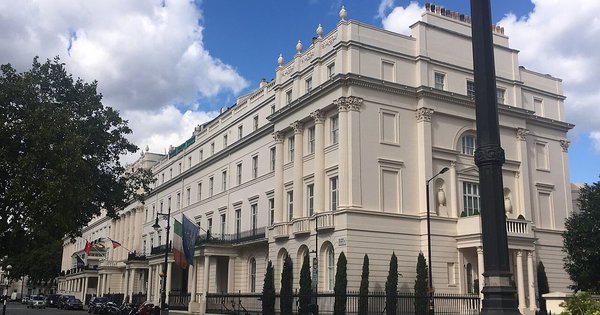
That is the durable part of Friday. The detentions in Turkey continue; the blocking orders remain in force; dissolution cases against the associations are expected. None of that was changed by a few hundred people outside an embassy in Belgrave Square or Belgrade. But the groups now facing closure in Ankara and Istanbul spent this week watching a map of Europe light up on their behalf, and the next stage — court monitoring, legal funds, emergency relocation support for people who need it — runs on exactly the connections that day of action made visible.