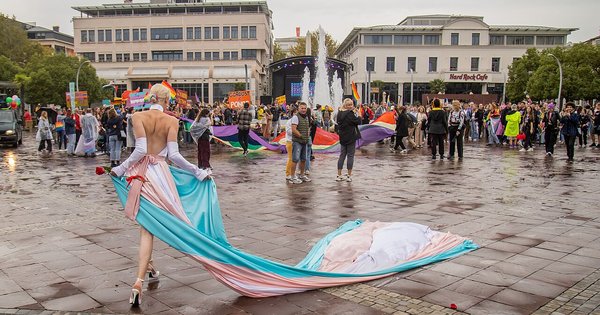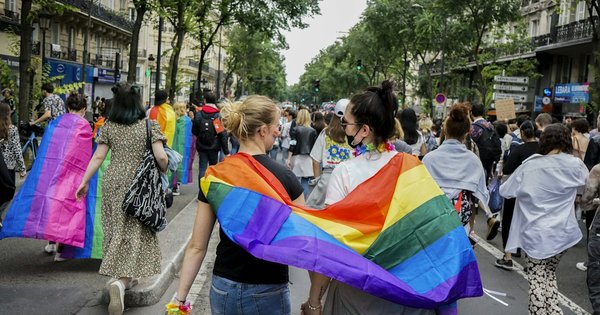
CSD Dresden — Christopher Street Day Dresden — opens tomorrow, Saturday May 30, with a street festival in the Altmarkt and a march through the city centre that organisers expect to draw around ten thousand people. It is one of the earliest Pride events on the long German CSD calendar, and after the 2025 season, it is also one of the most closely watched.
Dresden is the capital of Saxony, a state where the far-right Alternative for Germany (AfD) is the largest party in the state parliament. In the September 2024 state election the AfD took 30.6 percent of the vote in Saxony, ahead of the centre-right CDU, and the only reason the state has a government at all is a fragile centre-right minority coalition that depends on case-by-case support to pass legislation. Dresden itself has, for the better part of a decade, been one of the visible centres of organised far-right activism in Germany — from the PEGIDA marches that started in the city in 2014, through the youth-extremism cases that drew national attention through 2024 and 2025.
That is the political water Saturday’s CSD swims in.
What last year set up
The 2025 Pride season in Germany was, by the count of CeMAS — the Berlin-based monitoring outfit that tracks right-wing extremism and disinformation — a year of organised opposition. CeMAS counted 27 Pride events targeted by far-right counter-mobilisation across the country last summer, the bulk of them in the east. Saxony alone accounted for nearly a third of that total. Bautzen, a small Saxon city about an hour east of Dresden, saw roughly a thousand Pride marchers walk a route flanked by several hundred far-right counter-demonstrators; reporting from the day described racist and neo-Nazi chanting and at least one Hitler salute. Zwickau, Plauen, Görlitz — all Saxon cities — saw versions of the same scene.
Dresden in 2025 was the largest of those events by participant count, and the most heavily policed. The CSD march drew between twelve and fifteen thousand participants, depending on the source; counter-mobilisation arrived in the city centre, was kept at a deliberate distance by Saxon state police, and produced no successful disruption of the march itself but a sustained running confrontation along the side streets. The post-event briefing from CSD Dresden organisers was that the day had succeeded — the march moved, no participants were seriously injured, the rally happened — but that the cost of that success, in police hours, in coordination, in the emotional toll on the LGBTQ+ community in the city, had risen sharply from previous years.
That cost has not gone away in twelve months. CSD Dresden 2026 has been planning around it since January.
What CSD Dresden looks like this year
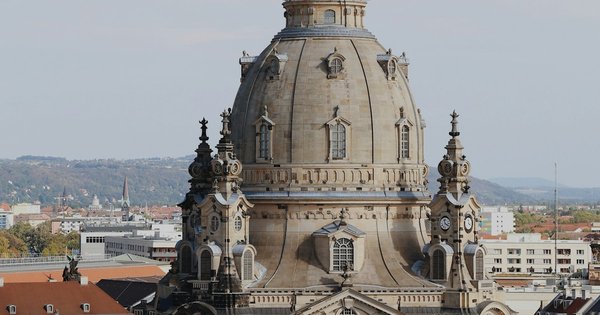
Saturday’s program follows the long German CSD format: a daytime street festival in the Altmarkt, the city’s central market square; a march through the centre that loops past the Frauenkirche and the Semper Opera; and an evening rally with speeches, music, and the formal political demands the organising committee has put forward for the year. The march route was published in mid-May and runs deliberately past the Saxon state parliament building — a routing decision the organising committee has framed as part of the year’s political messaging.
The published demands focus on three areas: state-level hate-crime data reporting, which Saxony has lagged on relative to other German states; trans healthcare access through the Saxon public health system, which has been particularly affected by hospital network closures in rural Saxony; and the state’s response to far-right counter-mobilisation at Pride events, including a specific request that Saxony’s interior ministry publish counter-mobilisation incident data for the 2025 CSD season the way North Rhine-Westphalia and Berlin already do.
The street festival opens at 11:00 in the Altmarkt. The march steps off at 14:00. The closing rally is scheduled for 17:00 at the same square.
What to watch on Saturday
Three things to watch from outside Dresden over the weekend.
The first is participant count. CSD Dresden organisers were privately concerned, in the run-up, that the chilling effect of 2025’s counter-mobilisation would suppress turnout — that some queer Dresdeners and some Saxon visitors would simply stay home rather than march under the conditions the day now requires. A number meaningfully below 2025’s, in a city where the queer community is not large to begin with, would be a particular kind of warning. A number at or above 2025’s would be a particular kind of statement.
The second is the police-extremism interaction along the route. Saxon state police have been criticised in past years for under-counting counter-mobilisation incidents and for inconsistent enforcement of the buffer zone around Pride routes. The 2024 internal review of the Saxon ministry of the interior promised better data collection for 2026. Saturday is the first test.
The third is the political response. The Saxon AfD’s parliamentary group has, in past years, issued formal statements on CSD weekend that have ranged from coded objection to overt hostility. The CDU-led state government has, with the same regularity, declined to comment one way or the other. The 2026 cycle is the first one in which the federal grand coalition includes the CDU and the SPD again — a configuration that has historically softened the centre-right reluctance to engage on LGBTQ+ topics, but which has not yet done so visibly in Saxony.
Either way, Dresden marches on Saturday. The march has marched every year since 1995 — the year it started, just after the German federal government voted to scrap Paragraph 175, the criminal code provision that had outlawed sex between men. The year before that, in 1994, would not have been possible. The Dresden march, every year since, has been a particular kind of public claim about what is possible in this city and in this state. That claim, on Saturday, will be made again, and the conditions under which it is made are the story.
The official program is at csd-dresden.de. Berlin-based CeMAS publishes running monitoring of far-right counter-mobilisation at German Pride events through the season.