It took 45 years, but Europe’s main human rights organisation finally has a plan with LGBTI people’s name on it.
On September 24, the Council of Europe adopted its first-ever Strategy on equal rights for LGBTI people, GCN reported. It covers 2027 to 2032 and will be officially launched on January 26, 2027, at an event held under Montenegro’s presidency of the Council’s Committee of Ministers.
That timing is not an accident of history, and it is worth unpacking why this matters, especially if you live somewhere the EU’s rules don’t reach.
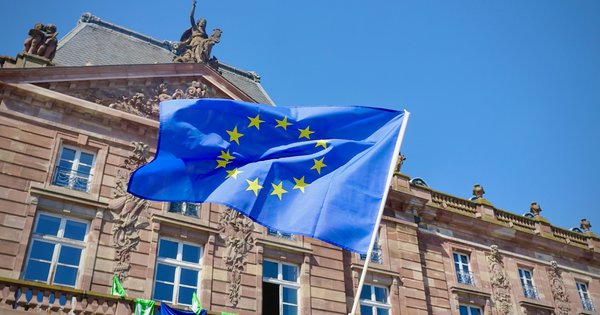
First: the Council of Europe is not the EU
Easy to mix up, same flag, both headquartered partly in Strasbourg. But they are different clubs.
- The EU has 27 members and makes binding law. It already has its own LGBTIQ Equality Strategy for 2026–2030.
- The Council of Europe has 46 members. It runs the European Convention on Human Rights and the European Court of Human Rights in Strasbourg, whose judgments bind every member.
The difference matters most in the places the EU doesn’t cover. Albania, Serbia, Montenegro, North Macedonia, Bosnia and Herzegovina, Turkey, Georgia, Armenia, Ukraine, Moldova and the UK are all Council of Europe members. For queer people in those countries, Strasbourg is often the court of last resort.
Why “45 years” is the number people keep quoting
The strategy lands 45 years after the European Court of Human Rights’ first LGBTI ruling in 1981. That case, Dudgeon v. United Kingdom, found that Northern Ireland’s criminalisation of sex between men violated the right to private life. It set off decades of case law on everything from military service bans to legal gender recognition.
What the Council of Europe hasn’t had until now is a single, organisation-wide plan that tells its own departments and its member governments what to prioritise.
The four priorities
According to GCN, the strategy is built on four priorities:
- Dignity and respect. Recognising the equal rights and dignity of LGBTI people and promoting a culture of respect and inclusion to counter stigmatisation.
- Fighting disinformation. Countering disinformation and manipulation of information about LGBTI people “in order to uphold democracy, human rights and the rule of law.”
- Stopping violence and hate. Preventing and combating violence and hatred against LGBTI people.
- Stronger laws. Establishing, safeguarding and strengthening protection through effective legal, institutional and regulatory frameworks.
The strategy also flags the harmful use of AI as a growing concern, with disinformation and AI tools able to widen the reach of hate speech.
That second priority is the one to watch. Framing anti-LGBTI disinformation as a threat to democracy itself, not just to a minority, is exactly the argument activists have been making as governments from Turkey to Georgia recast queer people as a danger to “the family.”
The gaps it is trying to close
GCN’s reporting includes a telling set of numbers on hate speech laws across the 46 member states:
- 35 have explicit legal protection against hate speech based on sexual orientation
- 18 cover gender identity
- 6 cover gender expression
- 6 cover sex characteristics (the category that protects intersex people)
- Only 3, Belgium, Denmark and Malta, cover all four
In other words: most of Europe has caught up on protecting lesbian, gay and bi people from hate speech. Trans, non-binary and intersex people are still mostly on their own.
The strategy also commits the Council of Europe to working with states to recognise, pardon and expunge historical convictions for same-sex activity. Kieran Rose of Ireland’s LGBT Restorative Justice Campaign told GCN: “We welcome the new Council of Europe strategy which commits to working with States to recognise, pardon and expunge historical convictions for same-sex activity.”
That’s a live issue in our region too. Activists in Serbia have spent this year asking the state to apologise to the men it prosecuted before gay sex was decriminalised in 1994.
Why Montenegro launching it is a big deal
Montenegro will host the launch in January while it chairs the Committee of Ministers. It’s a nice fit. When its life partnership law took effect in 2021, Montenegro became the first of the Western Balkan EU candidates to legally recognise same-sex couples, and its Pride Week is running right now, with the Podgorica march set for October 3.
It’s also a reminder that the job isn’t done. Our reporting last week found Montenegro’s justice gap on hate crimes and asylum is still wide, and the partnership law is still waiting for other laws to catch up.
The Council of Europe also does quieter, practical work in the region. In Albania, it gave technical support to the Health Ministry’s first clinical guideline on hormone therapy for trans people this year.
What a strategy can and can’t do
Be clear-eyed about this. A strategy isn’t a law. It doesn’t force Turkey to release detained activists or make Serbia pass a same-sex partnership bill.
What it does is set priorities, attach the Council’s staff, money and monitoring to them, and give activists something official to point to. When a government pushes a “foreign agent” bill or a “family protection” law, local groups can now cite a strategy their own government signed up to as a member state.
It arrives at a moment when the global picture is grim. Just last week, the UN’s human rights chief warned of a “comprehensive onslaught” against LGBTIQ+ people. Funding for queer groups has collapsed since US aid cuts.
What happens next
- January 26, 2027: official launch under Montenegro’s presidency.
- 2027–2032: the strategy runs, covering all 46 member states.
- Watch for whether it comes with real monitoring. The most useful strategies publish country-by-country progress; the least useful sit on a shelf.
For queer people in Tirana, Belgrade, Sarajevo or Istanbul, Strasbourg can feel far away. This week it moved a little closer.