Thirty-two years ago this month, on July 14, 1994, Serbia’s parliament quietly struck a single clause from its criminal code. Paragraph 3 of Article 110 had made “unnatural fornication” between men punishable by up to a year in prison. Its repeal decriminalized male homosexuality overnight — but it never came with an acknowledgment of the people who had already been arrested, tried, or pushed to the margins under it. This summer, as Serbia’s LGBTQ+ community looks ahead to Belgrade Pride Week at the end of August, activists are asking the state to close that loop with something it has never offered: an apology.
The demand is simple to state and surprisingly rare in the Balkans. Advocates want the Serbian state to formally apologize to every citizen who, before 1994, was prosecuted through the courts or otherwise persecuted because of their sexual orientation or gender identity. It is a request rooted less in litigation than in memory — a recognition that the law did real harm to real people, many of whom are now elderly and were never named, compensated, or acknowledged.
Why an apology, and why now
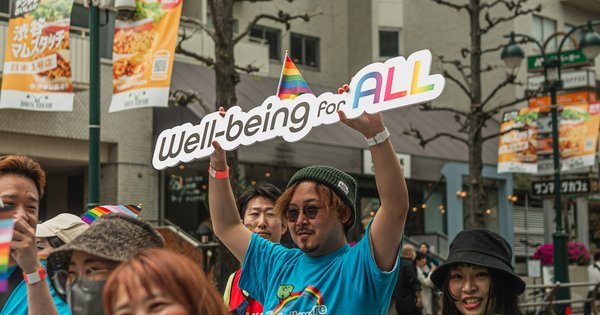
Symbolic reckonings like this have precedent elsewhere in Europe. Germany, the United Kingdom, and Spain have all, in different forms, moved to pardon or apologize to men convicted under historic anti-gay laws. For Serbia, the ask arrives at a moment when the community is trying to shift the conversation away from the single week of Pride and toward year-round accountability. As one recurring theme in Balkan activism this year puts it, LGBTQ+ people need freedom all year, not just during Pride season — and a state apology is the kind of gesture that outlasts a parade.
There is also a strategic logic. Serbia remains an EU candidate country, and its treatment of minorities is a standing item in accession assessments. An official apology would cost the government little and signal, cheaply and clearly, that it takes the dignity of LGBTQ+ citizens seriously. That makes it a useful test: a state that cannot bring itself to say sorry for a law it already repealed reveals something about how far it is willing to go on the harder reforms still outstanding.
The apology is one item on a longer list
Crucially, activists are not framing the apology as a standalone gesture. It sits alongside a set of concrete, forward-looking demands that would change everyday life for LGBTQ+ Serbians. Those include free access to PrEP and PEP through the public health system, which would put Serbia in line with prevention standards common across the EU; the standardization of community outreach and peer-support roles under the Ministry of Labour, Employment and Social Affairs, so that this work is recognized and funded rather than left to volunteers; and sustained education and awareness efforts aimed at young people, to address the discrimination that starts long before adulthood.
Running underneath all of it is a persistent problem the community keeps flagging: uneven protection for Pride events outside the capital. Belgrade’s main march has, in recent years, drawn heavy police protection and international attention. Smaller cities have fared far worse — the Pride event in Kruševac was unlawfully banned, a reminder that rights secured in the capital do not automatically extend to the rest of the country. An apology for past persecution rings hollow if present-day gatherings can still be shut down on a mayor’s say-so.
The bigger picture in the Balkans
Serbia’s situation is not unusual for the region. Across the Western Balkans — Serbia, North Macedonia, Kosovo, Bosnia, Montenegro, and Albania — LGBTQ+ communities are navigating the same tension between formal legal progress and lived reality, often with EU accession dangling as both incentive and leverage. Decriminalization arrived decades ago in most of these countries; what remains is the slower, more contested work of partnership recognition, gender-recognition law, hate-crime enforcement, and the simple expectation of being able to walk down the street safely.
Belgrade Pride Week 2026 runs from August 31 to September 6, with the Pride march closing it out on Saturday, September 6. Whether the apology demand gains any official traction before then is an open question — Serbian institutions have a long habit of letting such requests pass in silence. But the fact that it is being raised at all matters. Reckoning with the past is one of the ways a community insists on being seen in the present, and for the men who lived under Article 110, an acknowledgment that never came is still worth asking for.
Sources: Balkan Insight; LGBTQ history in Serbia (Wikipedia).