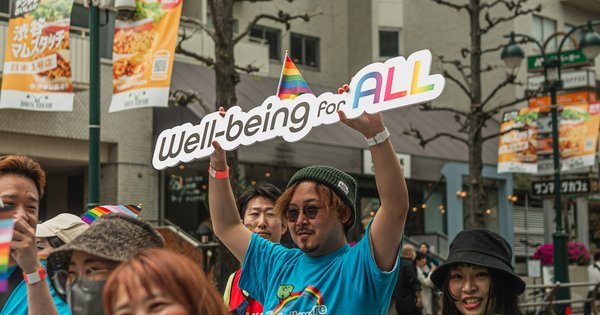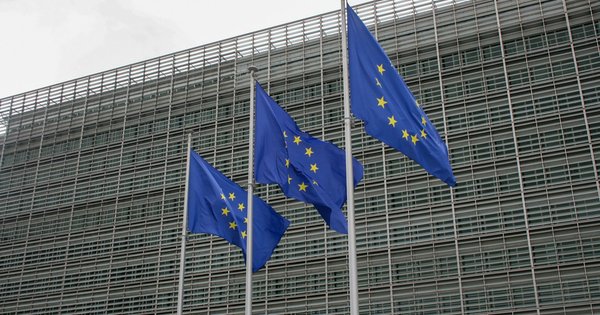
The European Union now has a fresh blueprint for LGBTIQ+ equality running through the end of the decade. The Commission’s LGBTIQ+ Equality Strategy 2026–2030, adopted in October 2025 and now in its first full year of implementation, is the successor to the 2020–2025 strategy that first put queer rights on the EU’s formal policy map. It is more ambitious than its predecessor on paper. Whether it changes anything on the ground is a different question — and one that matters enormously for the Balkans, where we spend much of our year.
What’s actually in it
The strategy is built around three pillars, and the framing is worth reading closely because it signals where the Commission thinks the fight now is. The first pillar is protection from violence, with a notably sharper focus on hate-motivated violence, online hate, and disinformation. The second is empowerment — living free from discrimination, with equal rights across employment, health, education, and family life. The third is engagement, the softer work of getting society, member states, and institutions to actually move.
A few concrete commitments stand out. The strategy pushes member states to ban conversion practices, an area where Europe is still a patchwork — some countries have full bans, others have nothing. It calls for the full implementation of the long-stalled Equal Treatment Directive, which would extend anti-discrimination protection beyond employment into goods, services, and other areas of life. It leans into recognition of “rainbow families” across borders, the practical problem of a same-sex couple or their children being legally a family in one member state and legal strangers in the next. And it keeps intersectionality as a stated cross-cutting priority, which in plain terms means not treating “LGBTIQ+” as a single white, urban, cisgender category.
There is money attached, which is not nothing. Funding under the CERV programme continues through 2027, with up to €3.6 billion earmarked under the CERV+ strand of the AgoraEU programme in the next Multiannual Financial Framework. Civil-society groups — the organizations that actually run the helplines, the legal clinics, and the Pride marches — depend on exactly this kind of funding to survive.
The gap between a strategy and a right
Here is the honest part. An EU equality strategy is not a law. It is a plan the Commission commits to, and it steers funding and political attention, but it cannot by itself compel a member state to ban conversion therapy or recognize a marriage. The European Parliament’s own LGBTIQ+ Intergroup, welcoming the strategy, framed its response as a call for “ambition, enforcement and inclusion” — and the middle word is the one that does the work. The 2020–2025 strategy was praised when it launched, too. Five years on, some of its headline goals, like a horizontal anti-discrimination directive, were still stuck.
Enforcement, when it comes, tends to come from courts rather than strategies. The single most consequential thing that happened for LGBTIQ+ rights in the EU this year was not a policy document — it was the Court of Justice ruling in April that Hungary’s anti-LGBTQ law breaches EU law and core Union values. That ruling has teeth. A strategy sets the direction; litigation and infringement proceedings are what change behavior. The most useful way to read the 2026–2030 strategy is as the political scaffolding that makes those harder enforcement steps easier to justify.
Why this reaches the Balkans
For readers in Western Europe, a lot of this strategy is about closing gaps in countries that are already fairly protective. From where we sit, in Albania and around the Western Balkans, the more interesting story is the accession one.
Every Balkan country hoping to join the EU — Albania, Serbia, Montenegro, North Macedonia, and the others — has to align with the bloc’s fundamental-rights standards to get in. That has always been the quiet engine of LGBTQ+ legal progress in the region: not domestic enthusiasm, which is often thin, but the accession checklist. When the Commission sharpens its own internal standards on conversion practices, family recognition, and hate-crime protection, it also, eventually, raises the bar for what candidate countries are expected to deliver. Albania’s civil-union benchmark, which we’ve written about, sits inside exactly this logic.
The catch is that the same anti-gender movements sweeping parts of Western and Central Europe are active across the Balkans, and they read these documents too. A stronger EU equality strategy gives local activists a lever and gives reformist governments cover — but it also hands the opposition a fresh “Brussels is imposing values on us” talking point. That tension is not going away, and pretending the strategy will glide into effect would be dishonest.
What we’ll be watching
The measure of this strategy won’t be the launch. It will be the boring follow-through over the next four years: whether the Equal Treatment Directive finally moves, whether more countries pass conversion-practice bans, whether cross-border family recognition stops being a lottery, and whether CERV+ money actually reaches the small organizations doing the work rather than getting stuck in administrative machinery. And for our corner of the map, whether any of it shows up in the accession negotiations as a concrete ask rather than a paragraph of good intentions.
A strategy is a promise. We’ll hold onto it — and keep an eye on who keeps it.
Sources: European Commission LGBTIQ+ Equality Strategy 2026–2030, European Parliament LGBTIQ+ Intergroup briefing, Human Rights Watch.