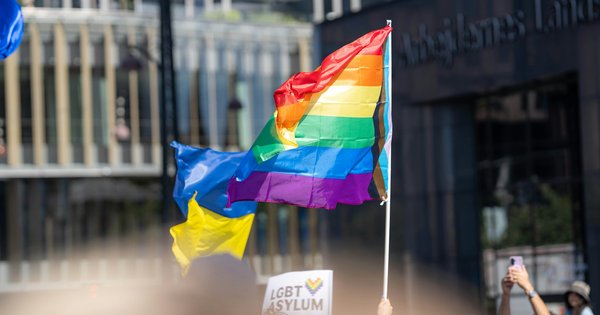
Today is National Coming Out Day. You’ll see the posts: the selfies with a rainbow flag, the long captions, the “I’ve never told anyone this, but…” threads. They’re lovely. They’re also mostly from places where being out is a lot less risky than it is for many of our readers.
So let’s talk about what coming out actually looks like in the Balkans, using the best numbers we have.
Where the day comes from
National Coming Out Day started in the United States in 1988. It was founded by psychologist Robert Eichberg and lesbian activist Jean O’Leary, and it’s held on October 11 because that’s the anniversary of the 1987 National March on Washington for Lesbian and Gay Rights (Wikipedia). Countries including Ireland, the Netherlands, Switzerland, Portugal and the UK mark it too.
The original idea was simple: the more people know someone who is openly queer, the harder it gets to treat queer people as an abstraction. That still holds. But it was never meant to be a deadline.
The numbers: who’s out, and who isn’t
The most detailed data comes from the EU Agency for Fundamental Rights (FRA). Its third LGBTIQ survey, run from June to August 2023 and published in May 2024, drew on 100,577 responses from the 27 EU countries plus three candidate countries: Albania, North Macedonia and Serbia (FRA).
Here’s how many people said they’re fairly or very open about being LGBTIQ:
- Albania: 12% (FRA country sheet)
- North Macedonia: 21% (FRA country sheet)
- Serbia: 29% (FRA country sheet)
- EU-27 average: 51%
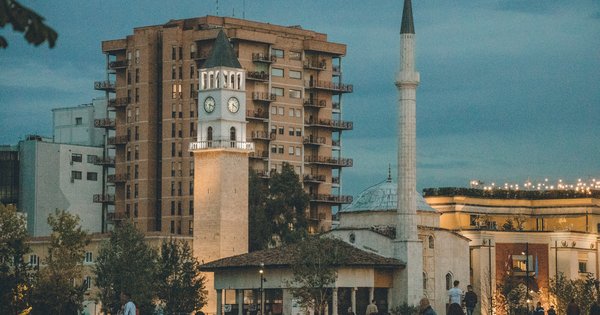
Read that Albania number again. Roughly one in eight. If you’re queer in Tirana and most of the people you know have no idea, you are the norm, not the exception.
Why people stay quiet
The same survey explains a lot of that silence.
Holding hands is a calculation. 74% of respondents in Albania and in North Macedonia, and 80% in Serbia, often or always avoid holding hands with a same-sex partner in public. Across the EU it’s 53%.
Some places feel off-limits. 47% in Albania and 43% in both Serbia and North Macedonia often or always avoid certain locations for fear of being assaulted, against 29% in the EU.
Harassment is common. In the year before the survey, 62% in Albania, 58% in Serbia and 63% in North Macedonia said they were harassed.
Work isn’t always safe. 36% of respondents in Albania felt discriminated against at work or while looking for work in the previous year, almost double the EU figure of 19%. It was 24% in Serbia and 27% in North Macedonia.
And school is where a lot of it starts. Around two-thirds of respondents in all three countries said they were bullied, ridiculed or threatened at school for being LGBTIQ. 64% of LGBTIQ students in Albania, 61% in Serbia and 63% in North Macedonia said they hid who they were at school.
One more number is hard to read: around a third of respondents said they went through a so-called “conversion” practice (30% in Albania and 32% in both Serbia and North Macedonia, against 24% in the EU).
And few people trust the state to have their back. Only 13% in Albania, 14% in North Macedonia and just 6% in Serbia believe their government effectively fights prejudice against LGBTIQ people.
A note on gaps: Kosovo, Montenegro and Bosnia and Herzegovina weren’t part of FRA’s survey, so there’s no comparable figure for them.
What’s shifting
It isn’t all stuck. In Albania, 36% of respondents said their school education never addressed LGBTIQ issues, and in Serbia 37%, both well below the EU figure of 62%.
The streets are changing too. Tirana Pride marched again in May. In September, Belgrade Pride marked 25 years since the 2001 march that was attacked. And right now, Queer Film Marathon Tirana is taking queer cinema to 12 Albanian cities, running until October 25. Every one of those happens because people decided, in their own way and on their own timeline, to be seen.
And the overall trend is up: FRA’s headline summary puts the share of LGBTI people who are open at 52%, up from 46% in its 2019 survey. Visibility grows slowly, but it grows.
Out is a spectrum
Here’s what the selfies don’t always say. Being out isn’t one switch. Lots of people are out to friends but not family, at university but not at work, online but not in their hometown. That’s not hiding. It’s making smart decisions about your own life.
If you’re thinking about coming out:
- You set the timing. Today is a nice day to do it. So is any other day. So is never, if that’s what keeps you safe.
- Start small. One trusted person is a real coming out.
- Check your digital life first. Shared devices, family phone plans and old group chats can out you before you’re ready.
- Have a plan B if family might react badly: somewhere to stay, a friend on standby, access to your own money.
- Find your people. Local LGBTIQ organisations exist in Tirana, Belgrade, Skopje and beyond. They’ve helped a lot of people through exactly this.
And if someone comes out to you today: say thank you, ask what they need, and keep it to yourself. Being the safe person matters more than you know.