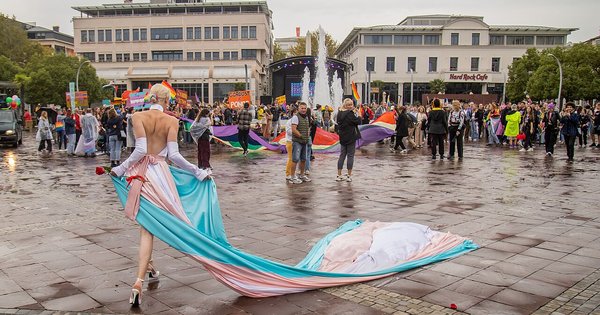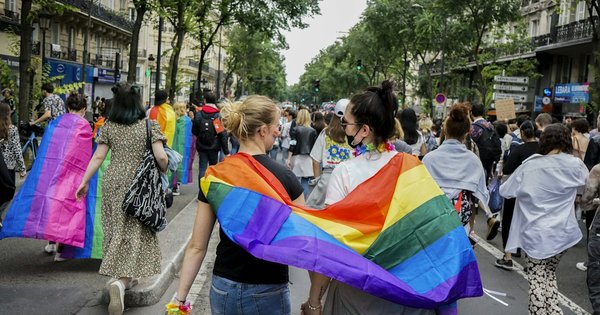
If you want to see what Pride looks like at full European scale, Cologne is the place to be this weekend. ColognePride — the city’s Christopher Street Day, and one of the largest LGBTQ+ celebrations on the continent — reaches its peak from July 3 to 5, closing with a parade on Sunday, July 5 that draws hundreds of floats and hundreds of thousands of people down to the banks of the Rhine.
The essentials
The full ColognePride festival period runs from June 19 to July 5, a two-and-a-half-week stretch of talks, parties, exhibitions and community events across the city. The heart of it is the CSD Street Festival, taking place July 3–5 throughout Cologne’s Old Town, with stages, performances, food stalls and info booths from queer organizations.
The parade itself — the CSD-Demonstration — steps off at 11:30 on Sunday, July 5, winding along the Rhine from Heumarkt to Kurt-Hackenberg-Platz. It is, as the name in German insists, a demonstration as much as a party: a political march that happens to come with sound systems.
This year’s motto sets the tone: “FÜR QUEERRECHTE – Viele. Gemeinsam. Stark!” — “For Queer Rights — Many. Together. Strong.” It is a deliberately plain-spoken slogan, and a pointed one.
Why “For Queer Rights,” and why now
Germany is not Hungary, and Cologne is about as comfortable a place to be queer as Europe offers. But the choice of motto is not accidental. Germany has spent the past two years watching a resurgent far right — most visibly the AfD — make opposition to LGBTQ+ visibility a reliable applause line, targeting Pride events, drag readings, and rainbow flags on public buildings. Several German cities have seen far-right counter-marches attempt to shadow their CSDs. The insistence on “queer rights,” in the plural and in the imperative, is Cologne’s organizers planting a flag: this is a rights demonstration, not merely a celebration, and the rights in question are not as settled as a sunny weekend crowd might suggest.
Germany did legislate real progress recently — its self-determination law, which lets trans, intersex and non-binary people change their legal name and gender marker through a straightforward administrative process, took effect in late 2024 and remains a model that much of Europe, and certainly the Balkans, has yet to match. Cologne’s march is partly a defense of gains like that one against a political climate that would happily roll them back.
If you’re going
Cologne in early July is warm, crowded and famously friendly, and CSD weekend turns the whole city center into an open-air festival. The Street Festival is free and family-welcoming; the Old Town and the Rudolfplatz–Schaafenstraße area form the traditional heart of queer nightlife. Public transit is the only sane way to move around parade day, and the city fills its hotels months in advance — so the practical advice, if you are reading this on the weekend itself, is to go for the day rather than the bed.
For the many travelers already crisscrossing Europe this summer between WorldPride in Amsterdam later this month and the tail end of the Mediterranean Pride season, Cologne is a reminder that the biggest, most established marches carry a political charge too. “Many. Together. Strong.” is not just a nice sentiment. In 2026, it reads as a strategy.
Sources: ColognePride official site, Cologne Tourism, Germany with Amy.