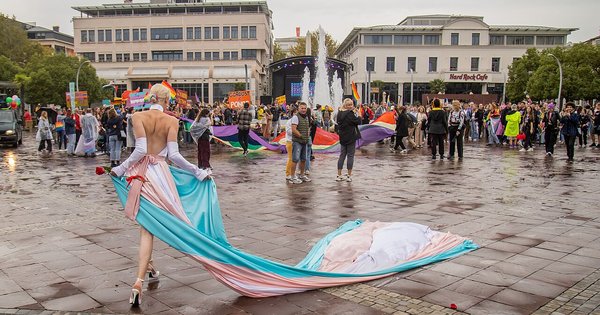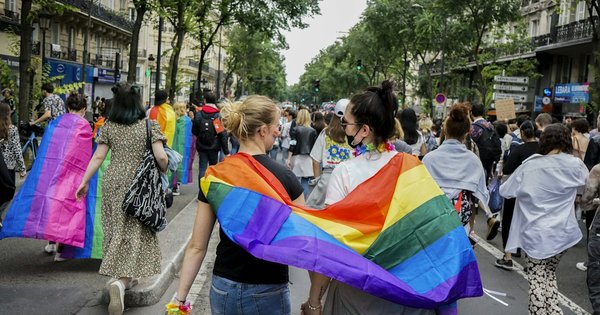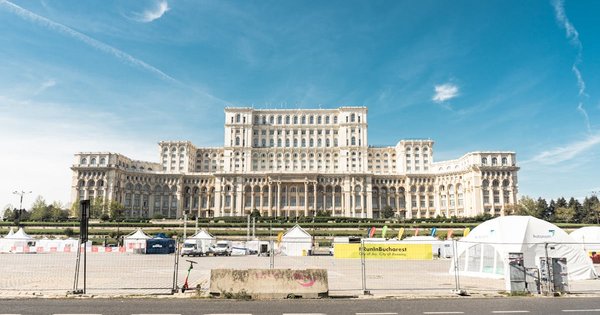
Bucharest Pride 2026 has confirmed its dates: an eleven-day programme running from June 3 to June 13, with the main march on Saturday, June 13. This year’s theme is “All of Us.” The route is unchanged from recent editions — Calea Victoriei to Piața Națiunilor Unite, past the Palace of the Parliament, and into Izvor Park for the closing concert. Organisers expect more than 30,000 people, which would match or exceed the historic turnout of the 2024 march.
The edition is a milestone for the organisation behind it. ACCEPT, founded in 1996, is Romania’s oldest LGBTQ+ rights organisation, and 2026 is its thirtieth anniversary. ACCEPT was instrumental in the campaign that led to the repeal of Article 200 of Romania’s criminal code in 2001 — the last European country to fully decriminalise consensual same-sex conduct between adults. It has organised Bucharest Pride every year since 2005. The thirtieth-anniversary framing runs through the 2026 programme: archival exhibitions, a panel of activists who were involved in the Article 200 campaign, and a documentary screening at the Romanian Peasant Museum that traces the organisation’s first decade.
Where Romania actually sits on rights
It would be misleading to write a Bucharest Pride preview without saying plainly where Romania ranks. On ILGA-Europe’s 2026 Rainbow Map, released earlier this month, Romania scored 19 percent — the lowest of any EU member state. Bulgaria is at 20 percent, Poland at 22 percent. Romania has no recognition of same-sex partnerships of any kind. The Constitutional Court has been asked to rule on civil unions and has avoided doing so. The European Court of Human Rights ruled in the Buhuceanu and Others v. Romania case three years ago that Romania’s refusal to provide a legal framework for same-sex couples violated the European Convention. Three years on, Romania has not complied.
Romanian politics is also in a state of flux. Nicușor Dan was elected president of Romania in May after a contentious runoff against a far-right rival; he is widely regarded as a moderate but has avoided public stances on marriage equality, both during the campaign and since taking office. The legislative initiative on civil unions remains stalled. ACCEPT’s manifesto for 2026 — which the organisation has been crowdsourcing from LGBTQ+ Romanians across the country since March — is expected to be read at the closing rally and addressed to the new presidency and parliament. The draft, parts of which have circulated publicly, demands the recognition of same-sex civil partnerships, anti-discrimination protections at work, and a working framework for legal gender recognition.
The programme
The eleven days between June 3 and June 12 are packed. There are film screenings at Cinema Elvire Popesco and the French Institute, theatre and dance performances at ARCUB, a partnership conference at the Romanian Academy of Economic Studies bringing together LGBTQ+ organisations from twelve countries, and a community sports tournament hosted by Bucharest Gay Sports. Pride Park runs in Izvor Park on June 12 and 13, with music, workshops, exhibitions, and stalls from queer-owned businesses and organisations from across Romania.
The march itself on June 13 begins at 17:00 at Piața Victoriei. The route runs about three kilometres down Calea Victoriei, the city’s central artery, through Piața Națiunilor Unite, past the Palace of the Parliament and into Izvor Park. Security is co-ordinated with the Bucharest Gendarmerie, and a counter-protest by far-right and religious groups has applied for a parallel demonstration, which is standard for Bucharest Pride. In recent years, the police have separated the two with substantial buffers and there have been no major incidents.
The thirty-year arc
There is something worth sitting with in the anniversary framing. When ACCEPT was founded in 1996, homosexuality was still a criminal offence in Romania. The organisation’s first decade was spent fighting to change a single article of the criminal code while many of its members faced harassment, dismissal from jobs, and worse. The first Bucharest Pride in 2005 drew a few hundred people under heavy police protection and active hostility from counter-protesters.
In 2024, the march drew a historic 30,000. In 2026, ACCEPT is planning around a similar number and an eleven-day programme with cultural partners across the city. None of that closes the gap between Romanian law and the European Convention. But the visibility, the cultural programme, and the sheer scale of the march itself say something about how the conversation in Romania has shifted, even when the law has not.
For anyone planning to be in Bucharest that week: the Pride Park grounds open at 13:00 on parade day, the closing concert runs until 23:00, and the official accessibility information and accreditation forms are published at acceptromania.ro. International marching delegations have already confirmed from Spain, Germany, France and Hungary. The “All of Us” theme is meant to read both ways — as an invitation, and as a demand.
Sources: ACCEPT Romania (acceptromania.ro), Romania Insider, ILGA-Europe Rainbow Map 2026, debucuresti.ro, Wikipedia (Bucharest Pride).