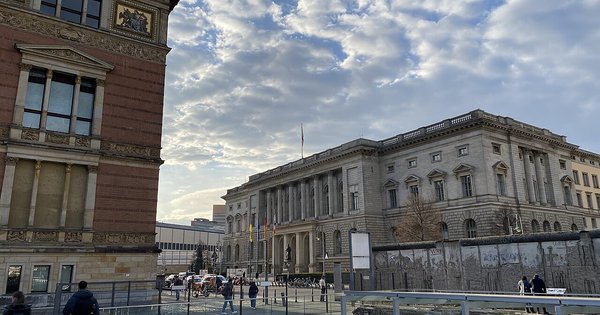
Germany held two state elections on Sunday, 20 September, and they pointed in opposite directions. In Berlin, the city that likes to call itself Europe’s “rainbow capital,” voters made the left-wing party Die Linke the largest party in the Abgeordnetenhaus for the first time. A few hours’ drive north, in Mecklenburg-Vorpommern, the far-right Alternative for Germany (AfD) finished first with more than 38 percent.
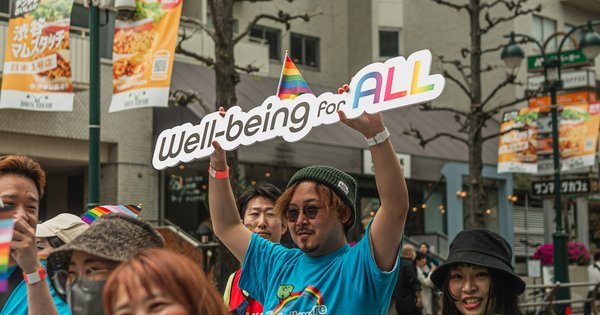
Both results matter for LGBTQ+ people, though in different ways. And both come just two months after the attack on Berlin’s Christopher Street Day in July, which killed one person and injured dozens. At the time, queer Berliners warned that the tragedy could be turned into election material.
Berlin: a clear winner, but no easy majority
According to the preliminary result reported by ZDF, Die Linke, led by Elif Eralp, won 25.7 percent. The CDU, which has governed Berlin since 2023, fell to 18.8 percent. The AfD came third with 16.3 percent, ahead of the Greens on 14.3 and the SPD on 12.1. The Sahra Wagenknecht Alliance (BSW) missed the 5 percent threshold. Turnout rose sharply, to 74.2 percent from 62.9 percent in 2023.
The outgoing CDU–SPD coalition has been voted out. Together, the two parties hold only 56 of the 158 seats, well short of the 80 needed for a majority. The CDU has ruled out working with Die Linke, and every other party rules out the AfD under Germany’s long-standing “firewall.” That leaves two realistic options, ZDF noted: a coalition led by Die Linke with the Greens and SPD, or a CDU-led three-way alliance. The Greens signalled openness to a left-wing alliance before the vote. On election night SPD lead candidate Steffen Krach declined to discuss coalitions. “We have been voted out,” he said.
Age made the biggest difference. ZDF reported that 46 percent of voters aged 16 to 24 backed Die Linke. In her victory speech Eralp said that in Berlin, “love and justice have won over hate,” and that the signal would go out to the world.
Why the budget matters for queer Berlin
For Berlin’s LGBTQ+ organisations, a new government matters first for a very practical reason: money. The outgoing CDU–SPD coalition cut funding for queer projects in the 2026/27 double budget, and the queer magazine SIEGESSÄULE documented the cuts in January. The LSVD⁺ Berlin-Brandenburg expected to be short almost €100,000 this year. It said its specialist counselling for educators, midwives and others working with rainbow families was likely to lose funding, and that no other provider in the city offers it. Sebastian Walter, queer-policy spokesperson for the Berlin Greens, told the magazine that cutting this infrastructure was “a historic turning point” and “unworthy of the rainbow capital.”
Whoever governs next will have to decide whether to restore that funding. That goes for community centres, anti-violence and education work, and counselling services for trans, inter and non-binary young people. It’ll also shape how Berlin handles security for queer events in the year after the CSD attack.
The result has its own tensions. On election night, the president of the Central Council of Jews in Germany, Josef Schuster, accused Die Linke of repeated antisemitic transgressions during the campaign that had so far gone without consequences, ZDF reported. That criticism will shadow coalition talks. Berlin’s LGBTQ+ community includes Jewish queer people who are watching that question as closely as the budget.
Mecklenburg-Vorpommern: the AfD’s strongest showing yet
The picture in the northeast is starker. According to preliminary results, the AfD won 38.2 percent and 32 seats, doubling its vote share. The governing SPD took 35.5 percent. Die Linke and the Greens won five seats each, while the CDU, on 4.9 percent, and the FDP both fell out of the Landtag entirely. Turnout was 78.1 percent. Chancellor Friedrich Merz, whose CDU was wiped out of the state parliament, called the result a “disaster,” ZDF reported.
Because of the firewall, the AfD isn’t expected to govern. The likeliest outcome is a continued SPD-led government with Die Linke and the Greens. But the AfD also won the Saxony-Anhalt election two weeks earlier, so it now finishes first in eastern German states with some regularity. The party has campaigned to repeal Germany’s Self-Determination Act, the 2024 law that lets trans, intersex and non-binary people change their legal gender and first name with a simple declaration at the registry office. As the largest opposition group, it’ll set much of the tone in the Schwerin Landtag, including on queer education, funding and Pride.
For LGBTQ+ people in rural eastern Germany, where Pride events have repeatedly faced far-right counter-mobilisation, that’s the practical meaning of Sunday’s vote. Rights won’t change overnight. But the loudest voice in the regional parliament will come from a party hostile to them.
Two Germanys, one question
Taken together, the two results show a country pulling apart. Young, urban voters in the capital swung left. Voters in a rural eastern state turned to the far right in record numbers. The federal coalition of CDU and SPD was punished in both places.
Neither result changes federal law. But German queer policy is increasingly made at the state level too, through budgets, school curricula and policing, and not just in the Bundestag. For queer Berliners, the question now is whether a new coalition will reverse the cuts and treat the “rainbow capital” label as a commitment. For queer people in Mecklenburg-Vorpommern, it’s how to hold ground in a Landtag where the far right is the largest party.