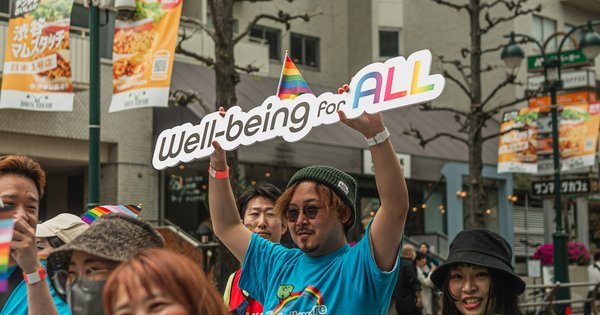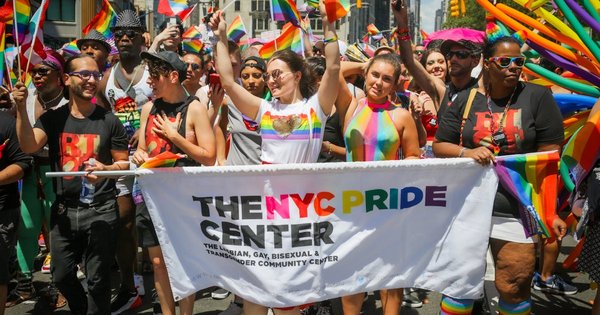
Germany’s Christopher Street Day season — the long summer run of Pride marches that fills the calendar from June into September — has not started yet. But the planning around it has, and a familiar worry is already in the room. For the second year running, LGBTQ+ organisers and the researchers who track political extremism are warning that far-right groups are preparing to shadow Pride marches across the country, and that they are getting better organised at it.
This is a story about a trend rather than a single event, and the trend is worth stating plainly because it is new enough that it can still be missed. In Germany, the most visible form of organised anti-LGBTQ+ activity in 2025 was not a piece of legislation. It was crowds — counter-demonstrations that turned up at Pride marches, particularly in the country’s east, to chant, to intimidate, and in some cases to try to physically disrupt the march.
What last year looked like
The scale is documented. CeMAS, a Berlin-based non-profit that monitors disinformation and right-wing extremism, counted 27 Pride marches targeted by far-right groups across Germany during the 2025 season — most of them in the eastern states. That figure is the baseline everyone is now working from, and it represents a sharp jump from the handful of disrupted events in previous years.
The character of the disruptions matters as much as the count. In Bautzen, a small city in Saxony, roughly a thousand people joined the local CSD march while several hundred far-right and neo-Nazi counter-demonstrators assembled nearby; reporting from the day described racist and neo-Nazi chanting and at least one Hitler salute. Similar scenes played out in Leipzig and Zwickau. Ahead of one Pride march, police intervened against a group of men — about half of them minors — who were said to be planning an attack.
That last detail is the one organisers keep returning to. The counter-mobilisation is not only growing; it is drawing in teenagers. Several German outlets and extremism researchers have described a younger cohort showing up in black bloc-style clothing, treating the disruption of a Pride march as a kind of entry point into organised far-right activity. A movement that recruits at the edge of a rainbow crosswalk is a different problem than a movement that recruits online, and it asks something different of the cities hosting these marches.
Why the east, and why now
It would be a mistake to read this as a purely eastern German phenomenon, or to treat it as disconnected from politics. The far-right Alternative for Germany (AfD) has its strongest support in the eastern states, and it has made opposition to what it calls “gender ideology” a routine part of its messaging. When a mainstream-sized political party normalises hostility to LGBTQ+ visibility, the more militant fringe reads that as permission. The counter-marches are the street-level expression of a shift that is also happening in parliaments and on social media.
ILGA-Europe, the continent’s main LGBTQ+ rights federation, has spent the past year describing exactly this dynamic across Europe — an offensive against LGBTQ+ people that runs through disinformation, political rhetoric, and administrative and legislative pressure, and that the organisation argues is increasingly coordinated rather than coincidental. Germany’s Pride counter-marches are one national version of a pattern visible from Romania to the Western Balkans. It is the same reason Pride organisers in Tirana and Sarajevo built this year’s marches around the language of solidarity: the threat rhymes across borders.
What organisers are doing differently
The German response, so far, has been less about confrontation and more about logistics and numbers. Cities that were caught off guard in 2025 are coordinating earlier with police on routes and timing. Pride organisers are emphasising turnout — the most effective answer to a few hundred counter-demonstrators has consistently been a few thousand marchers — and several are pairing the marches with daytime, family-friendly programming that is harder to cast as provocation.
There is also a deliberate refusal to let the counter-marches define the story. Brussels Pride set the tone for the season with its 2026 theme, “When Times Get Darker, We Shine Brighter,” and German organisers have echoed that framing. The point of a Pride march has never been that it is unopposed. The point is that it happens anyway, in public, with the route walked end to end.
For LGBTQ+ Germans in the eastern states, the calculation this summer is real and not abstract: whether to march in your own town, where the counter-demonstrators may be neighbours, or to travel to a larger city where the crowd is bigger and the risk is lower. That is a heavy thing to ask of anyone, and it is worth naming honestly rather than smoothing over.
What is not in doubt is that the marches will go ahead. Germany’s CSD season will run its full length again this year. The open question is how many of those 27 targeted marches becomes the 2026 number — and whether the cities hosting them have used the spring to prepare. The season starts in a few weeks. The watching has already started.