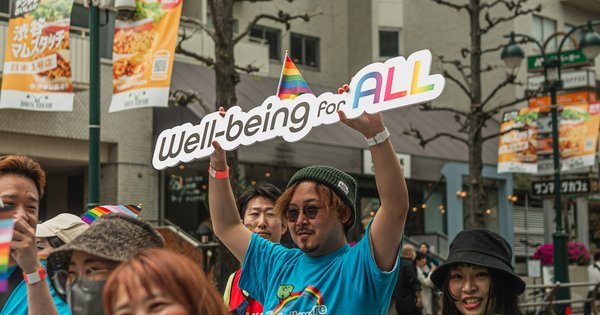
Three days after a van-and-blade attack killed one person and injured at least 29 others near Berlin’s Christopher Street Day festivities, the German capital’s queer community is fighting a fight it has seen coming since the moment the news broke: keeping the far-right Alternative for Germany (AfD) from turning the tragedy into a campaign ad.
The suspect, 21-year-old Abdul Ballout, was shot dead by police Sunday evening after a roughly 24-hour manhunt ended in a confrontation in the Spandau district, where officers say he charged at them with a bladed weapon. German prosecutors are treating the attack as Islamist terrorism. But for many in Berlin’s LGBTQ+ community, the aftermath has produced a second, more familiar anxiety: watching a party that has spent years campaigning against queer rights position itself as the community’s defender against “the real threat.”
A vigil, and a warning
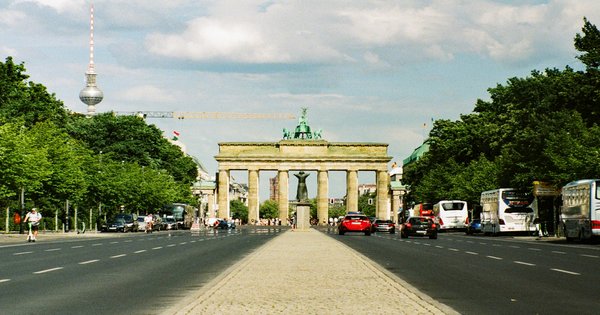
Hundreds gathered at the Brandenburg Gate on Sunday evening with candles and flowers. Lena Werner, 26, told reporters she came to show the attack wouldn’t work: the community, she said, would “not allow itself to be intimidated” and would “make our voice heard even louder, to demonstrate even greater solidarity.” Alex Friedrich, another attendee, wore a T-shirt reading “FCK AFD” in rainbow letters — a pointed statement about where he expects the political fallout to land.
That expectation didn’t take long to be confirmed. AfD lawmaker Martin Hess called for “a real shift in migration policy” within hours of the suspect’s identity becoming public, framing the attack as evidence for the party’s core platform rather than as violence against a Pride celebration specifically. The AfD is currently polling strongly in Berlin ahead of September elections, and LGBTQ+ activists and commentators — including in pieces published this week by The Intercept and EUnews — have warned that the party’s own record on queer rights makes its sudden interest in protecting LGBTQ+ Berliners difficult to take at face value.
“Strong resistance to this exploitation” is coming, one 23-year-old student named Luka told a reporter at the vigil — a sentiment echoed across the queer organizations now trying to hold two truths at once: that the attacker’s motive, as German authorities describe it, was Islamist extremism, and that a party built substantially on anti-immigrant politics is not the same thing as an ally of LGBTQ+ people.
The political math
Germany’s mainstream parties have tried to keep the response focused on unity rather than division. Chancellor Friedrich Merz said after the attack that “there are more of us, we are stronger, and we will stay together,” while Berlin Mayor Kai Wegner pledged the city “will only get stronger.” European Commission President Ursula von der Leyen wrote that the EU stood “united at the side of the LGBTQI+ community.” None of those statements, notably, mentioned migration policy.
But with a federal election year underway and the AfD leading in some Berlin polling, the space between “this was terrorism” and “this justifies our platform” is exactly where German politics will be contested over the coming weeks. LSVD⁺ (Federation Queer Diversity), one of Germany’s largest LGBTQ+ organizations, has pressed the government to strengthen protections for queer and intersex citizens — a request aimed squarely at preventing the attack from being absorbed into an unrelated immigration debate while queer safety itself goes unaddressed.
What comes next
Berlin police have not said publicly whether they believe Ballout acted alone. He had a prior conviction, was on probation under a court-ordered deradicalization program, and had attended only two of 26 scheduled sessions — details that have fueled a separate line of questioning about whether the attack was preventable through better monitoring, distinct from the migration-policy argument the AfD is making.
For TrueQueer’s readers in the Balkans, where Pride organizers in cities like Belgrade and Oradea already operate under bans, police cordons, or open hostility from nationalist politicians, the pattern in Berlin will look familiar: an attack on a Pride event becomes, within days, a proxy battle over who gets to claim the moral high ground, with queer safety itself sometimes an afterthought in the argument. Whether Berlin’s queer community can keep the focus on that safety — rather than watching the tragedy get absorbed into September’s election contest — is now the open question.
Sources: The Globe Post, The Intercept, EUnews, Al Jazeera.