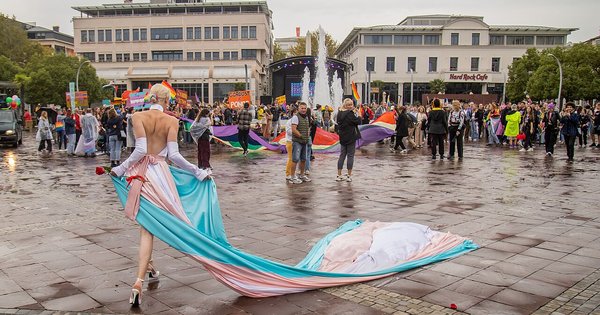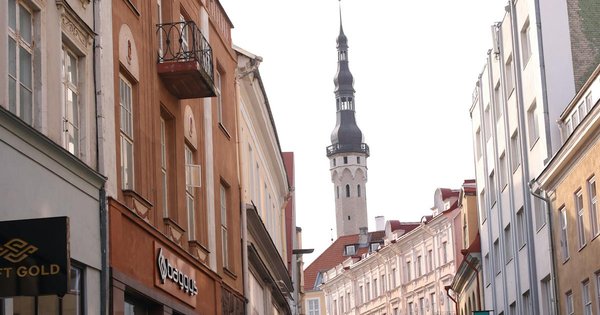
Baltic Pride opens in Tallinn on June 1 and runs through June 7, with the Pride march on Saturday, June 6 winding from the Old Town down to Telliskivi Creative City for a day-long concert and street programme. It is the biggest LGBTQ+ event in the Baltic region, and the only one that physically rotates between three countries.
For people unfamiliar with the format: Baltic Pride is shared. Each year it moves between Tallinn, Riga and Vilnius, hosted by the three national LGBTQ+ organisations that founded it together — the Estonian LGBT Association, Latvia’s Mozaīka, and the Lithuanian Gay League. The rotation is deliberate. None of the three Baltic states is large enough on its own to sustain the international attention of a major Pride, and when they pool the work, they get something that punches above the headcount of any one capital. Tallinn last hosted in 2017. The city’s turn in 2026 lands at a moment when Estonia has pulled noticeably ahead of its two neighbours on rights.
Why Estonia is the natural host this year
Estonia became the 21st country in Europe to legalise same-sex marriage when its parliament voted in 2023 and the law took effect on January 1, 2024. Adoption and parental rights came with it. Latvia and Lithuania have not followed. Latvia recognises civil unions for same-sex couples — a partial step adopted in 2024 after years of court pressure — but it still bars marriage. Lithuania has neither marriage nor a workable civil partnership framework, and a partnership bill has stalled in the Seimas across multiple sessions.
That gap is now built into the symbolism of Baltic Pride. When the march moves through Tallinn this year, it moves through the only Baltic capital where the couples in the parade can be legally married at home. The Estonian organisers have framed the week around what they are calling “digital and progressive identity” — a nod both to Estonia’s well-known tech reputation and to the country’s relatively quick journey from Soviet-era criminalisation to marriage equality in roughly a generation.
The programme
The official week begins on June 1 with opening events at Vabamu, the museum of occupations and freedom, including a panel on Baltic queer history that links the post-Soviet generation to today’s activists. Throughout the week, there are film screenings at Sõprus cinema, drag performances in Telliskivi, a literary evening at the Estonian Writers’ Union, and several closed community sessions for trans and non-binary participants.
Two events anchor the week. The first is the Pride Walk of Solidarity on June 5, in which participants carry cornflower-blue flags — a flower long associated with Estonian national identity and resilience — to honour Baltic LGBTQ+ pioneers, including activists who were imprisoned or pushed into exile under Soviet rule. The walk is short, deliberate, and ends with readings from archival material that has only become accessible in the last decade.
The second is the Pride parade on June 6. The route starts at Vabaduse Plats (Freedom Square) and runs through the Old Town to Telliskivi, where the parade dissolves into the Pride Park concert. Organisers expect a record turnout for a Tallinn edition — Riga’s 2025 edition drew roughly 9,000 people, and the Estonian capital is widely expected to exceed that this year. International marching delegations from Finland, Sweden and Germany have already confirmed.
What is harder this year
Pride is bigger and more visible than it used to be in Tallinn, but the political context around it is not entirely friendly. EKRE, the Estonian Conservative People’s Party, remains the country’s largest opposition party in opinion polls, and its leadership has campaigned openly against marriage equality and gender-recognition rights. Counter-demonstrations have been a feature of recent Tallinn Prides, though they have remained small. The Estonian Internal Security Service confirmed earlier this month that it has worked with Tallinn police on a security plan for the week and that no specific credible threat has been identified.
In Latvia and Lithuania, the picture is more uneven. Riga Pride in 2025 went ahead under tight police protection. Vilnius has had a more difficult relationship with Pride; in past editions, municipal authorities have tried to restrict routes or block the event outright. Both organisations send delegations to whichever city is hosting that year, and the Lithuanian Gay League will march in Tallinn under banners drawing attention to the partnership bill that has been blocked in the Seimas since 2022.
Practical notes for visitors
If you are coming for the week, the Tallinn Old Town is the centre of gravity for the cultural programme, and Telliskivi is where the energy concentrates on parade day. Estonia is in the Schengen Area and uses the euro. Public transport in Tallinn is free for registered residents and inexpensive for visitors. Baltic Pride has published an official accessibility statement and a guide to allies and supporters; both are linked from balticpride.ee.
For LGBTQ+ travellers comparing the three Baltic capitals more broadly, Tallinn is the easiest landing in 2026 — but Riga and Vilnius are improving, and Baltic Pride’s whole point is to keep the three on the same arc. The march on June 6 is one of the more straightforward statements of that in Europe this year: three countries, one parade, one capital at a time.
Sources: Baltic Pride official programme (balticpride.ee), Visit Estonia, GAY45 country guide, ILGA-Europe Rainbow Map 2026.