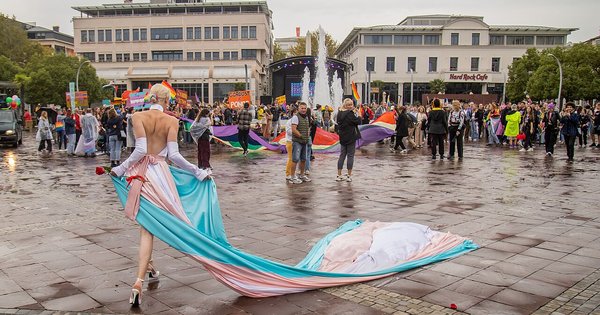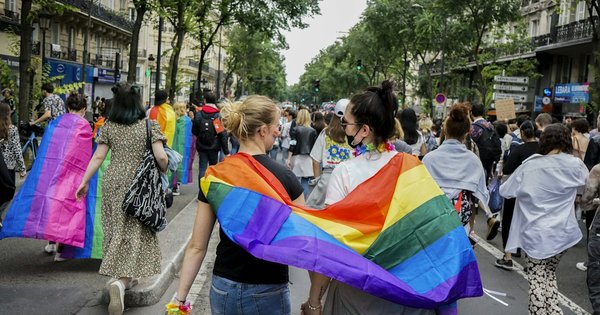
While hundreds of thousands filled the boulevards of Rome, Paris and Berlin this Pride season, two of the most consequential marches in Europe happened far from the cameras and the corporate floats. On Saturday, June 20, the capitals of North Macedonia and Bosnia and Herzegovina held their Pride parades — Skopje’s eighth, Sarajevo’s seventh — and the headline coming out of both was the same word: hope.
We say “consequential” deliberately. A Pride march in a country where the institutions are firmly behind you is a celebration. A Pride march in a country where you cannot count on that is something closer to a civic act of courage. Both Skopje and Sarajevo fall into the second category, and that is exactly why they are worth more attention than their headcounts suggest.
Skopje: “Let Everyone Know”
North Macedonia’s eighth annual Skopje Pride moved under the slogan “Let Everyone Know” — a direct answer to the social pressure that pushes queer people in the region to stay quiet and invisible. The phrase is aimed squarely at the silence: against hiding, against the unspoken arrangement in which LGBTQ+ people are tolerated only so long as they keep it to themselves.
The route was more ambitious than in past years, winding through Ilinden Boulevard, Roosevelt Street, Partizanski Odredi Boulevard and Dimitrije Cupovski Street before ending at “Zena Borec” — Woman Fighter — park. That choice of geography is its own statement. Recent Skopje Prides have drawn somewhere between 200 and 500 marchers with a few thousand spectators lining the route, and stretching the parade across more of the city center is a way of refusing to be tucked into a single guarded square.
It also lands at a particular political moment. North Macedonia is an EU candidate country, and the freedom to assemble peacefully — including for Pride — is exactly the kind of fundamental-rights benchmark Brussels watches in its accession reporting. Every year the march happens safely, it becomes a small piece of evidence that the country is meeting a standard it has formally signed up to.
Sarajevo: a Pride Week, not just a march
In Sarajevo, the parade anchored a full Pride Week of concerts, film screenings, drag, and queer-history walks — a reminder that Pride in the Balkans is increasingly about building year-round culture, not just surviving one afternoon. Bosnia and Herzegovina held its first Pride March only in 2019, and each one since has required a heavy security operation. That the seventh now sits inside a week of programming is a quiet measure of how far organizers have pushed.
The framing from organizers this year was deliberately personal rather than political. “This year’s Pride March brings hope because more and more families are accepting their LGBTQI+ relatives,” said organizing committee member Daniela Premuda. “This is about people’s lives, not politics.” It is a line worth sitting with. In a country where Pride is often discussed only in terms of risk and protest, organizers chose to center something gentler and harder to argue with: the slow, household-by-household work of relatives coming around.
Why the small marches matter
It is easy, from Western Europe or the United States, to measure Pride by scale — to assume a 300,000-strong parade means more than a 300-strong one. The Balkans inverts that math. In Sarajevo and Skopje, the relevant comparison is not against Rome but against the recent past, when these marches were unthinkable, or thinkable only behind walls of riot police. Hundreds of people walking openly through a Balkan capital, under a slogan that tells the whole city to look, is not a modest event. It is the frontier of where this right is still being won.
That does not mean either country is finished. North Macedonia and Bosnia both still lack legal recognition for same-sex partnerships, and the social hostility that makes the security operations necessary has not evaporated. We try to be honest about that rather than smoothing it into a feel-good arc. But honesty cuts both ways, and the other half of the truth is real too: two more marches happened, safely, in cities that not long ago could not hold them. More families showed up for their kids. The route got longer.
This is what progress in the Balkans actually looks like — not a single triumphant law, but a parade that comes back every year, a little more visible than the last. On Saturday, in two capitals at once, it came back. Let everyone know.
Sources: Balkan Insight — “LGBT Pride Marches in Bosnia, North Macedonia Offer Messages of Hope”, METLA.MK — Skopje Pride route, ILGA-Europe Rainbow Map 2026.