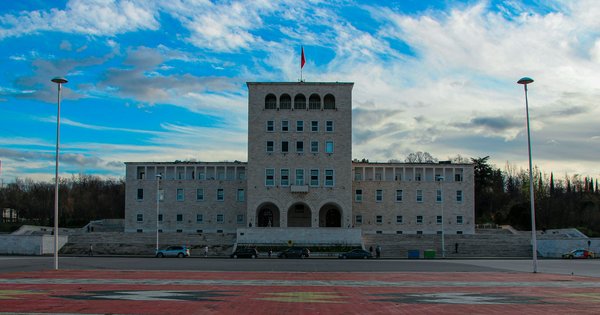
Education is on Albania’s front pages this week. Student protests over the cost of study and the lack of jobs after graduation spread from Tirana to universities in Elbasan and Shkodër, Al Jazeera reported on October 15.
This story isn’t about those protests. It’s about a quieter problem in the same classrooms, one that two reports published this year put into numbers: for many LGBTI young people in Albania, school and university are places where you learn to stay invisible, and sometimes the place you leave.
The short version
- The new study: In March, the Albanian NGO Aleanca LGBTI published Edukim për të gjithë (“Education for all”), a study by researcher Blin Sali of the barriers LGBTQI students face. It found that 86% of discrimination incidents went unreported.
- The international verdict: In June, the Council of Europe’s anti-racism body ECRI published its report on Albania. It says that on bullying of LGBTI pupils, the situation “appears to have even worsened.”
- The ask: Both call for anti-bullying work aimed specifically at LGBTI pupils, trained staff, and real ways to report.
What students told Aleanca
The Aleanca study is small, and says so. It combined an anonymous online questionnaire with 28 complete responses, a focus group of six people who never made it to university, and one in-depth interview. The author calls the findings “indicative,” not nationally representative. But the pattern is consistent.
Among current students who answered:
- 77.3% said their university was not prepared at all for LGBTQI students.
- Only 13.6% had reported an incident. Most stayed quiet out of fear, because they didn’t think it would help, or because they didn’t know how. Across all respondents, fear of being outed was one of the main reasons incidents went unreported.
- Only 50% said staff respected their name and gender.
- 86.4% had never had the chance to take part in any LGBTQI inclusion training.
- Just 22.7% said their institution had a confidential way to report.
The most common experiences were mockery, verbal insults, being misnamed or misgendered, harassment from classmates and staff, and homophobic or transphobic comments during lessons. One respondent described lecturers making inappropriate comments about well-known LGBT artists in class, to laughter from students.
Among the small group who had dropped out of university, two in three pointed to money problems and two in three to a non-inclusive environment.
The ones who never got there
The study’s most striking turn came by accident. While collecting answers, the researchers found a sizeable group of LGBTQI people who had never reached university at all. So they ran a separate focus group for them.
Of the six participants, three had left secondary school because of bullying and social pressure. One had completed only the first two grades of primary school. “The other students made such offensive comments and mocked me so much that at one point I said to myself, ‘no, I can’t anymore,’” one participant said (our translation from Albanian).
The report describes a chain reaction. Leaving school early limits stable work, raises the risk of poverty, pushes people into insecure or informal jobs, and wears down mental health. Some participants later took vocational courses run by Aleanca, which helped with skills and motivation but didn’t replace formal education.
What the Council of Europe found
ECRI’s seventh report on Albania, adopted on March 17 and published on June 17, 2026, lands in the same place from a different direction.
- In a 2024 survey of 195 LGBTI people, 73% described schools as “unsafe” for marginalised groups, including LGBTI students, because of bullying, harassment and exclusion.
- In its last report, ECRI asked Albania to go beyond general anti-bullying campaigns and build modules for groups who are targeted, including LGBTI young people. It now records “limited advancements.”
- Teachers and school staff “remain uninformed about LGBTI issues and, in some cases, even openly display discriminatory views,” ECRI writes, despite training under Albania’s LGBTI National Action Plan 2021–2027, which it says lacks resources.
- Sexuality education is being folded into biology, civic education and PE, with a goal of full national coverage by 2026. But LGBTI-specific content “is still missing.”
There is real infrastructure to build on. ECRI notes that the Ministry of Education adopted a National Action Plan Against Violence and Bullying for 2025–2028, and that schools employ hundreds of psychologists and social workers. What’s missing, ECRI says, is data. Apart from a general figure of 2,028 cases of violence and bullying in pre-university schools in 2022–2023, it received none.
Why talking about it in schools is so hard
The Aleanca report recalls 2015, when LGBTI organisations showed a documentary on bullying, SkaNdal, in several high schools. The sessions drew strong backlash in the media and online, and the Ministry of Education then said it had never officially authorised them.
That tension hasn’t gone away. In May, we reported on a bill in parliament that would ban school content discussing gender identity or “alternative family forms” for anyone under 22. It hasn’t advanced, but it hasn’t been withdrawn either.
What would actually help
The recommendations from both reports are specific and doable:
- In schools: national anti-bullying protocols that name sexual orientation, gender identity and sex characteristics, with a response within 24 to 48 hours (Aleanca), and a country-wide system to monitor and count anti-LGBTI incidents (ECRI).
- In universities: equality offices with a trained equality officer, confidential and independent reporting with safeguards against being victimised a second time, and mandatory staff training, including on respecting students’ names and gender identity.
- For the most vulnerable: psychologists trained to work with LGBTQI students, scholarships for students cut off by their families, an emergency fund, and programmes that help people who left school come back.
- In the curriculum: LGBTI equality in sexuality education and approved teaching materials, so teachers aren’t left guessing.
Most of this doesn’t need a new law. The action plans are already on paper. What the students in this study are asking for is that someone puts them into practice.
If you’re an LGBTI student in Albania and something has happened to you, our guide to reporting and getting support lists who to contact and what to save first.