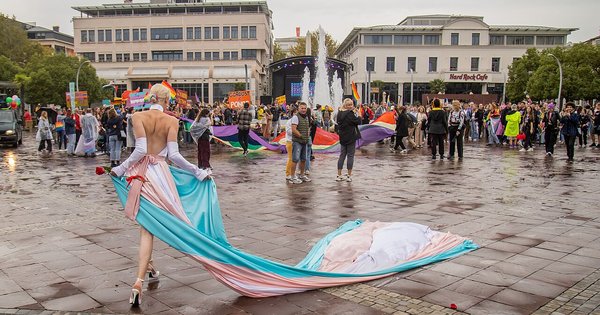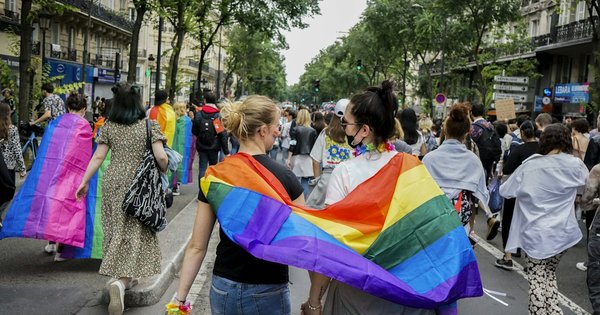
While Amsterdam is mid-celebration this summer, the next big WorldPride question is already being decided quietly in the background: which city gets 2030. As of now, it’s a two-horse race — Bangkok versus Barcelona — and the contrast between them is a neat little referendum on where the global LGBTQ+ movement wants to plant its biggest flag next.
London bows out
For a while this looked like a three-city contest. London was in the mix, and on paper it made sense — a huge, well-resourced city with deep Pride history. But London has withdrawn its 2030 candidacy, redirecting its energy toward a bid for WorldPride 2032, which would land on the 60th anniversary of the city’s first Pride march in 1972. It’s a sensible piece of strategy: rather than fight for 2030 and risk losing, London gets to aim at a year with its own built-in meaning. That leaves the field to Bangkok and Barcelona.
The timeline
If you’re waiting for a winner, settle in. The two cities will make their final pitches at the InterPride World Conference and Annual General Meeting, held this year in Phuket, Thailand, from October 29 to November 1, 2026. After the presentations, global voting among InterPride’s member organizations opens roughly two weeks later, and the result is expected to be announced in January 2027. So the campaigning runs all autumn, and we won’t have a decision until the new year.
The case for Bangkok
Thailand has momentum that’s hard to overstate. It became the first country in Southeast Asia to legalize same-sex marriage, with tens of thousands of couples marrying in the first year alone, and it has leaned hard into being the region’s queer capital. A 2026 Suan Dusit poll found more than 85% of Thais accept gender diversity — a level of public acceptance many Western countries would envy — and the government has openly framed LGBTQ+ tourism as an economic engine, the so-called “Rainbow Economy.”
A Bangkok WorldPride would be historic in the most literal sense: no WorldPride has ever been held in Asia. Awarding it to Bangkok would be a statement that the movement’s center of gravity is genuinely global, not just a rotation among wealthy Western cities. For a region where queer people in neighboring countries still face criminalization, a WorldPride next door would be more than a party — it would be a beacon.
The case for Barcelona
Barcelona’s pitch runs on a different kind of strength. Spain now tops ILGA-Europe’s Rainbow Map as the highest-ranked country on the continent for LGBTQ+ law and policy, having overtaken Malta, and Barcelona itself has decades of experience staging enormous, well-run queer events. The infrastructure is proven, the legal protections are among the best in the world, and the city sits inside a country whose national government has spent real political capital on trans and LGBTQ+ rights.
For those of us who spend our lives moving around Europe, Barcelona is also simply one of the most reliably welcoming big cities on the map — a place where queer visibility is woven into ordinary life rather than confined to one weekend. A Barcelona WorldPride would be a safe, spectacular, deeply competent choice, and a chance for Europe’s new rights leader to show off.
What the choice is really about
Strip away the logistics and the two bids represent two theories of what a WorldPride is for. Barcelona is the argument for consolidation — reward the places that have done the work, throw the biggest possible celebration somewhere safe and proven, let the movement’s leading edge shine. Bangkok is the argument for expansion — take the flagship event somewhere it has never been, use its visibility to lift a whole region, and bet that the future of the movement is in Asia, not just the Atlantic world.
There’s no wrong answer, exactly, and both cities would deliver something remarkable. But the vote will tell us something about how the organizations that make up InterPride are thinking right now — whether the instinct is to celebrate hard-won safety or to push visibility into places that need it more. Either way, we’ll be watching the Phuket presentations in late October, and we’ll be honest about where our heart is: as much as we love Barcelona, there’s a strong case that Asia’s first WorldPride would do more good in the world.
For now, the flags are up in Amsterdam. But the next chapter of this story is already being written — in Bangkok and Barcelona, and settled, eventually, in January.