We read the news about Albania’s new hormone therapy guideline the same way we read most Albanian news these days — over coffee, in a café a few blocks from our apartment, half in English on our phones and half asking each other to translate what the Albanian outlets were saying that the English ones weren’t. The story itself we covered here already: the Health Ministry quietly approved the country’s first formal clinical framework for trans hormone treatment back in April, and Albania’s Interreligious Council — Orthodox, Catholic, Evangelical and Muslim leaders, together, which in itself tells you something about how seriously they’re taking this — came out publicly against it in early August, calling for “transparency” while individual clerics used considerably less careful language about “moral deterioration.”
What we haven’t written about is what it’s like to be living here, as a married gay couple, while that argument plays out roughly ten minutes from our front door.
Tirana is not one thing
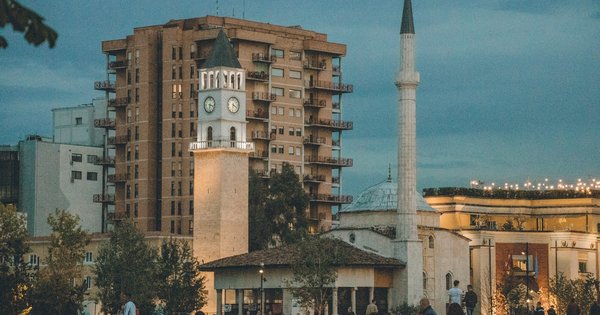
The honest answer is that it doesn’t feel like living inside a controversy, most days. Tirana in August is hot, slow, half-empty — a lot of the city that can afford to leave for the coast does, and the pace of everything, arguments included, drops with the temperature rising. We walk to Blloku, the old Communist-era elite quarter that’s now the neighborhood with the espresso bars and the crowd that skews younger and more visibly queer than anywhere else in the city, and nothing about an afternoon there feels like a country mid-fight over trans healthcare policy. We’ve held hands on that walk more times than we counted, without incident, for three years running.
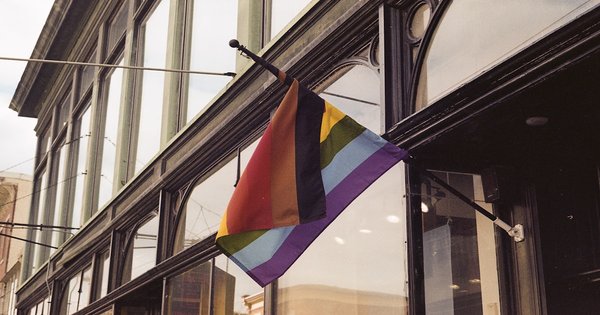
That’s true, and it’s also not the whole picture, and the tension between those two facts is basically the story of LGBTQ+ life in Albania right now. Tirana Pride happens every year with police cooperation and increasingly large crowds — this year’s theme was “Together for the Family,” a deliberately pointed rebuttal to the idea that queer people and family are opposites. Albania has had a functioning anti-discrimination law on the books since 2010. None of that happened by accident, and none of it happened because Albanian society organically decided it was fine with us — organizations like Pink Embassy fought for every inch of it, for years, against exactly the kind of institutional resistance we’re watching play out again right now.
What the backlash actually reveals
What strikes us about the Interreligious Council’s statement isn’t really its opposition — religious institutions across the Balkans have opposed nearly every piece of LGBTQ+ progress for decades, and Albania was never going to be the exception. What’s notable is the argument’s shape. The Council isn’t claiming trans people don’t exist, or that the state has no business in healthcare. It’s arguing about process — disclosure, consultation, transparency — while the underlying complaint is plainly about legitimacy. And buried in their own statement is an admission that Albanian LGBTQ+ advocates have been making for years, from the opposite direction: that the country genuinely has no dedicated legal framework for gender identity recognition. The Council wants that gap treated as a reason to freeze what little clinical guidance now exists. The people it’s about have wanted it closed with actual rights protections. Same gap, completely opposite conclusions about what should fill it.
We don’t think this ends with the guideline getting rolled back. Deputy Health Minister Eugena Tomini has been clear that it’s a clinical framework built on international practice, not a new legal status, and Albania has a pattern of absorbing exactly this kind of religious objection without reversing course — the same thing happened around the 2023 draft Gender Equality Law. But “we don’t think it gets rolled back” is a very different sentence from “this isn’t a real fight,” and living here means holding both at once: genuine, incremental institutional progress, and the fact that every inch of it still gets contested by people with real power the moment it happens.
Why we’re not leaving
We get some version of this question a lot: doesn’t it worry you, basing part of your year somewhere that’s still having this argument? Fair question. Our answer hasn’t changed much in three years. Albania in 2026 is not a finished project and it was never sold to us as one — it’s a conservative society modernizing unevenly, faster in Tirana than in the countryside, faster on paper than in some living rooms. That’s a real description of a lot of places we’ve lived, including, depending on the year, the country either of us grew up in. What we’ve found here is a capital with a real, visible, increasingly confident queer community that isn’t waiting for the Interreligious Council’s permission to exist — and a government that, whatever the pace, keeps moving the same direction as its EU accession ambitions, not the opposite one.
The hormone therapy guideline will probably survive the pushback. The pushback will probably happen again on the next thing. We’ll probably still be here, a ten-minute walk from wherever that argument is happening next, and still glad to be.