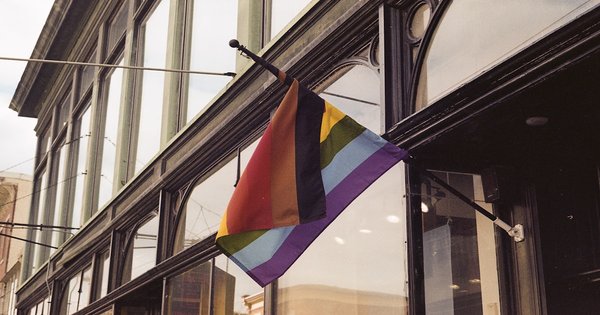
This weekend, roughly two thousand kilometers northwest of where we spend most of our year, Amsterdam opens WorldPride 2026 — fifteen days of parades, concerts, and a boat procession down the Prinsengracht that a million people will come to see. It is, by almost any measure, the safest and most celebrated Pride on the planet: a city that legalized same-sex marriage a quarter-century ago, throwing the doors open to the world.
From the Balkans, that picture lands differently than it does from Western Europe. Not with resentment — Amsterdam earned its moment — but with a particular clarity about how uneven the map still is. The same continent that will float eighty rainbow boats down a canal in August is also the continent where, a few countries to the southeast, a Pride march can still be banned, rerouted, or held behind lines of riot police.
The same season, two different realities
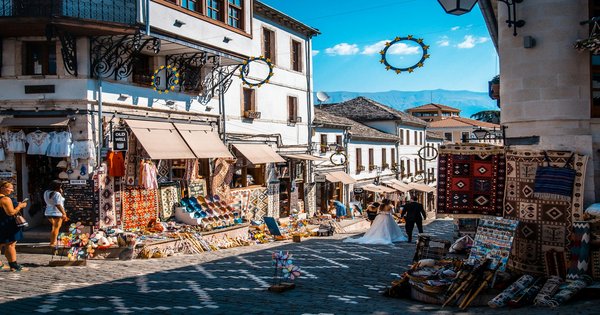
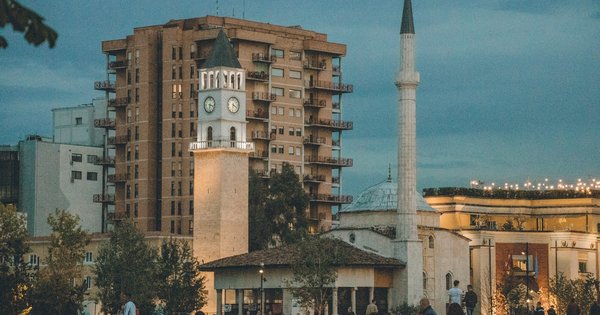
Consider the calendar we’ve been covering all summer. Belgrade Pride is preparing for its march this autumn with a list of demands and, as ever, a security operation to match. In Serbia, a smaller city saw its Pride event blocked outright this year. Montenegro — the one Western Balkan country to recognize same-sex partnerships — holds its march in Podgorica under heavy police protection, its significance tied directly to the country’s EU accession bid. Here in Albania, Tirana held its Pride earlier this year, and the community continues to organize against a political backdrop that ranges from cautious tolerance to open hostility depending on who is speaking.
None of that is a story of failure. Every one of those marches happening at all is a hard-won fact, built by organizers working with a fraction of the resources and none of the state backing their Dutch counterparts enjoy. But set beside Amsterdam’s fortnight, they map the real geography of European LGBTQ+ life: a gradient that runs from full legal equality in the northwest to contested visibility in the southeast, with EU accession acting as the lever slowly — unevenly — pulling the region toward the former.
Why the global room matters here
This is exactly why the less glamorous half of WorldPride is the half we’re watching most closely. Alongside the parties, Amsterdam is running a three-day Human Rights Conference in early August, and it’s funding more than 150 activists from around the world to attend through a scholarship program. That detail is the whole point. The organizers who most need to be in that room — the ones building movements in places where the work is underfunded and sometimes dangerous — are the ones who could never otherwise afford to be there.
For Balkan activists, a gathering like that is not a junket. It’s access: to funders, to legal strategists, to peers from Poland, Hungary, and beyond who are fighting adjacent battles, and to the simple, fortifying fact of not being alone. The anti-gender movements pressuring Pride in Belgrade and Podgorica are transnational and well-resourced; the response has to be transnational too. Amsterdam, for two weeks, is where that response gets to assemble in one place.
The honest version
We try, in writing about this region, to hold two things at once, and WorldPride is a good occasion to say them plainly. The first is that the distance between a canal parade in Amsterdam and a police-guarded march in Podgorica is real, and it would be dishonest to paper over it with rainbow optimism. The second is that the distance is closing, slowly, and that the people closing it are the Balkan organizers who show up year after year to hold a march that a generation ago would have been unthinkable.
Amsterdam’s fortnight is a picture of the destination. The Balkans, this summer, are a picture of the road. Both are worth watching — but if you want to understand where the movement is actually being built, keep at least one eye on the harder, quieter half of the map.
Sources: WorldPride Amsterdam; Balkan Insight — LGBTIQ; ILGA-Europe Rainbow Map 2026.