We’ve been based in the Balkans long enough now to have watched a full Pride season come and go from the inside rather than the outside. And the thing we keep coming back to, as the marches wrap up across the region this summer, is how much the story changes depending on which week you happen to be looking.
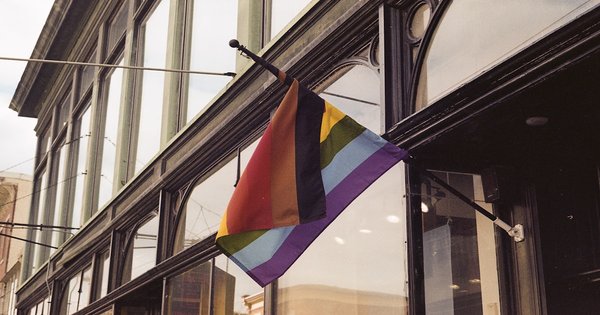
In June and early July, the picture looked genuinely hopeful. Skopje marched. Sarajevo marched. Pristina held its tenth Pride. Belgrade’s community kept organizing despite a country consumed by student-led protests. In city after city across a region that outsiders still file under “dangerous for gay people,” the parades happened — many of them secured by police, most of them without the violence that once defined Pride in this part of Europe. If you dropped in for a single weekend, you’d come away thinking the Balkans had turned a corner.
But we live here the other fifty-one weeks too, and that’s where the honest version of the story lives.
The march is the easy day
This is the thing that took us a while to understand. A Pride march, especially one with a heavy police cordon, is in some ways the safest day of the year to be visibly queer in a Balkan capital. The cameras are there. The EU ambassadors show up and make statements. The government, whatever it actually thinks, wants the images to look calm because those images get read in Brussels as evidence of “European values.”
The real test is the Tuesday in November when there’s no parade, no press, and no ambassador — when it’s just two people deciding whether to hold hands walking home. That’s the freedom that actually shapes a life, and it doesn’t move nearly as fast as the parade route suggests. A regional colleague put it plainly in the local press recently: the question at the end of Pride Month isn’t how many people took to the streets, it’s whether anyone feels safer for the rest of the year.
Progress and its ceiling
We don’t want to flatten this into pessimism, because that would be its own kind of dishonesty. The progress is real. A decade ago, several of these Prides couldn’t be held at all, or were held behind riot shields as crowds tried to break through. That so many happened this summer without incident is a genuine achievement built by local activists who took on far more risk than we ever will.
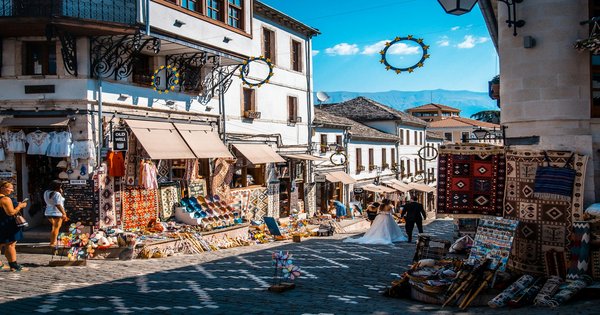
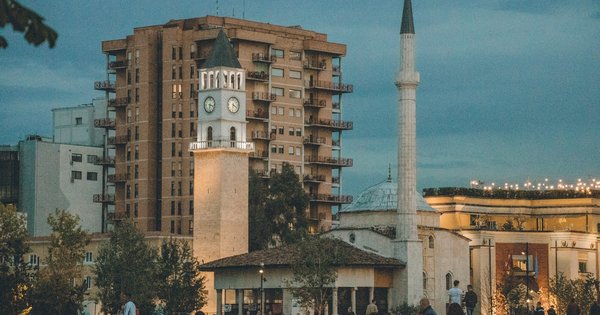
But the ceiling is real too, and it’s mostly legal. Across the Western Balkans, the same gaps keep showing up: no marriage, no civil unions in most places, thin or nonexistent legal gender recognition, and adoption firmly closed to same-sex couples. Kosovo has promised civil unions and not delivered. In Albania, where we spend much of our year, the Pride march has become one of the most resilient annual events in the region — and yet same-sex couples still have no legal recognition of their relationship at all. You can march down the main boulevard of a capital and then have the state treat you, on paper, as strangers to each other.
The EU lever
The one force genuinely moving these numbers is accession. Every country here that wants into the EU knows LGBTQ+ treatment is on the scorecard, and that leverage is real — it’s why police protect the marches, why anti-discrimination laws get passed, why ministers say the right things. We’ve watched it work.
We’ve also watched its limits. Governments are very good at passing the law that gets them the checkmark and then leaving it unenforced, or at protecting the one photogenic day and doing nothing about the ordinary ones. Accession pressure buys the parade. It does not, by itself, buy the Tuesday in November.
What we’re actually watching for
So as the flags come down this summer, here’s the metric we’ve learned to care about, living here. Not the size of the march — the boring stuff that follows it. Does the civil-union bill that was promised actually get tabled? Do the hate-crime provisions get used, or do they sit in the code as decoration? Does the community center stay open once the Pride grants run out? Do the small-town Prides — the ones without an ambassador in the front row — get to happen at all?
That’s the real map of freedom in the Balkans, and it gets drawn slowly, in the quiet months, by people who live here every day. We’re glad we got to watch the region march this summer. We’re more interested in what it does now that the music has stopped.